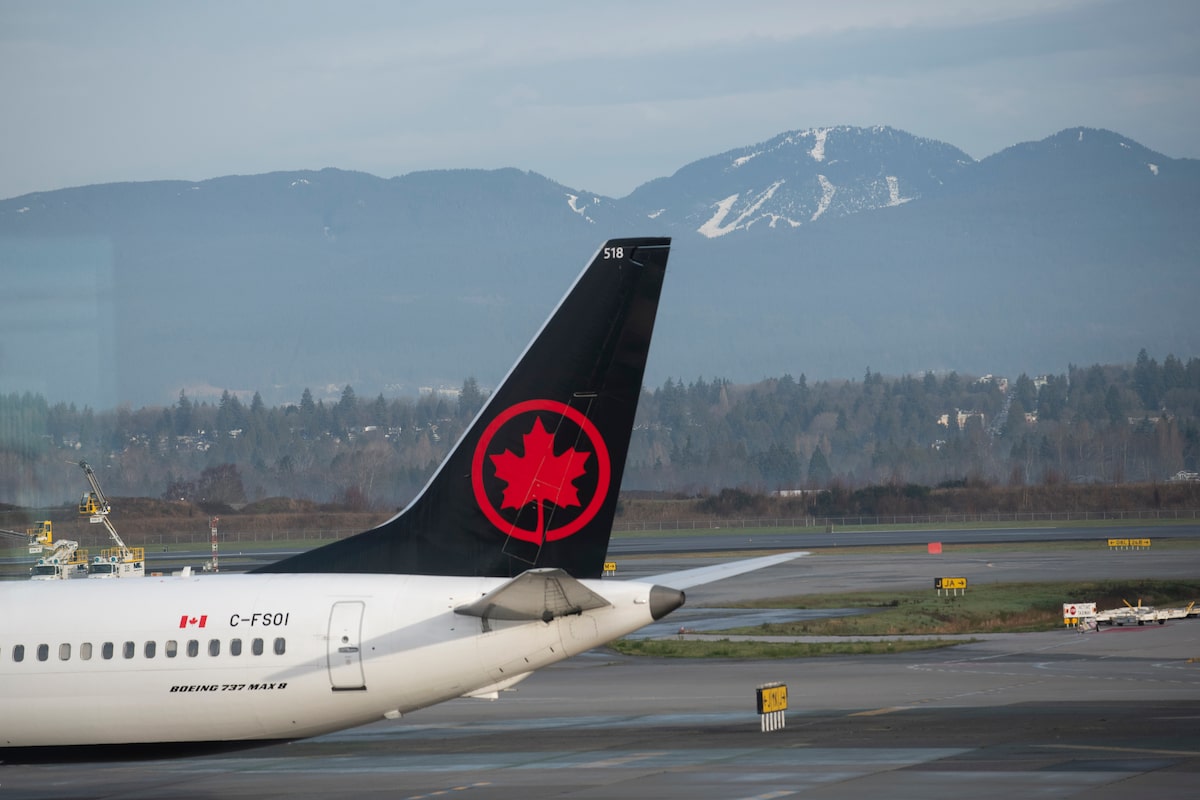
Abacus data released this week showed that 68 per cent of Canadians said they haven’t travelled to the U.S. in the past year.Fred Lum/The Globe and Mail
For millions of Canadians avoiding U.S. travel in the name of patriotism, rising airfare costs might yet be another deterrent.
When U.S. President Donald Trump first voiced that Canada should become the 51st state, prices for southbound flights took a nosedive in tandem with plummeting demand and rising anti-U.S. sentiment.
In early May of last year, the cost to fly to popular U.S. destinations dropped up to 37 per cent year-over-year, travel search engine Kayak found. Canadians travelling to sunny Tampa, for instance, paid about $305 on average for airfare, or 35 per cent less than the previous year. Those making their way to Seattle and Los Angeles saw prices drop 18 per cent and 16 per cent, respectively.
Today, this trend has reversed dramatically, with the average cost of an economy flight to the United States spiking 8 per cent year-over-year in December – or reaching $522 on average – according to Kayak.
Decoder: These provinces are boycotting U.S. travel the hardest
While demand for U.S. travel has remained at similarly low levels, costs have risen as carriers reduced capacity for flights bound south of the border. That’s led to more and sometimes cheaper flights to previously underserved global destinations, and higher costs for those who haven’t been able – or willing – to dodge the U.S.
Flights to Orlando from Toronto and Montreal this winter, for example, have grown 7 and 9 per cent year-over-year, respectively, Kayak said.
“February, March, April, that’s sort of when we saw the drop in prices, because airlines were still running at full capacity,” Flight Centre Travel Group Canada spokesperson Amra Durakovic said. “Then they adjusted.”
Anti-American sentiment when it comes to travel mostly hasn’t subsided. This winter, Canadian return trips by air from the U.S. fell roughly 20 per cent in November and 18.7 per cent in December. That compares with a roughly 14-per-cent and 24-per-cent drop in April and May, respectively.
Abacus data released this week also showed that 68 per cent of Canadians said they have not travelled to the United States in the past year, while one-third of Canadians said they would think less of family or close friends who visited the country in the past few months. The Abacus poll was conducted between Jan. 9 and 14 and surveyed 1,850 Canadian adults.
But while cheaper flights may have made the trip south more tempting for some, as 2025 ended, airlines began rerouting some carriers bound for the U.S. or substituting larger planes with smaller ones, driving up prices, according to Ms. Durakovic.
Marsha Lederman: I’m staying in Canada. But I feel for the people trying to lure us back to the U.S.
Data from aviation consultancy OAG showed that Canadian airlines reduced capacity to the United States by 10 per cent in the first quarter of this year. WestJet Airlines shrunk capacity by 19 per cent while Air Canada and budget carrier Flair cut capacity by 7 per cent and 58 per cent, respectively. Many of the cuts began in the middle of last year.
Though many Canadians continue to avoid U.S. travel, changes to flight capacity and cost might still weigh on a large chunk of travellers. Abacus found that 32 per cent of Canadians who responded to its survey travelled to the U.S. in the past 12 months for business or pleasure.
Among corporate travellers especially, demand hasn’t shown signs of budging at all. “Multinational companies with a significant presence or sales in the U.S. still need their key personnel to enter the country,” said Beth Nanton, partner and U.S. immigration practice leader at KPMG Law.
According to the latest data from travel automation company SAP Concur, Canadian business travel to the U.S. during the first half of 2025 remained stable, even as overall Canadian travel down south plummeted. The country accounted for 79 per cent of corporate travel from Canada during that period.
Canadian travel companies adapt as clients avoid U.S. travel
Meanwhile, airlines are doubling down on travel to destinations where Canadians are heading to in droves, Ms. Durakovic said, including to Mexico and Southeast Asia.
Flair launched new non-stop service to Mexico City from Toronto and Vancouver starting last fall, with one-way fares beginning at $141. This month, Air Canada AC-T announced new North American non-stop seasonal flights to Sapporo, Japan, flying directly from Vancouver starting in December, 2026.
According to Statistics Canada, Mexico became the most visited overseas country by Canadian residents in the second quarter of 2025, followed by France and Britain.
Japan, meanwhile, saw an 88-per-cent year-over-year increase in Canadian visitors in the second quarter, followed by Spain at 70.5 per cent and France at nearly 50 per cent.