interview
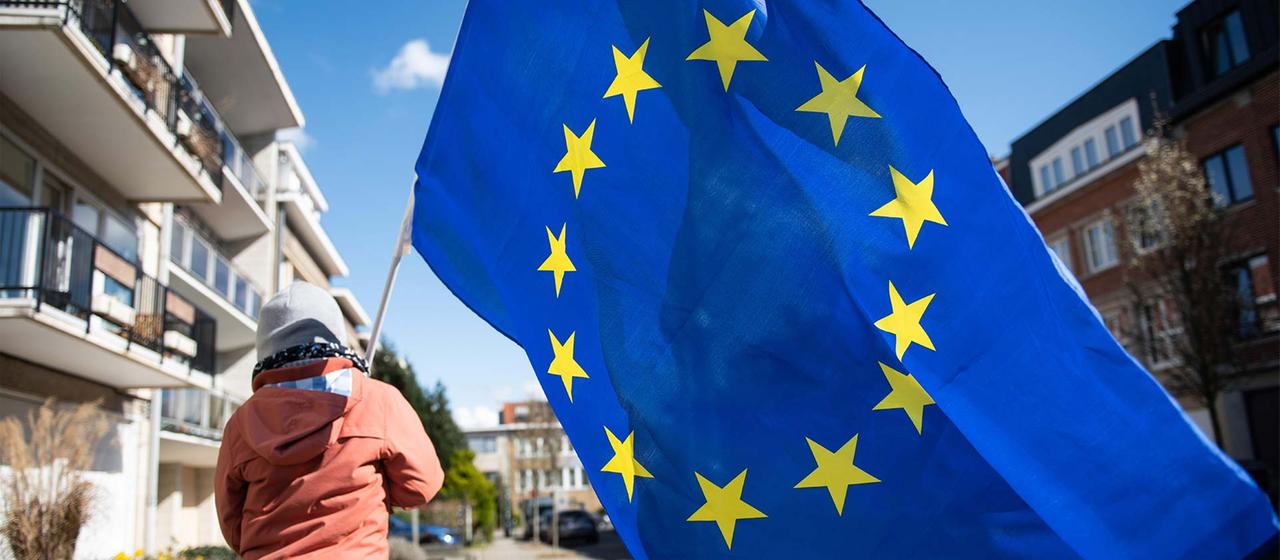
According to economist Achim Wambach, Europe’s rules-based trade is an advantage in the global economy. The ZEW President explains in an interview where toughness towards China is necessary and why innovation determines the EU’s prosperity.
ARD financial editorial team: We have the largest market in the world in terms of population. 450 million people live and consume in Europe. In the USA there are only 350 million. So do we even have to hide?
Achim Wambach: No, I don’t think we need to hide. I like to use the figures for Germany: We do around ten percent of our trade with the USA and around ten percent with China. That means 80 percent of our trade takes place somewhere else. I think that’s also our homework: someone has to take care of this 80 percent.
Around 40 percent of this comes from Europe – keyword: the European internal market. The question is: How do we get more out of it? Because there are still many barriers that we have built for ourselves and that we could dismantle ourselves. The other 40 percent comes from the rest of the world.
And this is exactly where Europe’s strength lies, which we often misinterpret as a weakness: we act based on rules. In the Mercosur agreement, for example, the South American partners do not have to be afraid that a president will suddenly impose punitive tariffs of 50 percent because something doesn’t suit him politically. A Commission President like Ursula von der Leyen wouldn’t be able to do that.
This rules-based WTO trading system creates reliability. It ensures that investments in partnerships with Europe pay off. This is a real strength that Europe could exploit much more aggressively – especially in comparison to the USA and China, where we are increasingly experiencing political arbitrariness. Companies there have to constantly fear that new rules will endanger trade overnight. That doesn’t exist in Europe.
To person
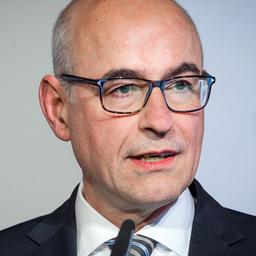
Achim Wambach is Professor of Economics and President of the Leibniz Center for European Economic Research (ZEW) in Mannheim. His research interests include competition economics, industrial economics and the economic regulation of markets.
“We have a lot more in common with the USA”
ARD financial editorial team: Nevertheless, Europe currently seems rather cautious, especially towards the USA. Couldn’t we defend our interests more resolutely – for example through a tougher tariff policy towards the USA and China?
Wambach: I would consider the two economic regions clearly separately. We have much more in common with the USA than just trade: the nuclear shield and cooperation in NATO. In this respect, the European Commission is well advised not to appear confrontational.
At the same time, boundaries must be clearly stated – formulated positively. For example, I can report from science that many actors are currently orienting themselves strongly towards Europe. The social and political pressure in the USA is enormous. In a way, Europe benefits from this. Studies also show that Europe is not the loser due to trade diversion: our tariff rates are comparatively low, so Europe can step in for other regions. This is the American side.
The situation with China is much more problematic. China massively subsidizes its companies and thus floods markets. We have already seen this in the solar sector: European companies have been squeezed out. There is a real risk that this will happen again – for example with electromobility. In such cases there are good reasons for introducing temporary and WTO-compliant protective tariffs. Not as isolation, but to give young, not yet established industries time to develop.
Unlock Europe’s potential
ARD financial editorial team: This means a differentiated approach depending on the region. Nevertheless: Can’t we signal more clearly to the USA that there are limits?
Wambach: Yes, I see it that way too. Europe has understood the wake-up call: defense spending is increasing massively. Now Europe has to show what it is capable of – in particular, that cooperation works and that not every country cooks its own soup. There is great potential there. In the current trade deal, Ms. von der Leyen negotiated very cautiously.
When it comes to tariffs alone, Europe is doing comparatively well; the effective burden is low. But the worry is that further demands will follow – for example on digital regulation or on geopolitical issues such as Greenland. Then Europe must make it clear: We made this deal, but we also have our own interests that we defend. On such issues, Europe must take a more confrontational approach in the future.
“Prosperity comes from innovation”
ARD financial editorial team: A final aspect: education, science and technological leadership. Can we position ourselves more strongly here?
Wambach: This is a very central point. Current politics is very defensive and strongly focused on yesterday: Which industry is mining where? But the crucial question is: Where will we be in ten years? Technological sovereignty means being the technology leader in ten years. Prosperity comes from innovation – not from interchangeable goods. And the EU still has a lot to do here.
Our funding programs are strongly focused on production, but not enough on innovation. At the same time, we keep putting obstacles in the way of start-ups and established companies: high tax burdens, high fees for skilled workers, low flexibility in the internal market. Good skilled workers then prefer to go to the USA or Great Britain.
All of this slows down innovation. The central question must be: How do we take the innovation landscape in Europe to the next level? This is one of the most important levers for the future.
The interview was conducted by Klaus-Rainer Jackisch, ARD finance editor, in the economic update on Evidence Network. The conversation was edited and shortened for the written version.