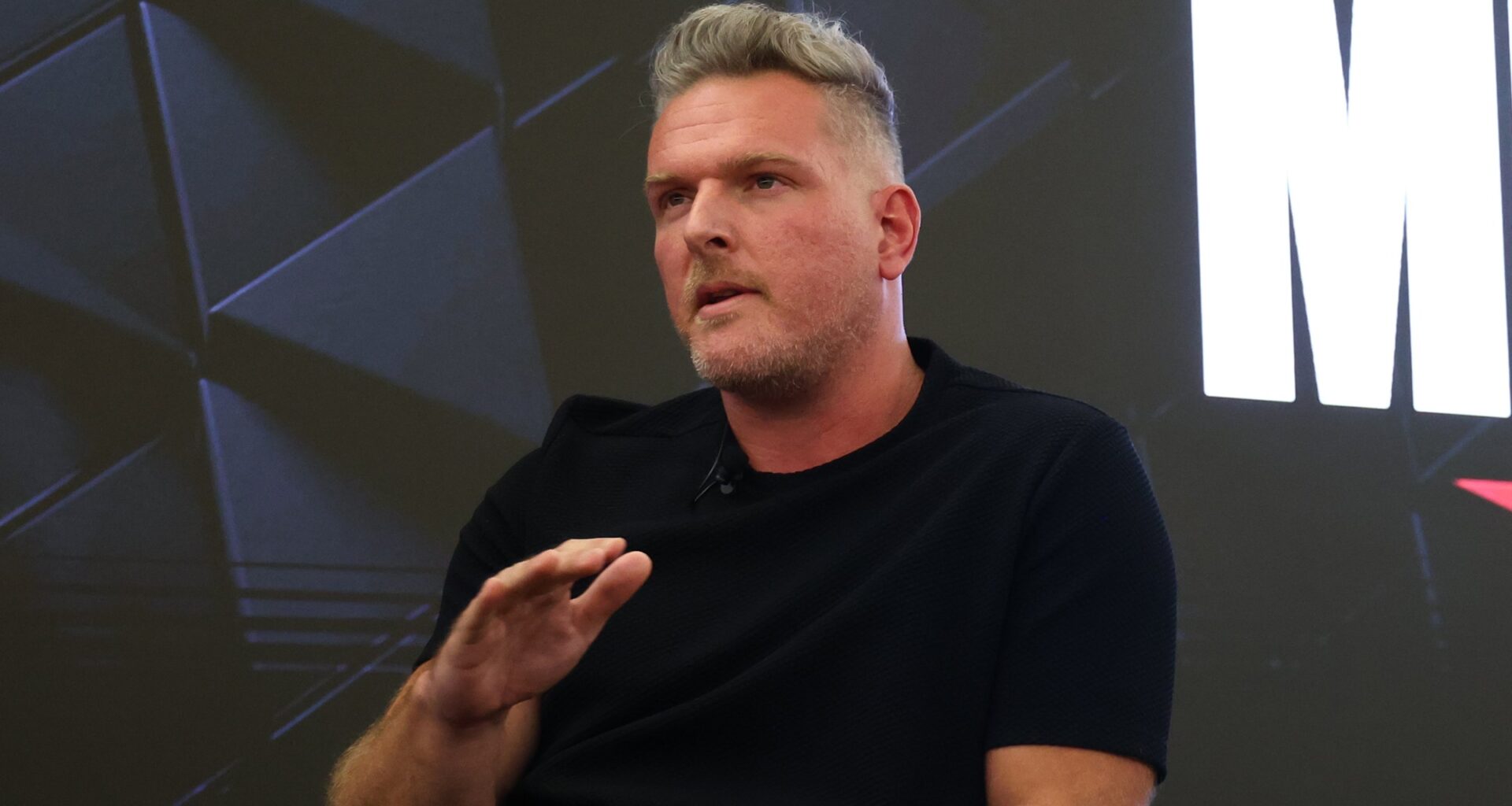

It’s hard to treat everyone the same when you’re in a managerial role. Typically, certain talents receive better treatment than others based on several factors. Big performers get perks, while the rest strive to reach their level. It’s nearly impossible to manage all talent the same way in any media environment. That’s where ESPN has struggled with its oversight, if any, of The Pat McAfee Show.
When the network gave up any creative influence on the program, it revealed a different side of ESPN that audiences had never seen. How could a brand allow creative freedom without guardrails at a network as large as ESPN? It was unique at the time and remains so today. The move set a precedent that large networks are willing to pay talent to “be them” and “do what they do best” rather than creating, building, and growing brands internally.
Now, that decision to give up any creative control is being tested again. The Pat McAfee Show announced plans to broadcast from the White House in conjunction with the UFC’s June 14 event. Will ESPN hold itself to the standards it previously established, or will it move forward because of a decision it already agreed to?
The honor of being showcased at the White House is nothing new. Teams, athletes, dignitaries, and celebrities have all graced the grounds of “the people’s house.” However, it’s no secret that the network has attempted to curb opportunities and content ideas tied to 1600 Pennsylvania Avenue in recent years, especially during the two elections of President Donald Trump.
Has ESPN visited the White House for a Final Four bracket the way it did during the Barack Obama administration? They sent the invite, but Trump declined.
Have several ESPN employees been suspended or left the company over political leanings or social media policies?
It’s no secret that ESPN has attempted to distance itself from the political lens as much as possible. Their message has been ESPN, not CNN. Sports, not politics. Games, not protests. Sports are cultural, while politics are real life.
That’s why giving up creative control is now an issue.
Last year, ESPN Radio and SEC Network host Paul Finebaum revealed to Outkick that in 2019 he pitched the idea of an exclusive interview with President Donald Trump. According to Finebaum, the discussion centered on Trump’s attendance at the upcoming LSU–Alabama game later that year. No politics, just sports.
“It was just about the idea of going to the White House to interview the President of the United States,” he said to Outkick. “And it wasn’t about politics, it was about, you’re coming to a football game. The biggest game of the year in college football, and I never exactly knew where the kill button came from, but it didn’t happen.”
A week after that interview with Outkick, Finebaum did not make his weekly appearances on First Take, SportsCenter or Get Up on ESPN. While the network denied allegations that Finebaum was suspended following the interview’s release, the absence was noticeable. Finebaum did, however, continue hosting his radio program on the SEC Network during that time and later resumed his weekly television appearances.
Still, the takeaway remains clear. Finebaum’s opportunity to interview the President of the United States at the White House in connection with a sporting event was denied.
In June, The Pat McAfee Show will broadcast live for two hours from the White House in connection with a sporting event. It also likely that Trump himself will make an extended appearance on the program, which airs on ESPN platforms.
Finebaum made his request in 2019. McAfee’s show is live in 2026. Has the standard changed, or did ESPN handcuff itself by giving up creative control?
McAfee is not an ESPN employee, while Finebaum is. However, both produce content for the network. If Stephen A. Smith made a similar request, would he be denied? What about Tony Kornheiser or Michael Wilbon? Would they receive the same response from ESPN brass?
Those are fair questions, and they highlight the situation ESPN has created for itself. It’s also not just about broadcasting from the White House or the near certainty of extended airtime with Trump. The business implications matter, too, especially when it comes to cross-promotion for the UFC and Paramount+.
The last time I checked, Paramount+ is a competitor of ESPN. Maybe I’m wrong, but I’m confident I’m not.
During Thursday’s interview with UFC President Dana White, both McAfee and White delivered extensive cross-promotion for the launch of the “Paramount+ era.” ESPN television featured more than 20 mentions of Paramount+, including multiple moments in which White explained why the Paramount+ experience is better than what viewers previously had. You know, with ESPN.
Is it a new day? Sure.
Do late-night talk show hosts appear on competitors’ programs? Of course.
However, allowing a guest on your airwaves to explain why their new partner is superior to the relationship they once had with you is another matter entirely. Yikes.
Between Trump’s presence and the likelihood that the broadcast turns into a two-hour infomercial for Paramount+ in June, does ESPN have any say in the matter? That’s the dilemma the network now faces, and it traces back to control.
ESPN President of Content Burke Magnus has often said that McAfee wants open dialogue with ESPN leadership. Magnus has also been McAfee’s strongest defender despite the headlines McAfee generates for all the wrong reasons. Viewership has not declined. Revenue continues to grow, and influence sits at an all-time high.
But at what cost? It’s difficult to maintain one standard for many and a different standard for a select few.
This is what happens when a network chooses leverage over leadership. By giving up creative control, ESPN didn’t just empower a show. It limited its own ability to say no. Once “no” leaves the table, every decision becomes reactive instead of intentional.
The contrast with Finebaum isn’t subtle, and neither is the message sent to the rest of the ESPN roster. Some voices get guardrails. Others get carte blanche. That approach may make business sense in the short term, but it erodes internal trust and external clarity.
ESPN created this situation, and now it has to live with it. Once standards depend on who’s asking, they stop being standards at all.
Barrett Media produces daily content on the music, news, and sports media industries. Sign up for our newsletters to stay updated and get the latest information right in your inbox.

John Mamola is Barrett Media’s sports editor and daily sports columnist. He brings over two decades of experience (Chicago, Tampa/St Petersburg) in the broadcast industry with expertise in brand management, sales, promotions, producing, imaging, hosting, talent coaching, talent development, web development, social media strategy and design, video production, creative writing, partnership building, communication/networking with a long track record of growth and success. He is a five-time recognized top 20 program director in a major market via Barrett Medi’s Top 20 series and has been honored internally multiple times as station/brand of the year (Tampa, FL) and employee of the month (Tampa, FL) by iHeartMedia. Connect with John by email at John@BarrettMedia.com.