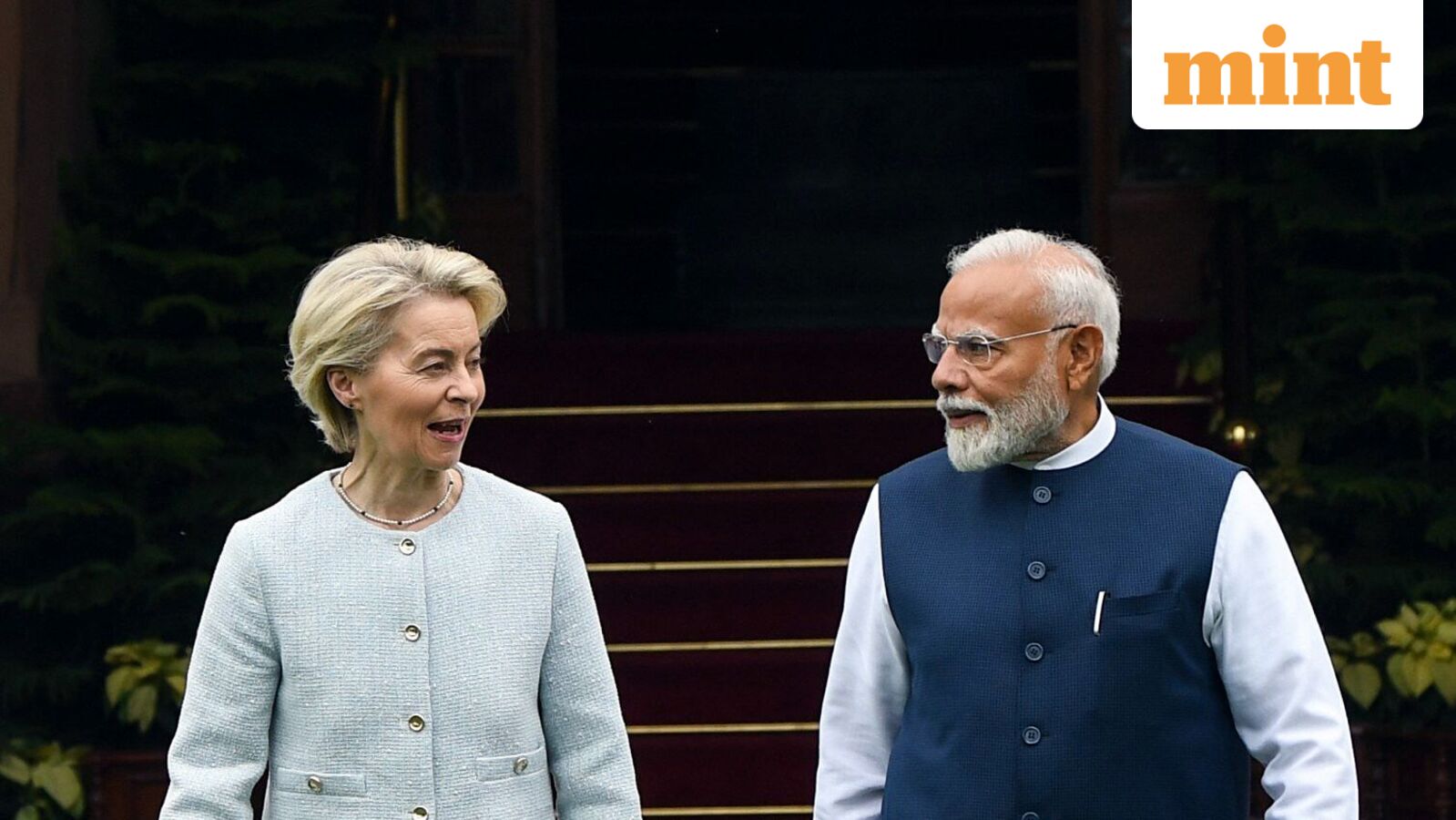
Negotiations between India and the European Union (EU) on their free trade agreement (FTA) are likely to end on 27 January (Tuesday), according to a Reuters report citing two sources each from the Indian and EU governments.
This FTA will pave the way for reduced tariffs on European cars and wine and expanded market for the Indian electronics, textiles and chemicals sectors, it added.
Notably, Prime Minister Narendra Modi is set to meet European Council President Antonio Costa and European Commission President Ursula von der Leyen from 25-28 January. Further, von der Leyen is also scheduled to co-chair an India-EU summit during the visit, the Indian government sources said.
The commerce ministry did not respond to queries, the report added.
The report noted that India’s key concerns outside of tariffs is the EU’s newly introduced carbon levies on imports of goods including steel, aluminium, cement, with industry experts saying there was little scope for relaxation.
“Duty-free access to the EU could help offset losses for Indian textile and jewellery exporters in the US. An India–EU FTA would cut tariffs on textiles, garments and leather, letting Indian exporters compete more evenly with Bangladesh and Vietnam,” Ajay Srivastava, founder of the Delhi-based think tank Global Trade Research Initiative, told Reuters, while noting regulatory hurdles remain.
(With inputs from Reuters)