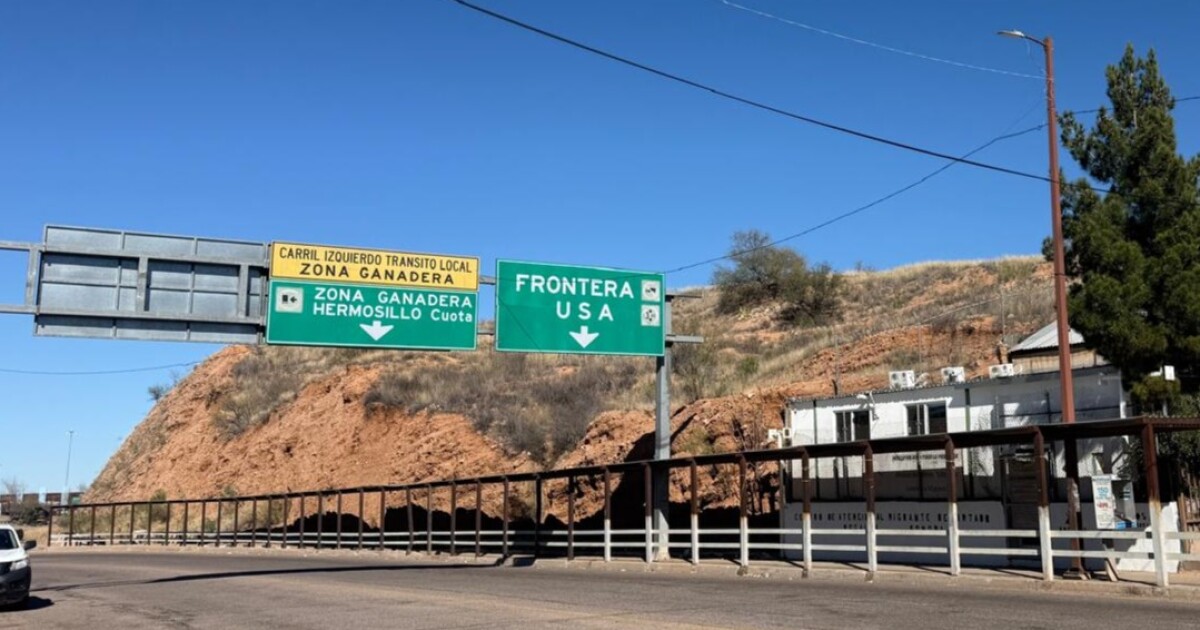
Just steps from the border, Yessica Minero and husband Antonio Acevedo sell tamales — sweet ones and savory ones, Salvadoran style — to drivers on their way to the United States.
They’ve set up shop underneath a highway sign reading “FRONTERA USA.” Minero said the drivers that pass sometimes shout to them, asking if they want a ride across. But the Salvadoran couple is stuck in Nogales, Sonora, Mexico, miles from where they came and just feet from where they meant to go.
“It’s incredible, but it’s true,” Minero said. “One year already.”
The couple has been at the border since they missed their Jan. 18 appointment to seek asylum with U.S. officials last year by a little more than an hour. It was the latest setback in a dangerous journey, largely on foot through Mexico, where they both got kidnapped.
Their appointment was rescheduled, but two days later, President Donald Trump canceled all those appointments on his first day in office. According to the Kino Border Initiative, more than 2,000 appointments were cancelled in Nogales that day. They haven’t restarted.
It’s been a year this week since Trump reentered office and issued a slew of Day 1 executive orders on immigration, bringing into question everything from asylum at the U.S.-Mexico border, to whether people born in the U.S. are guaranteed citizenship.
Now, Minero and Acevedo are turning to Mexico for safety. They’re two of thousands of migrants from around the world who, after being barred from seeking asylum in the United States last year, are filing asylum applications with the Mexican government.
Across the street at the Kino Border Initiative migrant shelter, tables and chairs are stacked unused next to a mural depicting soaring, open arms and a Psalm referring to God as a refuge.
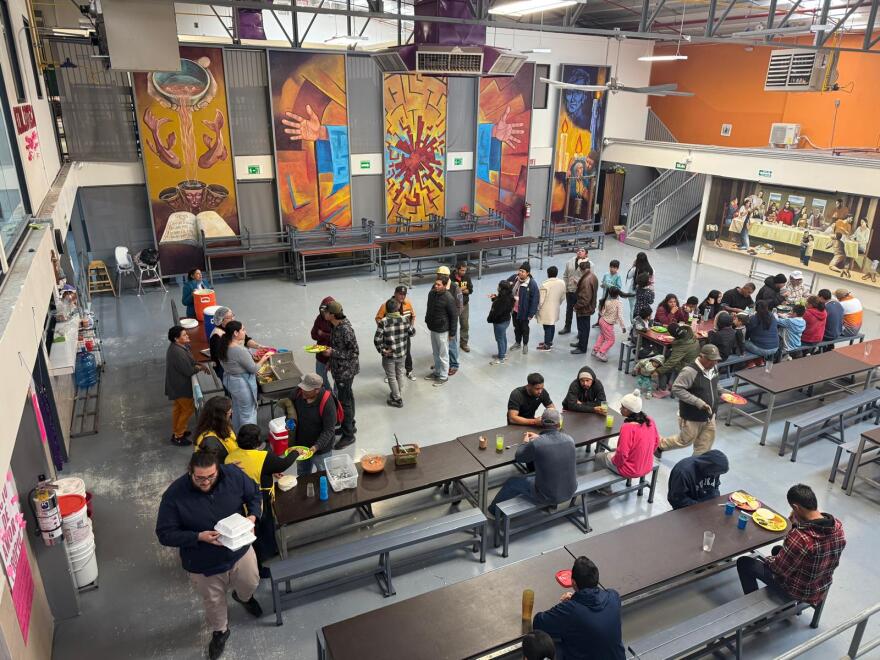
People line up for lunch at the Kino Border Initiative migrant shelter in Nogales, Sonora.
The remaining migrants who use this shelter’s services line up for lunch. Their numbers have dwindled, and many of the people who find themselves at the shelter these days are recent deportees from the United States. The flow of migrants to the U.S.-Mexico border has slowed almost to a halt over this past year.
Kino’s in-house lawyer, Rafael Cheé, started filing requests with Mexico for asylum seekers like Minero and Acevedo about a month after Trump’s inauguration.
He now has 14 active cases. In the 11 months since he opened the first, none of them have been resolved, despite the Mexican government’s promise to generally decide refugee claims within 45 days.
“They report a lot of desperation,” Cheé said of the migrants he represents.
Several of the asylum seekers he started working with at the beginning of the Trump administration have left the border and headed south. Some try to find informal work that doesn’t require documents in Mexico City or other parts of Mexico.
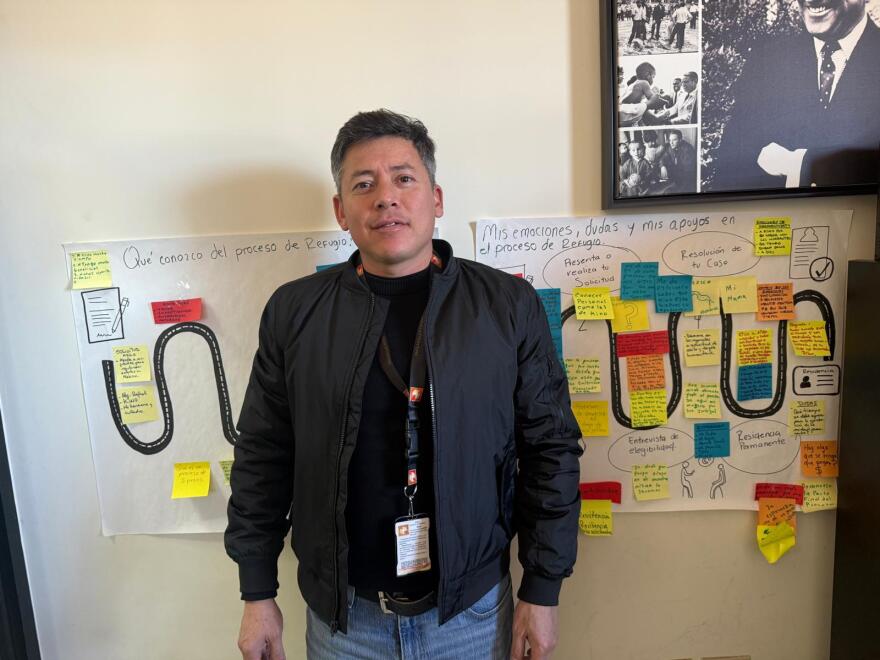
Kino Border Initiative lawyer Rafael Cheé stands next to posters describing how asylum seekers feel about their legal options for remaining in Mexico
The months have stretched on for Diego — KJZZ is using his first name because he says he left Ecuador after violent extortionists attacked him in his home. The civil engineer in his 60s hadn’t been in Mexico long enough to make an appointment to seek asylum in the United States before Trump ended them.
“Sometimes I wake up thinking, ‘Why did I do it? Why am I here?’” Diego said.
He makes an effort to stay positive despite the circumstances, which include being unable to work.
The Mexican government is supposed to provide temporary documents for asylum seekers whose claims are being processed. But the former leader of the country’s refugee agency told KJZZ last year that Mexico stopped issuing those documents a few years ago, under pressure from the Biden administration to stop the flow of migrants to the border.
A three-part Fronteras Desk series follows migrants on their asylum journeys.
So as Diego waits, he has no documents to work or move freely around the country. The engineer spends his days in the shelter, watching training videos on YouTube to try to stay prepared for a future job.
“This process isn’t easy,” Diego said. “You have to have patience.”
At Christmastime, his sister brought his dog, Blacky, to Nogales, more than a year after Diego sent the pet by plane ahead of him when he left Ecuador.
Now, Blacky lives in Arizona while Diego remains in Mexico. The dog barely recognized him at first, after the time apart, he said.

Diego has spent a year in Nogales, much of it waiting for asylum in Mexico after being barred from the United States.
Minero and Acevedo are also hoping for a reunion — with their daughter and granddaughters, who they left in southern Mexico more than a year ago when they realized how dangerous the journey north to the border would be.
Their daughter was able to get documents to work and move through Mexico. But there isn’t enough money to reunite, Minero says.
“Without papers, without anything, everything costs more,” Minero said.
They can barely afford the one room they rent in Nogales with the money they’re making selling food on the street.
If there’s no decision by this summer, Minero said, they plan to return to El Salvador — ending their long and dangerous journey back where they started.
“Either we risk our lives there, or we keep trying to hold on here,” Minero said.