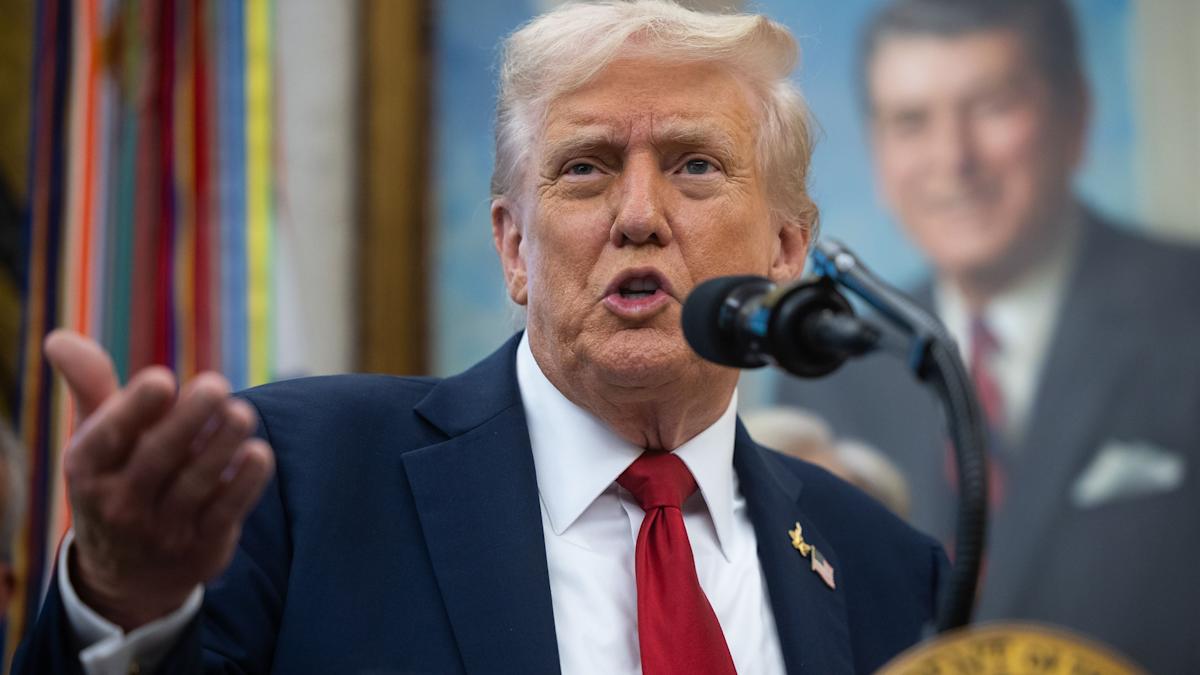

FRANCIS CHUNG / POOL / EPA / Shutterstock.com
Consumers and businesses hoping for a quick rollback of President Donald Trump’s tariffs have been handed a setback. The U.S. Supreme Court on Jan. 20 didn’t issue a ruling on pending challenges to most of the duties Trump imposed over the last year.
The wait means the controversial tariffs remain in place for now — leaving many Americans to wonder how an eventual decision will impact prices at grocery stores. Here’s what several money experts told GOBankingRates they expect.
“If the Supreme Court rules against the government, meaning tariffs are struck down, prices on many grocery items will decrease, but the lower prices won’t become a reality for shoppers for a while,” said Melanie Musson, a finance expert with Quote.com. “The supply chain takes time, and if a grocery store has already paid a supplier and that supplier has already paid the tariffs, the prices will stay where they are.”
If the Supreme Court rules in favor of the government, Musson noted, tariffs will likely remain in place and grocery prices for affected items will remain high.
Learn More: 4 Grocery Items That Have Gotten Much More Expensive Since Trump Took Office
Read Next: How Middle-Class Earners Are Quietly Becoming Millionaires — and How You Can, Too
According to Andrew Lokenauth, from Fluent in Finance, the Supreme Court decision matters because it determines whether these tariffs can be implemented through executive action or need congressional approval.
“If the Court sides with executive power, you’ll see price increases hit shelves in weeks, not months,” Lokenauth added. “Produce sections will be the first domino. Roughly 60% of fresh fruits and vegetables come from imports during winter months.”
Christopher Stroup, founder and president of Silicon Beach Financial, added that even if the tariffs target specific countries or products, supply chains are interconnected.
“Over time, higher input costs tend to push food prices higher, especially for packaged and imported items,” he noted.
So, what should you do as a consumer while waiting for the decision from the Supreme Court? Per Lokenauth, the playbook here is simple but not easy.
“Stock your pantry with non-perishables before implementation,” he advised. “Shift toward domestic produce when possible. And most important, build a buffer in your food budget now, before you’re forced to. Because once these tariffs hit, there’s no going back to old prices.”
Stroup said the best defense is flexibility.
“Keeping an emergency fund, avoiding lifestyle inflation and understanding how rising costs affect cash flow can make a big difference,” Stroup said. “This is where proactive financial planning helps to anticipate change rather than reacting after expenses creep higher.”