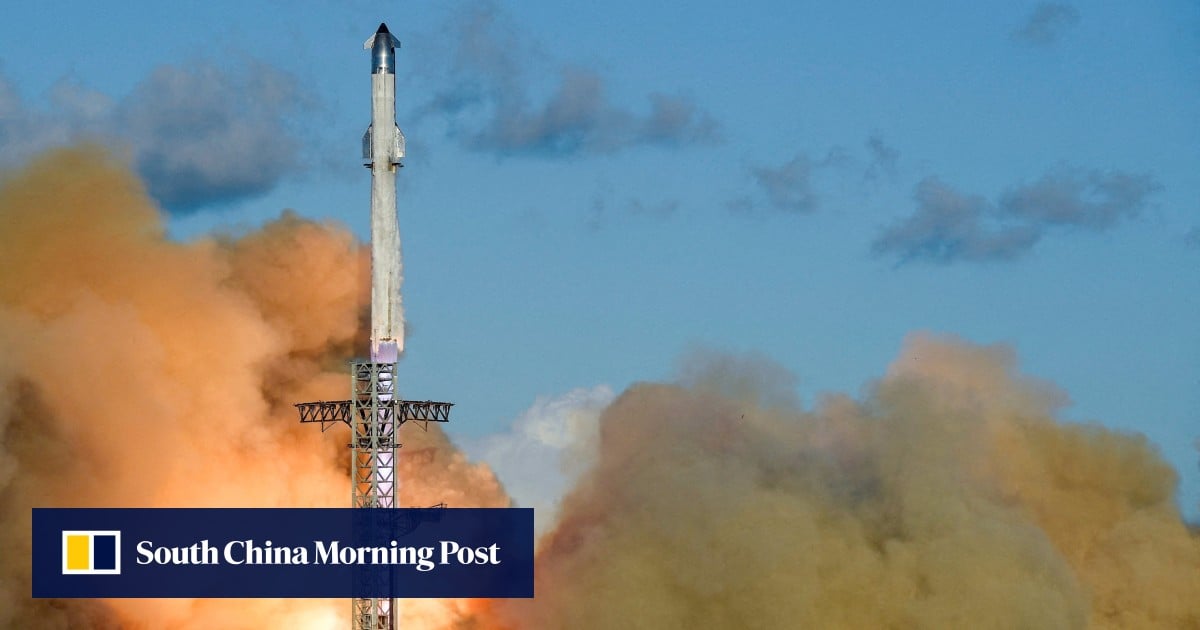
In 2022, the US Air Force Research Laboratory awarded Musk’s firm SpaceX a five-year contract to explore how Starship – which it is developing with the aim of creating the world’s largest and most powerful launch vehicle – could be used for “global rapid mobility”, which refers to the swift, efficient movement of troops and equipment across the world.
So far the concept is theoretical. But if it can be made a reality, it may reduce the US military’s reliance on overseas bases or aircraft carrier fleets and make existing air defences, such as missiles and early warning systems, obsolete.
This could also reshape “the traditional strategic balance” on the planet and herald the dawn of a new global power game, Beijing-based think tank Anbound said in a report issued on Tuesday, adding that China faced both a “challenge and opportunity”.
“[Starship’s] suborbital flight trajectory crosses the boundary between the atmosphere and near-Earth space, theoretically free from traditional airspace restrictions and difficult for existing defence systems to intercept or effectively constrain,” it added.
It predicted: “The emergence of this ‘sovereignty in orbit’ signals that great-power competition is shifting from horizontal geographic expansion to a contest for control over [launch] timing. Whoever masters the launch window will hold the initiative over timing.”