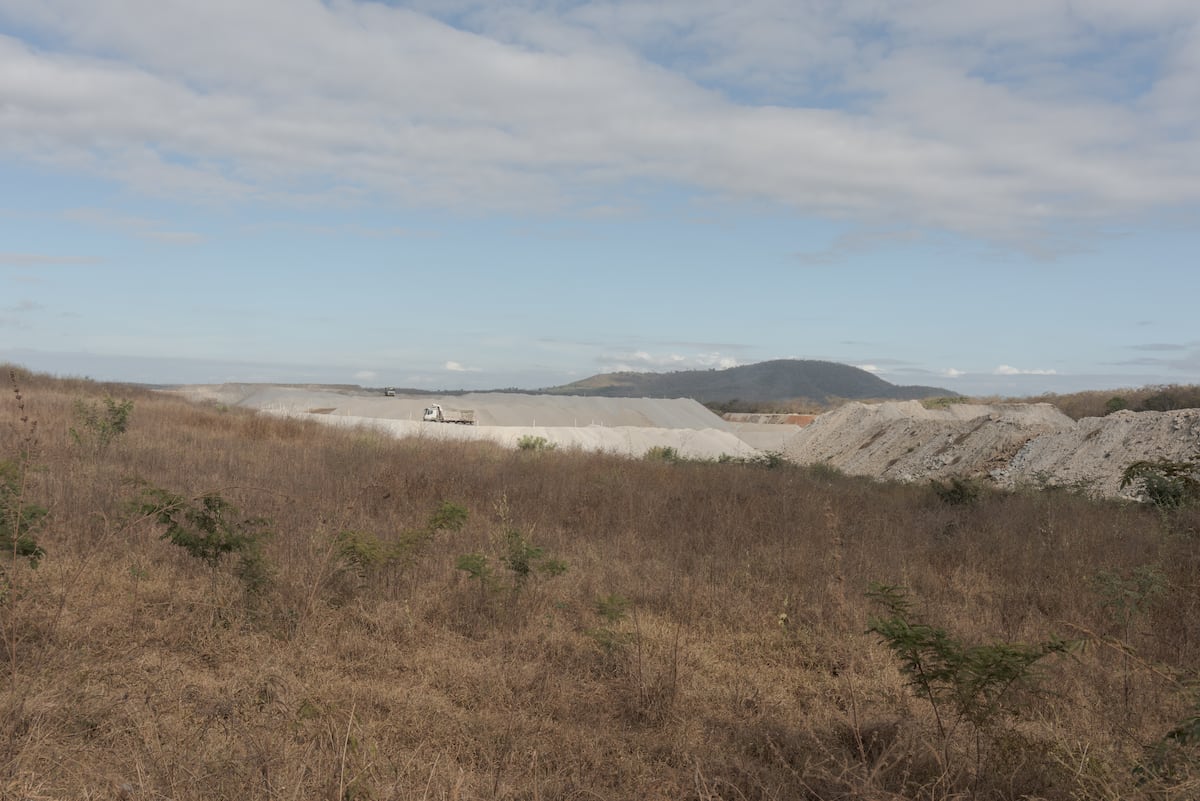
Among the natural resources that Brazil has exploited very little or not at all, critical minerals and rare earth elements have gained prominence in recent months. These materials are increasingly coveted globally because they are essential for achieving strategic autonomy, national security, and creating a new green economy. The United States and the European Union, among others, are courting the South American country with the aim of reaching an agreement to share this treasure. Brazil is among the top ten producers of nickel, manganese, niobium, iron ore, and bauxite and has rapidly gained ground in the production of lithium, natural graphite, rare earth elements, vanadium, and copper, according to a report by the consulting firm PwC.
The government of Luiz Inácio Lula da Silva is being courted with offers that would make it a strategic player in this new rush—like the gold rush before it and the oil rush now—for these contested mineral resources. The president has emphasized that his country does not want to be a mere supplier of strategic raw materials, but rather participate in the promising value chain.
Brazil has the second-largest reserves of rare earth elements, the 17 chemical elements most critical for the energy transition and essential for wind turbines and high-performance electric vehicles. While China possesses approximately 44 million tons, Brazil holds around 21 million tons and India nearly 7 million tons, according to the aforementioned PwC report, “Brazil in the Age of Critical Minerals.” Among the critical minerals in Brazil, the country’s reserves of graphite (26% of the world’s total), niobium (over 90%), nickel (12%), and lithium (5%) stand out.
Estimates indicate that global demand for graphite could quadruple and for rare earth elements could triple by 2040 if countries pursue the goals set in the Paris Agreement on climate change.
Brazil’s main obstacle in exploiting these coveted resources is that, until now, it has focused on extraction and export, leaving the higher value-added phases in the hands of third parties. Another recent study, “Strategic Minerals in Brazil: Production Opportunities and Integration into the Global Market,” by the Getúlio Vargas Foundation, states that the country has the opportunity to position itself as a reliable supplier, but points to a series of difficulties in realizing this potential: “The absence of large-scale rare earth projects, low participation in refining, financing difficulties, and regulatory uncertainties increase the risk that the country will miss the window of opportunity” that has opened up, given the growing demand and the desire to diversify a supply that China practically monopolizes at the moment.
The South American giant is already one of the world’s leading suppliers of iron ore, niobium —of which it owns 90% of the reserves, controlled by the Moreira Salles brothers, including Oscar-winning director Walter Salles—, bauxite, copper, manganese, to which lithium from the Jequitinhonha valley has recently been added.
Therefore, the Brazilian government is listening carefully to offers from other countries and is open to collaboration. The teams of Donald Trump and Lula have already held preliminary meetings to discuss rare earth elements as a result of the broader negotiations they are conducting regarding the tariffs the U.S. imposed on Brazil, and which it partially eased at the end of 2025. U.S. interest is such that Secretary of State Marco Rubio has convened a meeting with several countries on February 4 in Washington to discuss these valuable minerals. Neighboring Argentina, a close ally of Trump, quickly announced its participation.
On February 4, @SecRubio will welcome partners from across the globe to the State Department for the inaugural Critical Minerals Ministerial.
Strengthening critical mineral supply chains with our international partners is vital to America’s economic and national security,…
— Department of State (@StateDept) January 20, 2026
Contacts with the European Union are even more incipient. Commission President Ursula von der Leyen made Brussels’ interest in Brazil’s critical minerals clear when she mentioned them last week in Rio de Janeiro during her appearance alongside President Lula to celebrate the EU-Mercosur trade agreement. Brussels intends to reach an agreement with Brasilia to cooperate “on joint investment projects in lithium, nickel, and rare earth elements.” Von der Leyen emphasized the European Union’s need to achieve strategic independence, especially at a time when “minerals tend to become an instrument of coercion.” One of her vice-presidents, Stéphane Séjourné, is scheduled to visit Brazil soon to begin negotiations.
A comprehensive report by the Brazilian Institute of Mining, which represents companies in the sector, states that “with reserves of more than one hundred mineral substances, Brazil is on par with mineral powerhouses such as Australia, Canada, Russia, China, and South Africa.” And, with a simple example, it puts global demand into perspective. While manufacturing a conventional car requires about 100 grams of rare earth elements, an electric car demands between one and four kilograms.
Sign up for our weekly newsletter to get more English-language news coverage from EL PAÍS USA Edition