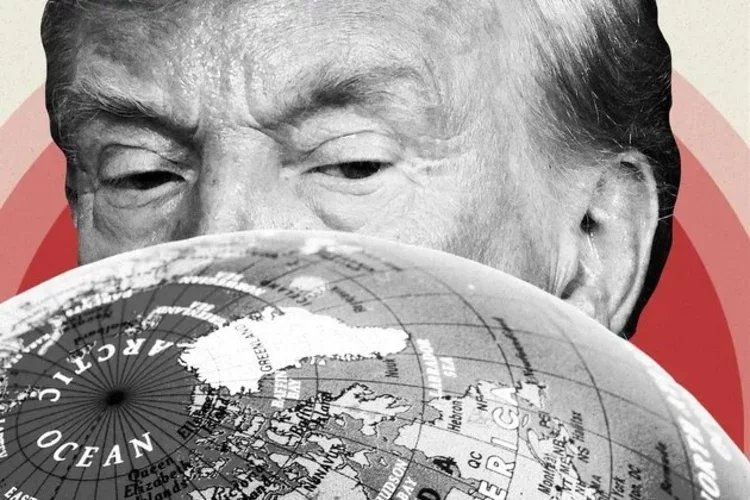
The United States is once again playing a high-stakes geopolitical game on multiple fronts. From trade wars to security architecture, from energy corridors to strategic territories, Washington is steadily expanding the boundaries of what it defines as its “vital interests.” Where the next decisive gain will be secured is still unclear. Yet one target is increasingly standing out from the rest — Greenland.
What once sounded like a provocative idea bordering on political eccentricity has now taken on the contours of a calculated strategy. The United States no longer hides its interest in Greenland’s natural resources, nor does it bother masking the logic behind its ambitions. Recent statements by U.S. Vice President J.D. Vance have removed any remaining ambiguity: if the United States provides Greenland’s security, then it should have a right to the island’s resources.
This argument reflects a broader shift in American strategic thinking. Security is no longer merely about protection; it has become a justification for ownership, access, and control. Vance’s reference to intercontinental missile threats and the destabilization of U.S. missile defense without control over the Arctic was not accidental. It was a clear attempt to frame Greenland not as a Danish territory with a distinct legal status, but as a critical node in America’s global defense architecture.
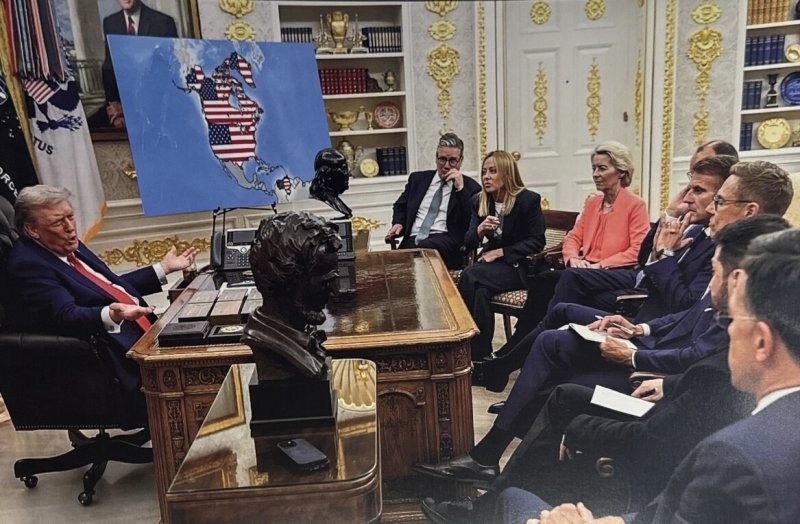
Source: @realDonaldTrump/Truth Social
Washington is also signaling that existing arrangements are no longer sufficient. The intention to revise the U.S.–Denmark defense agreement in order to remove restrictions on American deployment in Greenland suggests dissatisfaction not with military access, which the United States already enjoys, but with the limits imposed on political and territorial influence.
Donald Trump’s rhetoric fits seamlessly into this logic. By declaring the entire Western Hemisphere a zone of exclusive U.S. interests, he sent a message not only to Russia and China, but also to America’s own allies. Sovereignty, in this worldview, becomes negotiable when strategic necessity is invoked.
The announcement in Davos that a framework for a future Greenland deal already exists came as a shock precisely because it revealed how far discussions may have progressed behind closed doors. The fact that Denmark’s sovereignty over Greenland was reportedly not even discussed publicly only deepens the unease in European capitals.
Denmark finds itself trapped in a classic asymmetry of power. Officially, Copenhagen insists that sovereignty is non-negotiable. Unofficially, however, signals emerging from Western media suggest that compromises are already being explored, including the possible allocation of Greenlandic territory for expanded U.S. military bases. This is less a diplomatic choice than a reflection of geopolitical reality: small states rarely prevail when strategic interests of major powers collide.
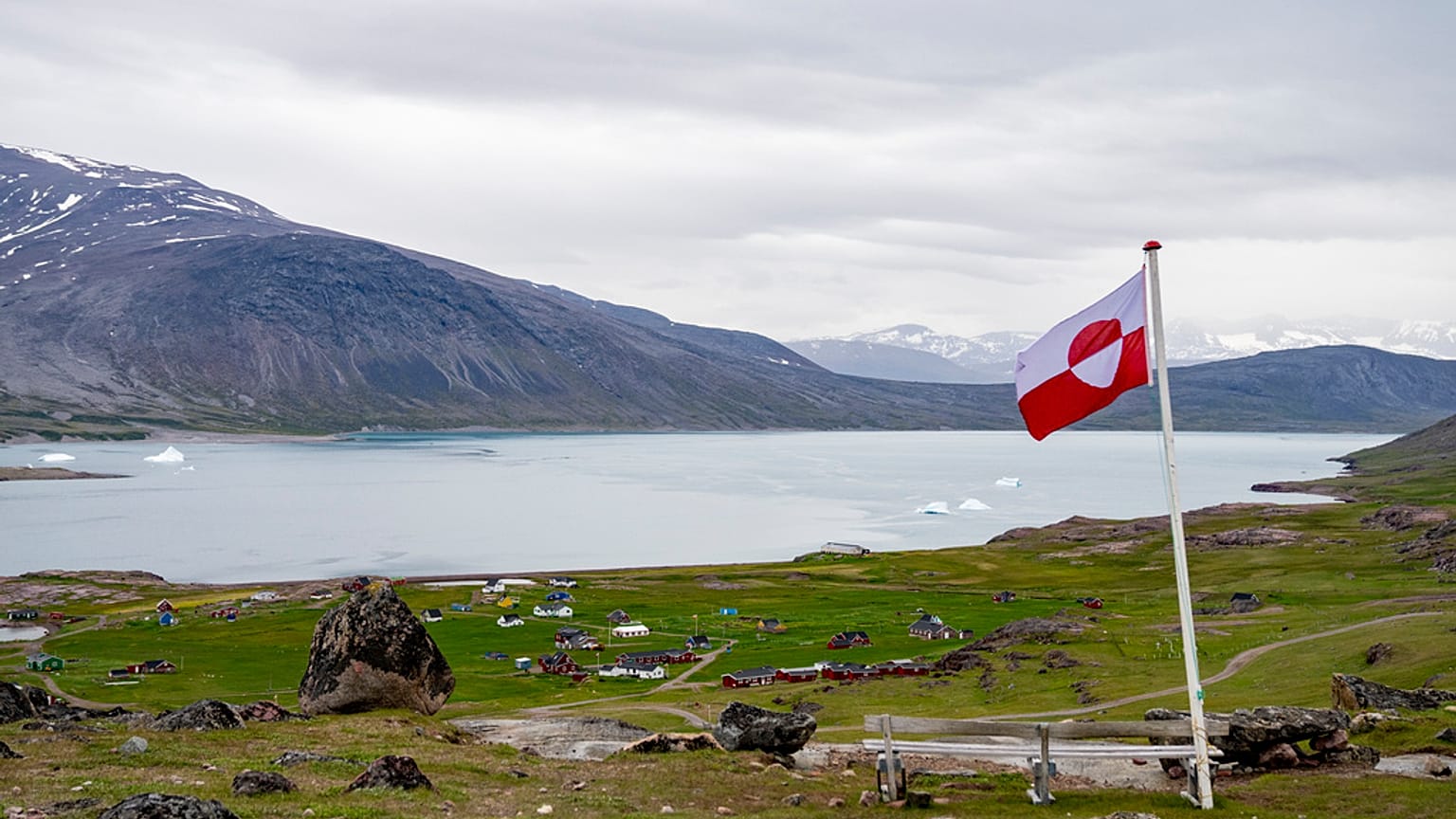
Source: Euronews
European attempts to counterbalance Washington’s ambitions appear hesitant and fragmented. Britain’s proposal to create an “Arctic Sentinel” mission may sound proactive, but it is unlikely to alter U.S. calculations. Surveillance missions do not compete with ownership, and monitoring shipping lanes does not offset control over land, airspace, and resources. Trump’s vision for Greenland is not about coordination — it is about leverage.
It is important to note that U.S. forces have been present in Greenland since World War II, operating under the 1951 agreement with Denmark. Yet this has never been enough for the current U.S. administration. Trump is not interested in leases or long-term basing arrangements. His logic is more radical: if America defends Greenland, it should own Greenland. This marks a significant departure from decades of U.S. practice, as Washington has never before openly questioned host nation ownership where American bases are located.
What has truly elevated Greenland’s status from a strategic outpost to a geopolitical prize is its resource potential. The island is now widely regarded as one of the most promising regions in the world for critical raw materials. Rare earth elements essential for batteries, electric vehicles, wind turbines, and advanced defense technologies are found there in globally significant quantities. Estimates suggest that Greenland alone could cover a substantial share of future global demand for key elements such as neodymium and dysprosium.
Climate change, paradoxically, is accelerating this geopolitical competition. Melting ice is gradually unlocking access to deposits that were previously unreachable. Advances in geological surveying have revealed formations that could rival the world’s largest reserves, including potential oil and gas basins comparable to those off Norway’s coast. What was once frozen and inaccessible is becoming strategically exploitable.
Seen through this lens, Greenland is no longer an Arctic periphery. It is a strategic asset at the intersection of defense, energy transition, and resource security. For Trump, whose worldview reduces geopolitics to leverage, assets, and transactions, the island represents an opportunity too valuable to ignore.
Despite resistance from European leaders, diplomatic protests from Paris, and cautious maneuvering from London, it is difficult to see who could realistically stop this trajectory. In today’s geopolitical climate, defined by power politics, resource competition, and strategic impatience, Greenland appears less like a Danish territory and more like the next frontier in America’s expanding sphere of influence.
Whether Europe is prepared to confront this reality remains an open question. What is already clear is that Greenland is no longer just about the Arctic. It is about the future rules of global power, and who gets to write them.
By Tural Heybatov