The United States considers South Korea capable of taking primary responsibility in deterring North Korea with “critical but more limited US support,” Pentagon’s new document on its National Defence Strategy says.
The report released on Friday says that the security of the US homeland is the department’s chief concern.
The document said that the Democratic People’s Republic of Korea (DPRK) poses a direct military threat to US allies South Korea and Japan. It asks South Korea to remain vigilant against an invasion as the country is capable of striking targets with “conventional and nuclear weapons as well as other weapons of mass destruction.”
It also says that the DPRK is increasingly capable of threatening the U.S Homeland as its forces are growing in size and sophistication.
The report says that South Korea taking primary responsibility is “the balance of responsibility consistent with America’s interest in updating U.S. force posture on the Korean Peninsula.” It said that this would ensure “a stronger and more mutually beneficial alliance relationship that is better aligned with America’s defense priorities, thereby setting conditions for lasting peace.”
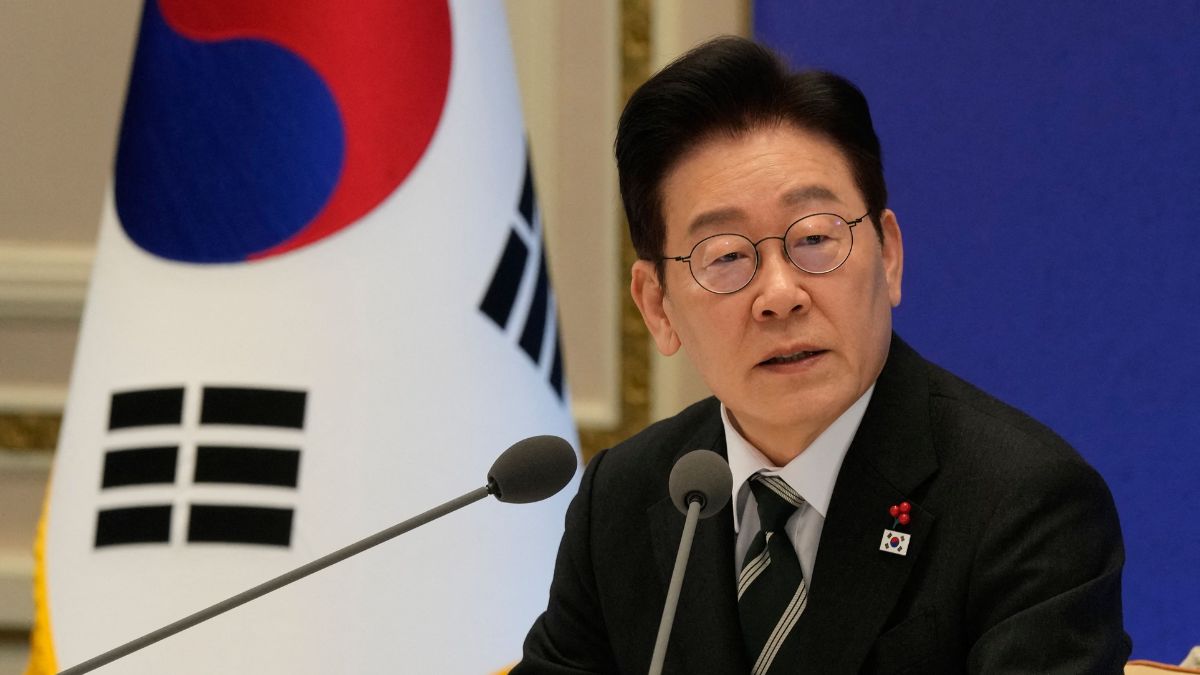
South Korean President Lee Jae Myung recently said that his government is committed to further expanding the country’s defence. During a New Year’s news conference, he said that “strategic autonomy and self-reliant national defence” are essential in an era of unpredictability.
The Pentagon document, however, makes no mention of denuclearisation, which was an explicit strategy pursued by the Biden adminsitration in 2022. The US instead seeks to manage the country’s nuclear arsenal rather than eliminating it.
The Pentagon document is part of what Washington calls “alliance mordernisation” under the Trump administration. The new strategy discusses how the US can increase burden sharing with its allies and partners and how it will “prioritize strengthening incentives for allies and partners to take primary responsibility for their own defence in Europe, the Middle East, and on the Korean Peninsula, with critical but limited support from U.S. forces”