On Monday, January 12, just over a week after the U.S. military operation that arrested Nicolás Maduro and shook Caracas, Venezuelan children returned to school after the Christmas break. What happened in the early hours of January 3 wasn’t discussed much in the classrooms, but it has been a recurring topic of conversation during recess. Venezuelan teenagers are already aware that they can get into trouble for speaking out: in recent months, several have been imprisoned on terrorism charges.
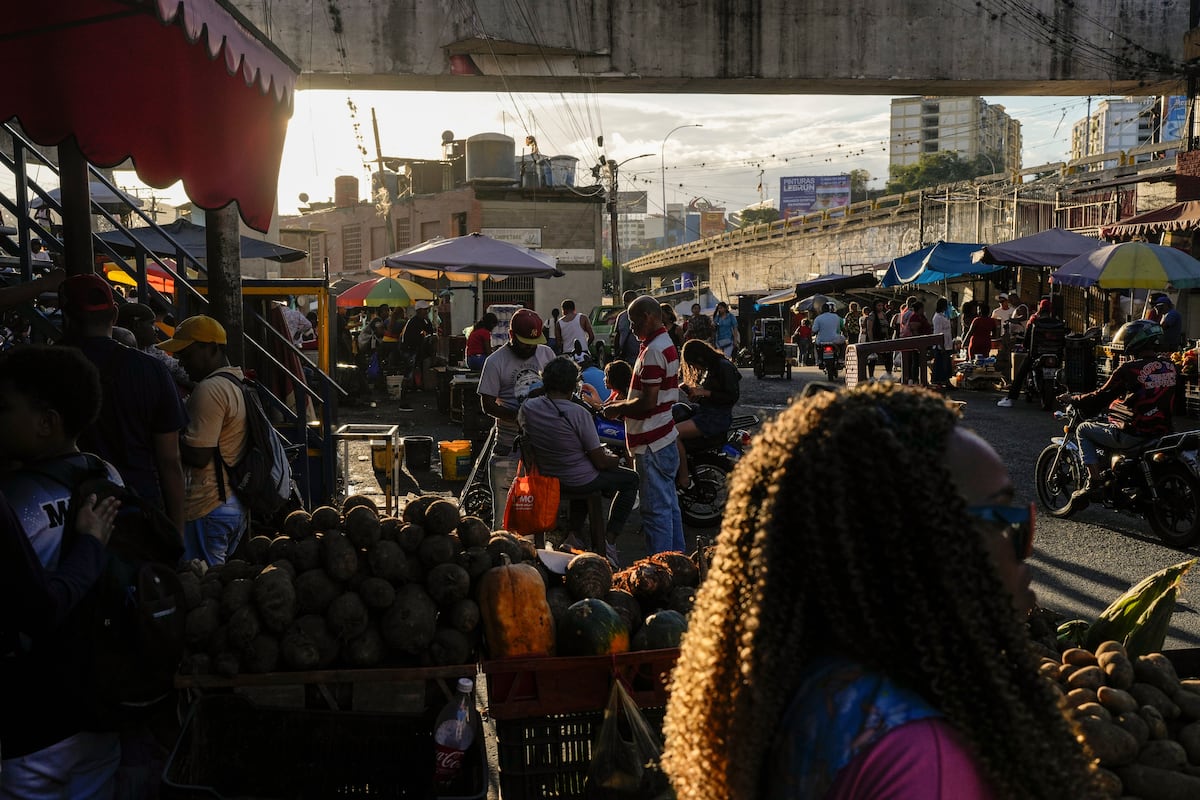
Venezuela’s new normal is marked by a paradox. The capture of Nicolás Maduro, the most powerful man in the country, in a U.S. commando operation worthy of a Hollywood script, has astonished the world and opened a chapter that will be discussed for decades. Yet inside Venezuela, Maduro’s capture has left people holding their breath. It is not a time for analysis or debates over responsibility: the rule is silence, caution, and a return to basic routines to ensure daily survival.
There is, strange as it may seem, a tacit consensus about this paradox both among regime officials and the general population. The ruling party — wounded but aware that it cannot escalate tensions with Washington — needs to project the idea that it still maintains political and territorial control of the country. Meanwhile, the Venezuelan people, unhappy and exhausted, waits while facing urgent economic pressures. It is still dealing with a long history of crises, repression, and shortages. Normality thus imposes itself as a forced meeting point.
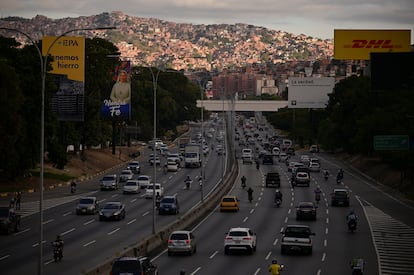 Traffic in Cilia Flores, Caracas, on January 12, 2026.Gaby Oraa (REUTERS)
After a few hours of panic buying and long lines at supermarkets, the supply of goods has fully normalized, as has the gasoline supply. State security forces are stationed in the main towns of the five municipalities in the metropolitan area, setting up checkpoints, checking people’s appearance, and inspecting cars and cell phones for material considered subversive. A dissenting remark about Maduro’s fate in a private conversation could be grounds for arrest.
Every day at 9 p.m., the political police and military counterintelligence officers take over the city. Many Venezuelans ignore them and remain indifferent to what is happening, but the streets have once again acquired, as in past crises, a ghostly appearance around midnight. Every morning, on their way to work, people use WhatsApp chats to find out the location of the checkpoints so they can try to avoid them.
“I’ve been driving around the city a lot these days, taking care of some personal business before work starts,” says Enrique Camero, a music teacher and resident of the Los Caobos neighborhood. “People are acting like nothing’s happened. Stores are open, people are shopping at a hardware store, a guy is fixing a car in the street, and my building’s condo board is discussing a fresh coat of paint the building needs,” he explains.
The call for this “normality” was made by Defense Minister Vladimir Padrino López, a pillar of the regime, just one day after Maduro’s capture. The general expressed the support of the Bolivarian National Armed Forces for the interim president, Delcy Rodríguez, and asked the population to resume “their normal work and educational activities” in the following days. Interior Minister Diosdado Cabello made a similar call shortly afterward.
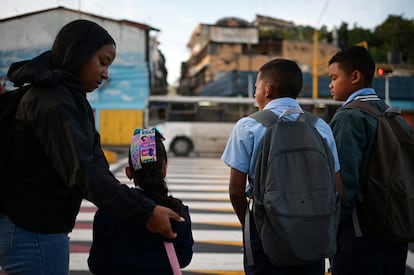 A mother takes her children to school in Caracas last Monday.Gaby Oraa (REUTERS)
Maduro supporters have taken to the streets on several occasions to demand his return, condemn the aggression, and denounce U.S. imperialism. At this particularly delicate moment, the ruling party is determined not to “lose the streets,” as many of its leaders privately admit. Pro‑government rallies typically occupy avenues in central and western Caracas, reinforced by swarms of motorbike riders who seek to amplify each turnout. State media dutifully broadcast these mobilizations, which are also taking place in other parts of the country.
At every protest there are people genuinely outraged, but attendance is effectively required of the entire public administration, with no room for indifference. Despite the mobilization, these gatherings are relatively modest and far from the mass popular pull Chavismo — the movement founded by former president Hugo Chávez — once commanded.
“I work from 6 a.m. until 10 p.m., Monday through Friday, and some Saturdays,” says Jairo, a taxi driver who asks that his real name not be published for fear of reprisals. “People from all walks of life get in here. As soon as they feel comfortable, they start talking about Maduro, gossiping about politics to try and find out something. I haven’t seen anyone upset. On the contrary, everyone is intrigued.”
Domestically, Delcy Rodríguez is doing everything necessary to make it clear that the regime remains in place and that Nicolás Maduro’s legacy endures. Efforts to secure his release are at the top of the Chavista agenda. Graffiti demanding Maduro be freed is beginning to appear in the streets. At the same time, the regime is trying to blunt the impact of the blow dealt by the United States by offering new “unilateral” concessions, such as the release of prisoners, as Jorge Rodríguez highlighted when referring to efforts to alleviate international pressure.
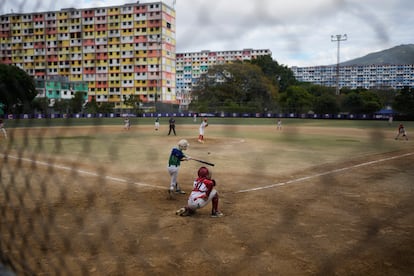 Children play baseball in Caracas, on June 10.Matias Delacroix (AP)
The tone of the Chavista leadership is now less arrogant. Calls for calm are growing. Diosdado Cabello, the most radical of the government leaders, justified the resumption of diplomatic relations with the United States, stating that it will allow them “to have channels to work for the release of Nicolás and Cilia [Flores, Maduro’s wife].” In a recent official announcement, it was reported that nearly 400 political prisoners have been released since December, including, several journalists
Meanwhile, arrests continue. Following the U.S. attack, 16 young people were detained in the eastern city of Barcelona, accused of terrorism for celebrating Maduro’s capture in the streets. They were released three days later after sustained appeals from family and friends. Since the aftermath of the 2024 presidential elections, fear of expressing opinions freely has become firmly entrenched among ordinary people. Now the fear is greater because the emergency decree in force since January 3 allows for detentions over any sign of joy or protest.
“We’ve already protested a lot; there are many people here who have seen repression like the devil,” says Henry Sáez, an accountant who also asks to remain anonymous. “There’s nothing left to do but wait. What can people do when you can be thrown in prison for anything you say?” he asks. “We’ll just have to wait. I think things are going to keep happening here.”
Sign up for our weekly newsletter to get more English-language news coverage from EL PAÍS USA Edition