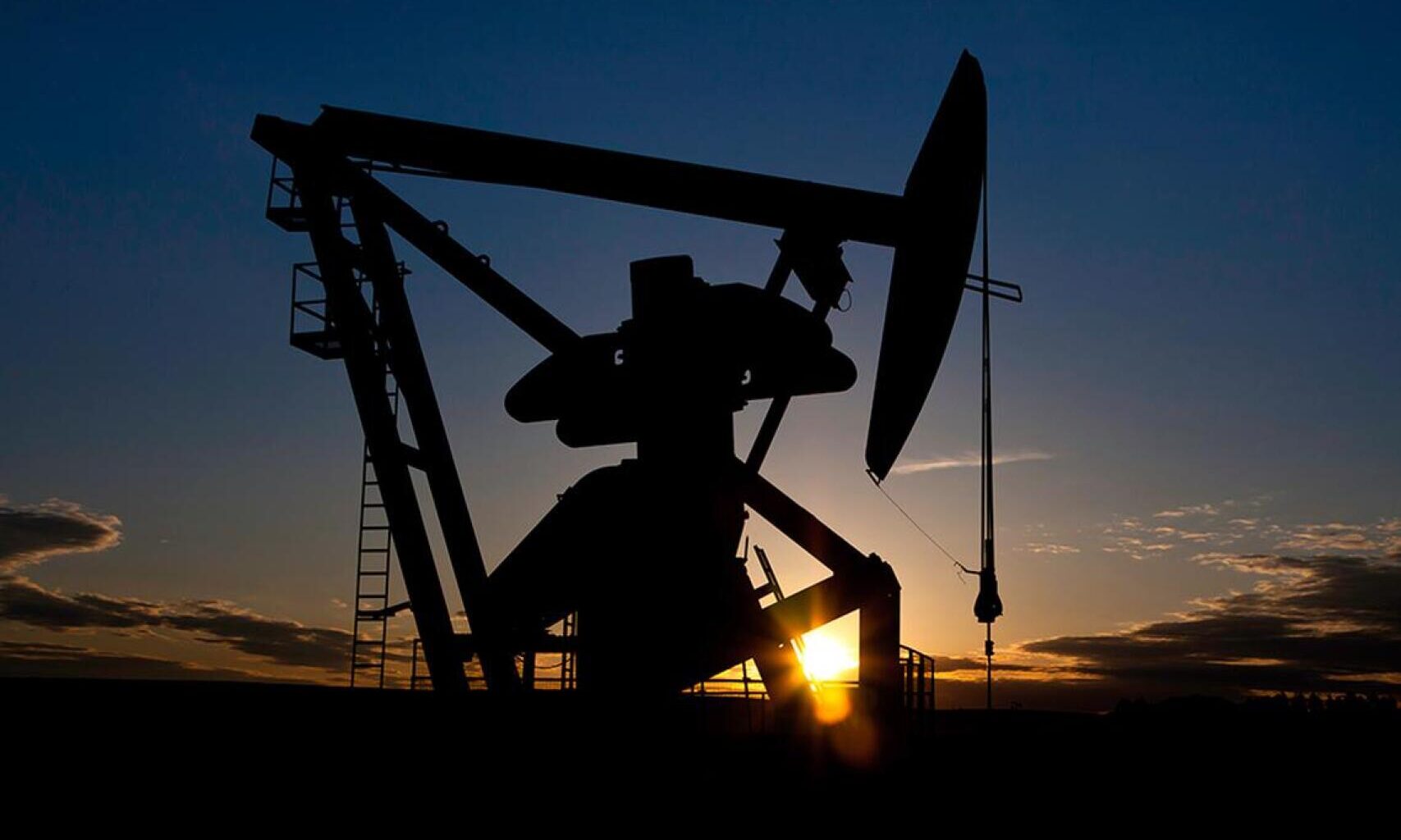
BISMARCK — A stop to oil drilling in North Dakota by one of the largest producers in the state will likely lead to layoffs but is “nothing new” to the industry, experts said.
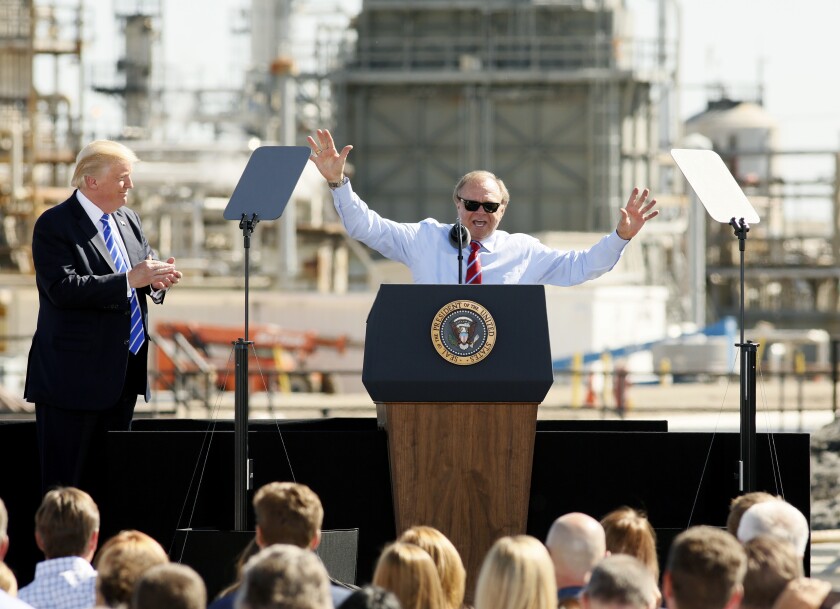
Harold Hamm, founder of Continental Resources, said his company plans to
stop drilling in North Dakota’s Bakken formation for the first time in 30 years
because of low crude oil prices, according to a Monday, Jan. 19, report.
At a North Dakota Industrial Commission meeting the next day, Gov. Kelly Armstrong said people should understand that Continental is not pulling up stakes in North Dakota.
“To be clear, this isn’t the first time an oil company has laid down rigs on infield drilling locations when they’re at a break-even point. … This happens a lot,” Armstrong said.
Nathan Anderson, director of the state Department of Mineral Resources, said Continental plans to halt its three drilling rigs by the end of February.
“They would evaluate whether they pick up rigs after that, based on where oil production is and where the economics are,” Anderson said at the meeting.
The financial break-even point for oil is anywhere from $50 to $65 a barrel, he said.
WTI crude oil futures extended losses to $59 a barrel on Thursday, Jan. 22, amid mounting evidence of an oversupplied market, an industry publication reported.
Ron Ness, president of the North Dakota Petroleum Council, said operations will continue on the 20,000 producing wells in the state, and this development related to drilling new wells is “nothing new.”
“We’ve had a good run in North Dakota in the Bakken, and it’s going to go through commodity downturns like this. That’s where we’re at today, and it looks like we’re going to be here for a while, possibly,” he told The Forum.
North Dakota is a major player in the U.S. oil industry, ranking third only to Texas and New Mexico, according to industry statistics.
The state relies heavily on tax revenues from the sale of oil and gas to fund vital infrastructure and other projects, so downturns in the market could impact state budgets.
When oil prices and activity levels drop, North Dakota needs to budget accordingly, which was done during the last legislative session,
Anderson said in a previous interview.
Forum file photo
Continental has a big footprint in North Dakota, second only to Chord Energy, headquartered in Houston, the largest operator in the Bakken, Ness said.
Chord has not publicly indicated its plans, he said, while other large companies such as ConocoPhillips, Exxon and Devon Energy might be able to reduce but not halt drilling activity.
Public companies will likely make such announcements at quarterly investor meetings in early to mid-February, he said.
North Dakota is not alone, with all oil basins seeing reductions in activity. Ness said the Permian Basin in Texas, which produces more than 5 million barrels of oil a day, is looking at a 15% drilling reduction.
The state has weathered downturns before, in 2009 and 2015, and in 2020 at the start of COVID-19 pandemic.
Exploration and drilling of new wells, a massive investment for oil companies, is important to the industry because well outputs decline over time, Ness said.
There are about 30 rigs drilling new wells currently in the state, a number that will begin to decline in the weeks to come with Continental’s moves, and possible reductions by other companies.
“They’re just pacing their new investments for a while, until they feel that outlook is better. A lot of people don’t want that oil produced at $45 to $50. They feel that oil’s worth $75 to $90 a barrel. If you produce it, you’ve got to sell it,” he said.
Forum News Service file photo
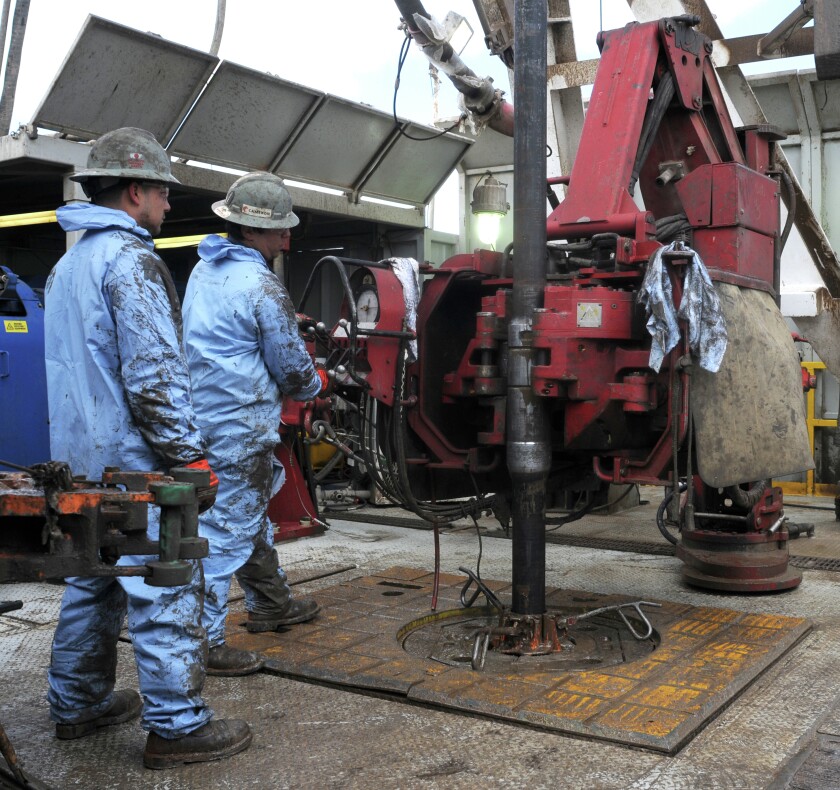
While it still takes tens of thousands of people to produce North Dakota’s typical 1.1 million barrels of oil each day, the exploration and drilling side of the industry employs the highest number of people, Ness said.
That workforce tends to be more transient, coming from all over the country and the world, he said, and is where there will likely be layoffs or consolidations, impacts that could be felt by March.
“It certainly is, hopefully, just a short term ramification of news like this,” he said.