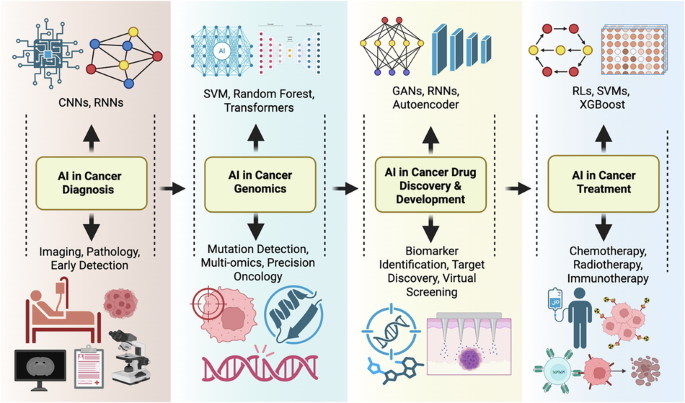
Upadhyay, A. Cancer: An unknown territory; rethinking before going ahead. Genes Dis. 8, 655–661 (2021).
Bourgeois, A. et al. Barriers to cancer treatment for people experiencing socioeconomic disadvantage in high-income countries: a scoping review. BMC Health Serv. Res. 24, 670 (2024).
Bray, F. et al. Global cancer statistics 2022: GLOBOCAN estimates of incidence and mortality worldwide for 36 cancers in 185 countries. CA Cancer J. Clin. 74, 229–263 (2024).
Majérus, M.-A. The cause of cancer: The unifying theory. Adv. Cancer Biol.—Metastasis 4, 100034 (2022).
Song, Q., Merajver, S. D. & Li, J. Z. Cancer classification in the genomic era: five contemporary problems. Hum. Genom. 9, 27 (2015).
Geéron A. Hands-on Machine Learning with Scikit-Learn and Tensor Flow: Concepts, Tools, and Techniques to Build Intelligent Systems (E-book, O’Reilly, 2017).
Basu, K., Sinha, R., Ong, A. & Basu, T. Artificial intelligence: how is it changing medical sciences and its future? Indian J. Dermatol. 65, 365–370 (2020).
Xu, Y. et al. Artificial intelligence: a powerful paradigm for scientific research. Innovation 2, 100179 (2021).
Rajpurkar, P., Chen, E., Banerjee, O. & Topol, E. J. AI in health and medicine. Nat. Med. 28, 31–38 (2022).
Yan, K., Wang, Y., Shao, Y. & Xiao, T. Gene Instability-Related lncRNA Prognostic Model of Melanoma Patients via Machine Learning Strategy. J Oncol 2021, 5582920 (2021).
LeCun, Y., Bengio, Y. & Hinton, G. Deep learning. Nature 521, 436–444 (2015).
Guo, L. et al. Random-forest algorithm based biomarkers in predicting prognosis in the patients with hepatocellular carcinoma. Cancer Cell Int. 20, 251 (2020).
Rajpurkar, P. et al. Deep learning for chest radiograph diagnosis: a retrospective comparison of the CheXNeXt algorithm to practicing radiologists. PLoS Med 15, e1002686 (2018).
Sebastian, A. M. & Peter, D. Artificial intelligence in cancer research: trends, challenges and future directions. Life 12, 1991 (2022).
Alowais, S. A. et al. Revolutionizing healthcare: the role of artificial intelligence in clinical practice. BMC Med. Educ. 23, 689 (2023).
Gillum, R. F. From papyrus to the electronic tablet: a brief history of the clinical medical record with lessons for the digital age. Am. J. Med. 126, 853–857 (2013).
Post, A. R., Burningham, Z. & Halwani, A. S. Electronic Health Record data in Cancer Learning Health Systems: challenges and opportunities. JCO Clin. Cancer Inf 6, e2100158 (2022).
Chen, X. et al. A CT-based radiomics nomogram for prediction of lung adenocarcinomas and granulomatous lesions in patient with solitary sub-centimeter solid nodules. Cancer Imaging 20, 45 (2020).
Beig, N. et al. Perinodular and intranodular radiomic features on lung CT images distinguish adenocarcinomas from granulomas. Radiology 290, 783–792 (2019).
Ardila, D. et al. End-to-end lung cancer screening with three-dimensional deep learning on low-dose chest computed tomography. Nat. Med. 25, 954–961 (2019).
Baldwin, D. R. et al. External validation of a convolutional neural network artificial intelligence tool to predict malignancy in pulmonary nodules. Thorax 75, 306–312 (2020).
Roth, H. R. et al. Improving computer-aided detection using convolutional neural networks and random view aggregation. IEEE Trans. Med. Imaging 35, 1170–1181 (2016).
Spadaccini, M. et al. Discovering the first US FDA-approved computer-aided polyp detection system. Future Oncol 18, 1405–1412 (2022).
Zhang, S. M., Wang, Y. J. & Zhang, S. T. Accuracy of artificial intelligence-assisted detection of esophageal cancer and neoplasms on endoscopic images: a systematic review and meta-analysis. J. Dig. Dis. 22, 318–328 (2021).
Baik, Y. S., Lee, H., Kim, Y. J., Chung, J. W. & Kim, K. G. Early detection of esophageal cancer: evaluating AI algorithms with multi-institutional narrowband and white-light imaging data. PLoS ONE 20, e0321092 (2025).
Bera, K., Schalper, K. A., Rimm, D. L., Velcheti, V. & Madabhushi, A. Artificial intelligence in digital pathology—new tools for diagnosis and precision oncology. Nat. Rev. Clin. Oncol. 16, 703–715 (2019).
Shebib, R. et al. Randomized controlled trial of a 12-week digital care program in improving low back pain. NPJ Digit. Med. 2, 1 (2019).
Saltz, J. et al. Spatial organization and molecular correlation of tumor-infiltrating lymphocytes using deep learning on pathology images. Cell Rep. 23, 181–93.e7 (2018).
Esteva, A. et al. Dermatologist-level classification of skin cancer with deep neural networks. Nature 542, 115–118 (2017).
Yu, L., Chen, H., Dou, Q., Qin, J. & Heng, P. A. Automated melanoma recognition in dermoscopy images via very deep residual networks. IEEE Trans. Med. Imaging 36, 994–1004 (2017).
Vasaikar, S. V., Straub, P., Wang, J. & Zhang, B. LinkedOmics: analyzing multi-omics data within and across 32 cancer types. Nucleic Acids Res. 46, D956–d63 (2018).
Wang, Y., Su, H., Lu, Y. & Li, H. Regulatory Role of Fatty Acid Metabolism-Related Long Noncoding RNA in Prostate Cancer: A Computational Biology Study Analysis. J Oncol 2023, 9736073 (2023).
Lee, J. S. et al. Harnessing synthetic lethality to predict the response to cancer treatment. Nat. Commun. 9, 2546 (2018).
Zhou, J. et al. Deep learning sequence-based ab initio prediction of variant effects on expression and disease risk. Nat. Genet. 50, 1171–1179 (2018).
Davis, R. J. et al. Pan-cancer transcriptional signatures predictive of oncogenic mutations reveal that Fbw7 regulates cancer cell oxidative metabolism. Proc. Natl. Acad. Sci. USA 115, 5462–5467 (2018).
Jaganathan, K. et al. Predicting splicing from primary sequence with deep learning. Cell 176, 535–48.e24 (2019).
Rahman, M. A. et al. Impact of artificial intelligence (AI) technology in healthcare sector: a critical evaluation of both sides of the coin. Clin. Pathol. 17, 2632010×241226887 (2024).
Sezgin, E., Huang, Y., Ramtekkar, U. & Lin, S. Readiness for voice assistants to support healthcare delivery during a health crisis and pandemic. NPJ Digit. Med. 3, 122 (2020).
Brill, T. M., Munoz, L. & Miller, R. J. Siri, Alexa, and other digital assistants: a study of customer satisfaction with artificial intelligence applications. In The Role of Smart Technologies in Decision Making (eds. Eleonora P. and Francesca S.) 35–70 (Routledge, 2022).
Woodman, R. J. & Mangoni, A. A. A comprehensive review of machine learning algorithms and their application in geriatric medicine: present and future. Aging Clin. Exp. Res. 35, 2363–2397 (2023).
Janiesch, C., Zschech, P. & Heinrich, K. Machine learning and deep learning. Electron. Mark. 31, 685–695 (2021).
Taye, M. M. Understanding of machine learning with deep learning: architectures, workflow, applications and future directions. Computers 12, 91 (2023).
Patil, S. et al. Reviewing the role of artificial intelligence in cancer. Asian Pac. J. Cancer Biol. 5, 189–199 (2020).
Moeskops, P. et al. (eds) Deep learning for multi-task medical image segmentation in multiple modalities. In International Conference on Medical Image Computing and Computer-assisted Intervention (Springer, 2016).
Al Sharkawy M. et al. Breast cancer detection using support vector machine technique applied on extracted electromagnetic waves. Appl. Comput. Electromagn. Soc. J. 292–301 (2012).
Li, M., Jiang, Y., Zhang, Y. & Zhu, H. Medical image analysis using deep learning algorithms. Front. Public Health 11, 1273253 (2023).
Wong, J., Horwitz, M. M., Zhou, L. & Toh, S. Using machine learning to identify health outcomes from electronic health record data. Curr. Epidemiol. Rep. 5, 331–342 (2018).
Yang, S., Varghese, P., Stephenson, E., Tu, K. & Gronsbell, J. Machine learning approaches for electronic health records phenotyping: a methodical review. J. Am. Med. Inf. Assoc. 30, 367–381 (2023).
Javaid, M., Haleem, A., Pratap Singh, R., Suman, R. & Rab, S. Significance of machine learning in healthcare: features, pillars and applications. Int. J. Intell. Netw. 3, 58–73 (2022).
Tayefi, M. et al. Challenges and opportunities beyond structured data in analysis of electronic health records. Wiley Interdiscip. Rev. Comput. Stat. 13, e1549 (2021).
Ngiam, K. Y. & Khor, I. W. Big data and machine learning algorithms for health-care delivery. Lancet Oncol 20, e262–e273 (2019).
Ahsan, M. M., Luna, S. A. & Siddique, Z. Machine-learning-based disease diagnosis: a comprehensive review. Healthcare (Basel) 10, 541 (2022).
Qasrawi, R. et al. The role of machine learning in infectious disease early detection and prediction in the MENA region: a systematic review. Inform. Med. Unlocked 56, 101651 (2025).
Mehta, J. & Majumdar, A. Rodeo: robust de-aliasing autoencoder for real-time medical image reconstruction. Pattern Recognit 63, 499–510 (2017).
Choudhary, K. et al. Recent advances and applications of deep learning methods in materials science. npj Comput. Mater. 8, 59 (2022).
Alzubaidi, L. et al. Review of deep learning: concepts, CNN architectures, challenges, applications, future directions. J. Big Data 8, 53 (2021).
Ahmed, S. F. et al. Deep learning modelling techniques: current progress, applications, advantages, and challenges. Artif. Intell. Rev. 56, 13521–13617 (2023).
Bengio, Y., Courville, A. & Vincent, P. Representation learning: a review and new perspectives. IEEE Trans. Pattern Anal. Mach. Intell. 35, 1798–1828 (2013).
Erfanian, N. et al. Deep learning applications in single-cell genomics and transcriptomics data analysis. Biomed. Pharmacother. 165, 115077 (2023).
Rainio, O. & Klén, R. Convolutional neural networks for tumor segmentation by cancer type and imaging modality: a systematic review. Netw. Model. Anal. Health Inform. Bioinform. 14, 58 (2025).
Gull, S., Akbar, S. & Khan, H. U. Automated detection of brain tumor through magnetic resonance images using convolutional neural network. BioMed. Res. Int. 2021, 3365043 (2021).
Alqazzaz, S. et al. Combined features in region of interest for brain tumor segmentation. J. Digit. Imaging 35, 938–946 (2022).
Ranjbarzadeh, R., Zarbakhsh, P., Caputo, A., Tirkolaee, E. B. & Bendechache, M. Brain tumor segmentation based on optimized convolutional neural network and improved chimp optimization algorithm. Comput. Biol. Med. 168, 107723 (2024).
Lin, W.-W. et al. 3D brain tumor segmentation using a two-stage optimal mass transport algorithm. Sci. Rep. 11, 14686 (2021).
Choi, E., Schuetz, A., Stewart, W. F. & Sun, J. Using recurrent neural network models for early detection of heart failure onset. J. Am. Med. Inf. Assoc. 24, 361–370 (2017).
Raval, D. & Undavia, J. N. A Comprehensive assessment of Convolutional Neural Networks for skin and oral cancer detection using medical images. Healthc. Anal. 3, 100199 (2023).
Chen, R., Stewart, W. F., Sun, J., Ng, K. & Yan, X. Recurrent neural networks for early detection of heart failure from longitudinal Electronic Health Record data: implications for temporal modeling with respect to time before diagnosis, data density, data quantity, and data type. Circ. Cardiovasc. Qual. Outcomes 12, e005114 (2019).
Hussain, J., Båth, M. & Ivarsson, J. Generative adversarial networks in medical image reconstruction: a systematic literature review. Comput. Biol. Med. 191, 110094 (2025).
Makhlouf, A., Maayah, M., Abughanam, N. & Catal, C. The use of generative adversarial networks in medical image augmentation. Neural Comput. Appl. 35, 24055–24068 (2023).
Alajaji, S. A. et al. Generative adversarial networks in digital histopathology: current applications, limitations, ethical considerations, and future directions. Mod. Pathol. 37, 100369 (2024).
Koshino, K. et al. Narrative review of generative adversarial networks in medical and molecular imaging. Ann. Transl. Med. 9, 821 (2021).
Nawab, K., Ramsey, G. & Schreiber, R. Natural language processing to extract meaningful information from patient experience feedback. Appl. Clin. Inf. 11, 242–252 (2020).
Maleki Varnosfaderani, S. & Forouzanfar, M. The role of AI in hospitals and clinics: transforming healthcare in the 21st century. Bioengineering (Basel, Switzerland) 11, 337 (2024).
Khurana, D., Koli, A., Khatter, K. & Singh, S. Natural language processing: state of the art, current trends and challenges. Multimed. Tools Appl. 82, 3713–3744 (2023).
Supriyono, W., Suyono, A. P. & Kurniawan, F. Advancements in natural language processing: implications, challenges, and future directions. Telemat. Inform. Rep. 16, 100173 (2024).
Serrano-Guerrero, J., Bani-Doumi, M., Chiclana, F., Romero, F. P. & Olivas, J. A. How satisfied are patients with nursing care and why? A comprehensive study based on social media and opinion mining. Inf. Health Soc. Care 49, 14–27 (2024).
Scharkow, M. Thematic content analysis using supervised machine learning: an empirical evaluation using German online news. Qual. Quant. 47, 761–773 (2013).
van Buchem, M. M. et al. Analyzing patient experiences using natural language processing: development and validation of the Artificial Intelligence Patient Reported Experience Measure (AI-PREM). BMC Med. Inf. Decis. Mak. 22, 183 (2022).
Javaid, M., Haleem, A., Singh, R. P. & Ahmed, M. Computer vision to enhance healthcare domain: an overview of features, implementation, and opportunities. Intell. Pharm. 2, 792–803 (2024).
Al-Oraiqat, A. M. et al. Method for determining treated metal surface quality using computer vision technology. Sensors 22, 6223 (2022).
Gumbs, A. A. et al. The advances in computer vision that are enabling more autonomous actions in surgery: a systematic review of the literature. Sensors (Basel, Switzerland) 22, 4918 (2022).
Dudek, P. et al. Sensor-level computer vision with pixel processor arrays for agile robots. Sci. Robot. 7, eabl7755 (2022).
Hassan, H. et al. Review and classification of AI-enabled COVID-19 CT imaging models based on computer vision tasks. Comput. Biol. Med. 141, 105123 (2022).
Wu, Z., Chen, Y., Zhao, B., Kang, X. & Ding, Y. Review of weed detection methods based on computer vision. Sensors 21, 3647 (2021).
Lee, J. O., Zhou, H. Y., Berzin, T. M., Sodickson, D. K. & Rajpurkar, P. Multimodal generative AI for interpreting 3D medical images and videos. NPJ Digit. Med. 8, 273 (2025).
Rani, K., Kumar, A., Kumar, S., Gupta, A. & Singh, A. Medical imaging using machine learning, computer vision and applications. Int. J. Eng. Sci. Emerg. Technol. 11, 260–268 (2023).
Sharma, A. et al. Computer vision based healthcare system for identification of diabetes & its types using AI. Meas. Sens. 27, 100751 (2023).
Awwad, S., Tarvade, S., Piccardi, M. & Gattas, D. J. The use of privacy-protected computer vision to measure the quality of healthcare worker hand hygiene. Int. J. Qual. Health Care 31, 36–42 (2019).
Wang, D. et al. Real world validation of an AI-based CT hemorrhage detection tool. Front. Neurol. 14, 1177723 (2023).
Buaka, E. S. D. & Moid, M. Z. I. AI and medical imaging technology: evolution, impacts, and economic insights. J. Technol. Transf. 49, 2260–2272 (2024).
Ali, H., Mohsen, F. & Shah, Z. Improving diagnosis and prognosis of lung cancer using vision transformers: a scoping review. BMC Med. Imaging 23, 129 (2023).
Eswaran, U. & Khang, A. Artificial intelligence (AI)-aided computer vision (CV) in healthcare system. In Computer Vision and AI-Integrated IoT Technologies in the Medical Ecosystem (eds. Alex K., Vugar A., Olena H. and Arvind K. S.) 125–137 (CRC Press, 2024).
Najar Najafi, N., Hajihassani, H. & Azimzadeh Irani, M. The impact of artificial intelligence on cancer diagnosis and treatment: a review. Cancer Inform 24, 11769351251371273 (2025).
Surur, F. M. et al. Unlocking the power of machine learning in big data: a scoping survey. Data Sci. Manag. 8, 519–535 (2025).
Taherdoost, H. Deep learning and neural networks: decision-making implications. Symmetry 15, 1723 (2023).
Chai, J., Zeng, H., Li, A. & Ngai, E. W. T. Deep learning in computer vision: a critical review of emerging techniques and application scenarios. Mach. Learn. Appl. 6, 100134 (2021).
Liang, M. et al. Low-dose CT screening for lung cancer: computer-aided detection of missed lung cancers. Radiology 281, 279–288 (2016).
Bi, W. L. et al. Artificial intelligence in cancer imaging: clinical challenges and applications. CA Cancer J. Clin. 69, 127–157 (2019).
Rastogi, D. et al. Deep learning-integrated MRI brain tumor analysis: feature extraction, segmentation, and survival prediction using replicator and volumetric networks. Sci. Rep. 15, 1437 (2025).
Zhao, X. et al. Deep bone oncology diagnostics: computed tomography based Machine learning for detection of bone tumors from breast cancer metastasis. J. Bone Oncol. 48, 100638 (2024).
Yuan, X. et al. Systematic review and meta-analysis of artificial intelligence for image-based lung cancer classification and prognostic evaluation. npj Precis. Oncol. 9, 300 (2025).
Yao, I. Z., Dong, M. & Hwang, W. Y. K. Deep learning applications in clinical cancer detection: a review of implementation challenges and solutions. Mayo Clin. Proc.: Digit. Health 3, 100253 (2025).
Das, S., Dey, M. K., Devireddy, R. & Gartia, M. R. Biomarkers in cancer detection, diagnosis, and prognosis. Sensors 24, 37 (2024).
Rusanov, B. et al. Guidance on selecting and evaluating AI auto-segmentation systems in clinical radiotherapy: insights from a six-vendor analysis. Phys. Eng. Sci. Med. 48, 301–316 (2025).
Sarkar, S., Teo, P. T. & Abazeed, M. E. Deep learning for automated, motion-resolved tumor segmentation in radiotherapy. npj Precis. Oncol. 9, 173 (2025).
Huang, J. et al. Application of artificial intelligence in medical imaging for tumor diagnosis and treatment: a comprehensive approach. Discov. Oncol. 16, 1625 (2025).
Fountzilas, E., Pearce, T., Baysal, M. A., Chakraborty, A. & Tsimberidou, A. M. Convergence of evolving artificial intelligence and machine learning techniques in precision oncology. npj Digit. Med. 8, 75 (2025).
Zhang, B., Shi, H. & Wang, H. Machine learning and AI in cancer prognosis, prediction, and treatment selection: a critical approach. J. Multidiscip. Health 16, 1779–1791 (2023).
Mohamed, A. A. et al. A deep learning method for classifying mammographic breast density categories. Med. Phys. 45, 314–321 (2018).
Arieno, A., Chan, A. & Destounis, S. V. A review of the role of augmented intelligence in breast imaging: from automated breast density assessment to risk stratification. Am. J. Roentgenol. 212, 259–270 (2019).
Yala, A., Lehman, C., Schuster, T., Portnoi, T. & Barzilay, R. A deep learning mammography-based model for improved breast cancer risk prediction. Radiology 292, 60–66 (2019).
Dembrower, K. et al. Comparison of a deep learning risk score and standard mammographic density score for breast cancer risk prediction. Radiology 294, 265–272 (2020).
Le Boulc’h, M. et al. Comparison of breast density assessment between human eye and automated software on digital and synthetic mammography: Impact on breast cancer risk. Diagn. Int. Imaging 101, 811–819 (2020).
Wu, G., Bajestani, N., Pracha, N., Chen, C. & Makary, M. S. Hepatocellular carcinoma surveillance strategies: major guidelines and screening advances. Cancers (Basel) 16, 3933 (2024).
McKinney, S. M. et al. International evaluation of an AI system for breast cancer screening. Nature 577, 89–94 (2020).
Dembrower, K. et al. Effect of artificial intelligence-based triaging of breast cancer screening mammograms on cancer detection and radiologist workload: a retrospective simulation study. Lancet Digit. Health 2, e468–e474 (2020).
Lennox-Chhugani, N., Chen, Y., Pearson, V., Trzcinski, B. & James, J. Women’s attitudes to the use of AI image readers: a case study from a national breast screening programme. BMJ Health Care Inform 28, e100293 (2021).
Eisemann, N. et al. Nationwide real-world implementation of AI for cancer detection in population-based mammography screening. Nat. Med. 31, 917–924 (2025).
Jiang, Y., Edwards, A. V. & Newstead, G. M. Artificial intelligence applied to breast MRI for improved diagnosis. Radiology 298, 38–46 (2021).
Feng, Q., Liu, Z. & Chen, C. L. P. Broad and deep neural network for high-dimensional data representation learning. Inf. Sci. 599, 127–146 (2022).
Cui, Z. & Grindrod, P. Mappings, dimensionality and reversing out of deep neural networks. IMA J. Appl. Math. 89, 2–11 (2024).
Sarker, I. H. Deep learning: a comprehensive overview on techniques, taxonomy, applications and research directions. SN Comput. Sci. 2, 420 (2021).
Javid, A. M., Venkitaraman, A., Skoglund, M. & Chatterjee, S. High-dimensional neural feature design for layer-wise reduction of training cost. EURASIP J. Adv. Signal Process. 2020, 40 (2020).
Singh, R., Wu, W., Wang, G. & Kalra, M. K. Artificial intelligence in image reconstruction: the change is here. Phys. Med. 79, 113–125 (2020).
Shen, L., Zhao, W. & Xing, L. Patient-specific reconstruction of volumetric computed tomography images from a single projection view via deep learning. Nat. Biomed. Eng. 3, 880–888 (2019).
Venkadesh, K. V. et al. Deep learning for malignancy risk estimation of pulmonary nodules detected at low-dose screening CT. Radiology 300, 438–447 (2021).
Kniep, H. C. et al. Radiomics of brain MRI: utility in prediction of metastatic tumor type. Radiology 290, 479–487 (2019).
Fan, S. et al. Computed tomography-based radiomic features could potentially predict microsatellite instability status in stage II colorectal cancer: a preliminary study. Acad. Radiol. 26, 1633–1640 (2019).
Tseng, L. J., Matsuyama, A. & MacDonald-Dickinson, V. Histology: the gold standard for diagnosis? Can. Vet. J. 64, 389–391 (2023).
Aljehani, M. R. et al. The importance of histopathological evaluation in cancer diagnosis and treatment. Int. J. Health Sci. 7, 3614–3623 (2023).
Yang, Z. et al. A foundation model for generalizable cancer diagnosis and survival prediction from histopathological images. Nat. Commun. 16, 2366 (2025).
Singh, N. N., Tandon, A. & Jayasankar, P. Strength, weakness, opportunities and challenges (SWOC) experience of histopathology image analysis, enhanced by artificial intelligence. J. Oral. Biol. Craniofacial Res. 15, 1057–1063 (2025).
Fatima, G. et al. Transforming diagnostics: a comprehensive review of advances in digital pathology. Cureus 16, e71890 (2024).
Campanella, G. et al. Clinical-grade computational pathology using weakly supervised deep learning on whole slide images. Nat. Med. 25, 1301–1309 (2019).
Viswanathan, V. S., Toro, P., Corredor, G., Mukhopadhyay, S. & Madabhushi, A. The state of the art for artificial intelligence in lung digital pathology. J. Pathol. 257, 413–429 (2022).
Eloy, C. et al. Artificial intelligence-assisted cancer diagnosis improves the efficiency of pathologists in prostatic biopsies. Virchows Arch 482, 595–604 (2023).
Wong, A. N. N. et al. Current developments of artificial intelligence in digital pathology and its future clinical applications in gastrointestinal cancers. Cancers (Basel) 14, 3780 (2022).
Salvi, M., Acharya, U. R., Molinari, F. & Meiburger, K. M. The impact of pre- and post-image processing techniques on deep learning frameworks: a comprehensive review for digital pathology image analysis. Comput. Biol. Med. 128, 104129 (2021).
Ehteshami Bejnordi, B. et al. Diagnostic assessment of deep learning algorithms for detection of lymph node metastases in women with breast cancer. JAMA 318, 2199–2210 (2017).
Oiseth, S. J. & Aziz, M. S. Cancer immunotherapy: a brief review of the history, possibilities, and challenges ahead. J Cancer Metastasis Treat 3, 250–61 (2017).
Sirinukunwattana, K. et al. Gland segmentation in colon histology images: the glas challenge contest. Med. Image Anal. 35, 489–502 (2017).
Liu, Y. et al. Detecting cancer metastases on gigapixel pathology images. arXiv preprint arXiv:170302442 (2017).
Wang, H. et al. Mitosis detection in breast cancer pathology images by combining handcrafted and convolutional neural network features. J. Med. Imaging (Bellingham) 1, 034003 (2014).
Soliman, A., Li, Z. & Parwani, A. V. Artificial intelligence’s impact on breast cancer pathology: a literature review. Diagn. Pathol. 19, 38 (2024).
Sandbank, J. et al. Validation and real-world clinical application of an artificial intelligence algorithm for breast cancer detection in biopsies. NPJ Breast Cancer 8, 129 (2022).
Pannala, R. et al. Artificial intelligence in gastrointestinal endoscopy. VideoGIE 5, 598–613 (2020).
Wang, Y. et al. Improved breast cancer histological grading using deep learning. Ann. Oncol. 33, 89–98 (2022).
Mantrala, S. et al. Concordance in breast cancer grading by artificial intelligence on whole slide images compares with a multi-institutional cohort of breast pathologists. Arch. Pathol. Lab. Med. 146, 1369–1377 (2022).
Tian, Y. et al. What makes for good views for contrastive learning? Advances in Neural Information Processing Systems 33, 6827–6839 (2020).
Abdulrazzaq, M. M. et al. Consequential advancements of self-supervised learning (SSL) in deep learning contexts. Mathematics 12, 758 (2024).
Espis, A., Marzi, C. & Diciotti, S. Comparative analysis of supervised and self-supervised learning with small and imbalanced medical imaging datasets. Sci. Rep. 15, 32345 (2025).
Richter, T., Bahrami, M., Xia, Y., Fischer, D. S. & Theis, F. J. Delineating the effective use of self-supervised learning in single-cell genomics. Nat. Mach. Intell. 7, 68–78 (2025).
Penarrubia, C., Valero-Mas, J. J. & Calvo-Zaragoza, J. Self-supervised learning for text recognition: a critical survey. Int. J. Comput. Vis. 133, 6221–6250 (2025).
Zhang, X. & Han, L. A generic self-supervised learning (SSL) framework for representation learning from spectral–spatial features of unlabeled remote sensing imagery. Remote Sens 15, 5238 (2023).
Ciga, O., Xu, T. & Martel, A. L. Self supervised contrastive learning for digital histopathology. Mach. Learn. Appl. 7, 100198 (2022).
Kang, X., Li, D. & Sun, R. Nanotechnology and natural killer cell immunotherapy: synergistic approaches for precise immune system adjustment and targeted cancer treatment in gastrointestinal tumors. Front. Med. (Lausanne) 12, 1647737 (2025).
Ashraf, F. B., Alam, S. M. & Sakib, S. M. Enhancing breast cancer classification via histopathological image analysis: leveraging self-supervised contrastive learning and transfer learning. Heliyon 10, e24094 (2024).
Hu, A. et al. The diagnosis and management of small and indeterminate lymph nodes in papillary thyroid cancer: preoperatively and intraoperatively. Front. Endocrinol. (Lausanne) 15, 1484838 (2024).
Tang, Q. et al. Preoperative MRI and CA19-9 for predicting occult lymph node metastasis in small pancreatic ductal adenocarcinoma (≤2 cm). BMC Med. Imaging 25, 318 (2025).
Huang, S. C. et al. Deep neural network trained on gigapixel images improves lymph node metastasis detection in clinical settings. Nat. Commun. 13, 3347 (2022).
Wang, R., Gu, Y., Zhang, T. & Yang, J. Fast cancer metastasis location based on dual magnification hard example mining network in whole-slide images. Comput. Biol. Med. 158, 106880 (2023).
Challa, B. et al. Artificial intelligence-aided diagnosis of breast cancer lymph node metastasis on histologic slides in a digital workflow. Mod. Pathol. 36, 100216 (2023).
Caldonazzi, N. et al. Value of artificial intelligence in evaluating lymph node metastases. Cancers (Basel) 15, 2491 (2023).
Steiner, D. F. et al. Impact of deep learning assistance on the histopathologic review of lymph nodes for metastatic breast cancer. Am. J. Surg. Pathol. 42, 1636–1646 (2018).
Liu, Y. et al. Artificial intelligence-based breast cancer nodal metastasis detection: insights into the black box for pathologists. Arch. Pathol. Lab. Med. 143, 859–868 (2019).
Bándi, P. et al. Continual learning strategies for cancer-independent detection of lymph node metastases. Med. Image Anal. 85, 102755 (2023).
Bhinder, B., Gilvary, C., Madhukar, N. S. & Elemento, O. Artificial intelligence in cancer research and precision medicine. Cancer Discov 11, 900–915 (2021).
Satam, H. et al. Next-generation sequencing technology: current trends and advancements. Biology (Basel) 12, (2023).
Sahoo, O. S. et al. Role of next-generation sequencing in revolutionizing healthcare for cancer management. MedComm–Future Med. 3, e70001 (2024).
Vashisht, V., Vashisht, A., Mondal, A. K., Woodall, J. & Kolhe, R. From genomic exploration to personalized treatment: next-generation sequencing in oncology. Current Issues Mol. Biol 46, 12527–12549 (2024).
Yap, T. A., Stadler, Z. K., Stout, L. A. & Schneider, B. P. Aligning germline cancer predisposition with tumor-based next-generation sequencing for modern oncology diagnosis, interception, and therapeutic development. Am. Soc. Clin. Oncol. Educ. Book 43, e390738 (2023).
Fang, Y. et al. Systematic Investigation of Tumor Microenvironment and Antitumor Immunity With IOBR. Med Research 1, 136–140 (2025).
Zhang, J., Li, H., Tao, W. & Zhou, J. GseaVis: An R Package for Enhanced Visualization of Gene Set Enrichment Analysis in Biomedicine. Med Research 1, 131–135 (2025).
Djuric, U., Zadeh, G., Aldape, K. & Diamandis, P. Precision histology: how deep learning is poised to revitalize histomorphology for personalized cancer care. NPJ Precis. Oncol. 1, 22 (2017).
Andre, F. et al. Genomics to select treatment for patients with metastatic breast cancer. Nature 610, 343–348 (2022).
Kato, S. et al. Real-world data from a molecular tumor board demonstrates improved outcomes with a precision N-of-One strategy. Nat. Commun. 11, 4965 (2020).
Chen, C. et al. Applications of multi-omics analysis in human diseases. MedComm 4, e315 (2023). (2020).
Correa-Aguila, R., Alonso-Pupo, N. & Hernández-Rodríguez, E. W. Multi-omics data integration approaches for precision oncology. Mol. Omics 18, 469–479 (2022).
Escaramís, G., Docampo, E. & Rabionet, R. A decade of structural variants: description, history and methods to detect structural variation. Brief. Funct. Genom. 14, 305–314 (2015).
Li, Y. et al. Patterns of somatic structural variation in human cancer genomes. Nature 578, 112–121 (2020).
Ho, S. S., Urban, A. E. & Mills, R. E. Structural variation in the sequencing era. Nat. Rev. Genet. 21, 171–189 (2020).
Pös, O. et al. Copy number variation: methods and clinical applications. Appl. Sci. 11, 819 (2021).
Kosugi, S. & Terao, C. Comparative evaluation of SNVs, indels, and structural variations detected with short- and long-read sequencing data. Hum. Genome Var. 11, 18 (2024).
Yang, L. A practical guide for structural variation detection in the human genome. Curr. Protoc. Hum. Genet. 107, e103 (2020).
Mahmoud, M. et al. Structural variant calling: the long and the short of it. Genome Biol 20, 246 (2019).
Ferlaino, M. et al. An integrative approach to predicting the functional effects of small indels in non-coding regions of the human genome. BMC Bioinform 18, 442 (2017).
Garraway, L. A. & Lander, E. S. Lessons from the cancer genome. Cell 153, 17–37 (2013).
Horak, P. et al. Standards for the classification of pathogenicity of somatic variants in cancer (oncogenicity): Joint recommendations of Clinical Genome Resource (ClinGen), Cancer Genomics Consortium (CGC), and Variant Interpretation for Cancer Consortium (VICC). Genet. Med. 24, 986–998 (2022).
Sessa, C. et al. Risk reduction and screening of cancer in hereditary breast-ovarian cancer syndromes: ESMO Clinical Practice Guideline. Ann. Oncol. 34, 33–47 (2023).
Calabrese, A., Von Arx, C., Tafuti, A., Pensabene, M. & De Laurentiis, M. Prevention, diagnosis and clinical management of hereditary breast cancer beyond BRCA1/2 genes. Cancer Treat. Rev. 129, 102785 (2024).
Chandrashekar, P. et al. Somatic selection distinguishes oncogenes and tumor suppressor genes. Bioinformatics 36, 1712–1717 (2020).
Dakal, T. C. et al. Oncogenes and tumor suppressor genes: functions and roles in cancers. MedComm 5, e582 (2024). (2020).
Singh, S. R. et al. Exploring the genetic orchestra of cancer: the interplay between oncogenes and tumor-suppressor genes. Cancer 17, 1082 (2025).
Schon, K. & Tischkowitz, M. Clinical implications of germline mutations in breast cancer: TP53. Breast Cancer Res. Treat. 167, 417–423 (2018).
Shah, S. A. et al. Explainable AI-based skin cancer detection using CNN, particle swarm optimization and machine learning. J. Imaging 10, 332 (2024).
Vilhekar, R. S. & Rawekar, A. Artificial Intelligence in Genetics. Cureus 16, e52035 (2024).
Ashayeri, H. et al. Transfer learning in cancer genetics, mutation detection, gene expression analysis, and syndrome recognition. Cancers (Basel) 16, 2138 (2024).
Tiwari, A., Mishra, S. & Kuo, T.-R. Current AI technologies in cancer diagnostics and treatment. Mol. Cancer 24, 159 (2025).
Liu, Q. & Hu, P. Extendable and explainable deep learning for pan-cancer radiogenomics research. Curr. Opin. Chem. Biol. 66, 102111 (2022).
Qi, Y., Zhao, T. & Han, M. The application of radiomics in predicting gene mutations in cancer. Eur. Radiol. 32, 4014–4024 (2022).
Bodalal, Z., Trebeschi, S., Nguyen-Kim, T. D. L., Schats, W. & Beets-Tan, R. Radiogenomics: bridging imaging and genomics. Abdom. Radiol. 44, 1960–1984 (2019).
Alam, M. R. et al. Recent applications of artificial intelligence from histopathologic image-based prediction of microsatellite instability in solid cancers: a systematic review. Cancers 14, 2590 (2022).
Kather, J. N. et al. Pan-cancer image-based detection of clinically actionable genetic alterations. Nat. Cancer 1, 789–799 (2020).
Fu, Y. et al. Pan-cancer computational histopathology reveals mutations, tumor composition and prognosis. Nat. Cancer 1, 800–810 (2020).
Oh, J. M. et al. U1 snRNP regulates cancer cell migration and invasion in vitro. Nat. Commun. 11, 1 (2020).
Coudray, N. et al. Classification and mutation prediction from non-small cell lung cancer histopathology images using deep learning. Nat. Med. 24, 1559–1567 (2018).
Yu, B. H. et al. The clinicopathological relevance of uniform CD56 expression in anaplastic large cell lymphoma: a retrospective analysis of 18 cases. Diagn. Pathol. 16, 1 (2021).
Kather, J. N. et al. Deep learning can predict microsatellite instability directly from histology in gastrointestinal cancer. Nat. Med. 25, 1054–1056 (2019).
Moore, G. W. K., Howell, S. E. L., Brady, M., Xu, X. & McNeil, K. Anomalous collapses of Nares Strait ice arches leads to enhanced export of Arctic sea ice. Nat. Commun. 12, 1 (2021).
Sirinukunwattana, K. et al. Image-based consensus molecular subtype (imCMS) classification of colorectal cancer using deep learning. Gut 70, 544–554 (2021).
Skrede, O. J. et al. Deep learning for prediction of colorectal cancer outcome: a discovery and validation study. Lancet 395, 350–360 (2020).
Chong, Y. et al. Recommendations for pathologic practice using digital pathology: consensus report of the Korean Society of Pathologists. J. Pathol. Transl. Med. 54, 437–452 (2020).
Štorkánová, H. et al. Plasma Hsp90 levels in patients with systemic sclerosis and relation to lung and skin involvement: a cross-sectional and longitudinal study. Sci. Rep. 11, 1 (2021).
Waarts, M. R., Stonestrom, A. J., Park, Y. C. & Levine, R. L. Targeting mutations in cancer. J. Clin. Investig. 132, e154943 (2022).
Mendiratta, G. et al. Cancer gene mutation frequencies for the U.S. population. Nat. Commun. 12, 5961 (2021).
Kafieh, R. Artificial Intelligence in Cancer, Biology and Oncology (MDPI—Multidisciplinary Digital Publishing Institute, 2024).
Shao, X. et al. Transfer learning-based PET/CT three-dimensional convolutional neural network fusion of image and clinical information for prediction of EGFR mutation in lung adenocarcinoma. BMC Med. Imaging 24, 54 (2024).
Dammak, S., Cecchini, M. J., Breadner, D. & Ward, A. D. Using deep learning to predict tumor mutational burden from scans of H&E-stained multicenter slides of lung squamous cell carcinoma. J. Med. Imaging 10, 017502 (2023).
Liang, C. W., Fang, P. W., Huang, H. Y. & Lo, C. M. Deep convolutional neural networks detect tumor genotype from pathological tissue images in gastrointestinal stromal tumors. Cancers 13, 5787 (2021).
Cao, R. et al. Development and interpretation of a pathomics-based model for the prediction of microsatellite instability in colorectal cancer. Theranostics 10, 11080–11091 (2020).
Su, Y. et al. Application of BERT to enable gene classification based on clinical evidence. BioMed. Res. Int. 2020, 5491963 (2020).
Aburass, S., Dorgham, O. & Al Shaqsi, J. A hybrid machine learning model for classifying gene mutations in cancer using LSTM, BiLSTM, CNN, GRU, and GloVe. Syst. Soft Comput. 6, 200110 (2024).
Sun, Y. et al. Identification of 12 cancer types through genome deep learning. Sci. Rep. 9, 17256 (2019).
Zhang, S. et al. Improvement in prediction of prostate cancer prognosis with somatic mutational signatures. J. Cancer 8, 3261–3267 (2017).
Shiao, S. P. K., Grayson, J., Lie, A. & Yu, C. H. Personalized nutrition—genes, diet, and related interactive parameters as predictors of cancer in multiethnic colorectal cancer families. Nutrients 10, 795 (2018).
Hui, X. et al. EBT: a statistic test identifying moderate size of significant features with balanced power and precision for genome-wide rate comparisons. Bioinformatics 33, 2631–2641 (2017).
Cho, H.-J., Lee, S., Ji, Y. G. & Lee, D. H. Association of specific gene mutations derived from machine learning with survival in lung adenocarcinoma. PLoS ONE 13, e0207204 (2018).
Farina, E., Nabhen, J. J., Dacoregio, M. I., Batalini, F. & Moraes, F. Y. An overview of artificial intelligence in oncology. Futur. Sci. OA 8, Fso787 (2022).
Passaro, A. et al. Cancer biomarkers: emerging trends and clinical implications for personalized treatment. Cell 187, 1617–1635 (2024).
Tufail, M., Jiang, C.-H. & Li, N. Wnt signaling in cancer: from biomarkers to targeted therapies and clinical translation. Mol. Cancer 24, 107 (2025).
Forghani, R. Precision digital oncology: emerging role of radiomics-based biomarkers and artificial intelligence for advanced imaging and characterization of brain tumors. Radiol. Imaging Cancer 2, e190047 (2020).
Chiu, F.-Y. & Yen, Y. Imaging biomarkers for clinical applications in neuro-oncology: current status and future perspectives. Biomark. Res. 11, 35 (2023).
Chen, M. M. et al. Artificial intelligence in oncologic imaging. Eur. J. Radiol. Open 9, 100441 (2022).
Pandey, P., Mayank, K. & Sharma, S. (eds) Bio-Marker Cancer Prediction System Using Artificial Intelligence. 2023 International Conference on Integration of Computational Intelligent System (ICICIS), 1–4 November 2023 (2023).
Quddusi, D. M. & Bajcinca, N. Identification of genomic biomarkers and their pathway crosstalks for deciphering mechanistic links in glioblastoma. IET Syst. Biol. 17, 143–161 (2023).
Liu, Y. H., Jin, H. Q. & Liu, H. P. Identification of T-cell exhaustion-related gene signature for predicting prognosis in glioblastoma multiforme. J. Cell. Mol. Med. 27, 3503–3513 (2023).
Zhou, J., Zeng, Z. Y. & Li, L. Progress of artificial intelligence in gynecological malignant tumors. Cancer Manag. Res. 12, 12823–12840 (2020).
Kourou, K., Exarchos, T. P., Exarchos, K. P., Karamouzis, M. V. & Fotiadis, D. I. Machine learning applications in cancer prognosis and prediction. Comput. Struct. Biotechnol. J. 13, 8–17 (2015).
Kawakami, E. et al. Application of artificial intelligence for preoperative diagnostic and prognostic prediction in epithelial ovarian cancer based on blood biomarkers. Clin. Cancer Res. 25, 3006–3015 (2019).
Lv, J., Liu, G., Dong, W., Ju, Y. & Sun, Y. ACDB: An Antibiotic Combination DataBase. Front. Pharm. 13, 869983 (2022).
Sarvepalli, S. & Vadarevu, S. Role of artificial intelligence in cancer drug discovery and development. Cancer Lett 627, 217821 (2025).
Bassey, G. E., Daniel, E. A., Okesina, K. B. & Odetayo, A. F. Transformative role of artificial intelligence in drug discovery and translational medicine: innovations, challenges, and future prospects. Drug Des. Dev. Ther. 19, 7493–7502 (2025).
Long, X. et al. Artificial intelligence and anti-cancer drugs’ response. Acta Pharm. Sin. B 15, 3355–3371 (2025).
Abou Hajal, A. & Al Meslamani, A. Z. Insights into artificial intelligence utilisation in drug discovery. J. Med. Econ. 27, 304–308 (2024).
Serrano, D. R. et al. Artificial intelligence (AI) applications in drug discovery and drug delivery: revolutionizing personalized medicine. Pharmaceutics 16, 1328 (2024).
Hopkins, A. L. & Groom, C. R. The druggable genome. Nat. Rev. Drug Discov. 1, 727–730 (2002).
Lin, Q., Tam, P. K. & Tang, C. S. Artificial intelligence-based approaches for the detection and prioritization of genomic mutations in congenital surgical diseases. Front. Pediatr. 11, 1203289 (2023).
Chen, W., Liu, X., Zhang, S. & Chen, S. Artificial intelligence for drug discovery: resources, methods, and applications. Mol. Ther. Nucleic Acids 31, 691–702 (2023).
Qiu, X., Li, H., Ver Steeg, G. & Godzik, A. Advances in AI for protein structure prediction: implications for cancer drug discovery and development. Biomolecules 14, 339 (2024).
Knox, C. et al. DrugBank 6.0: the DrugBank knowledgebase for 2024. Nucleic Acids Res 52, D1265–D1275 (2024).
Lv, J., Liu, G., Ju, Y., Huang, H. & Sun, Y. AADB: a manually collected database for combinations of antibiotics with adjuvants. IEEE/ACM Trans. Comput. Biol. Bioinform. 20, 2827–2836 (2023).
Kim, S. et al. PubChem 2025 update. Nucleic Acids Res 53, D1516–d25 (2025).
Fahimian, G., Zahiri, J., Arab, S. S. & Sajedi, R. H. RepCOOL: computational drug repositioning via integrating heterogeneous biological networks. J. Transl. Med. 18, 375 (2020).
Wang, Y. et al. Discovery of novel glycogen synthase kinase-3α inhibitors: structure-based virtual screening, preliminary SAR and biological evaluation for treatment of acute myeloid leukemia. Eur. J. Med. Chem. 171, 221–234 (2019).
Gupta, R. et al. Artificial intelligence to deep learning: machine intelligence approach for drug discovery. Mol. Divers. 25, 1315–1360 (2021).
Dueñas, M. E. et al. Advances in high-throughput mass spectrometry in drug discovery. EMBO Mol. Med. 15, e14850 (2023).
Yin, Q. et al. DeepDrug: a general graph-based deep learning framework for drug–drug interactions and drug–target interactions prediction. Quant. Biol. 11, 260–274 (2023).
Zhavoronkov, A. et al. Deep learning enables rapid identification of potent DDR1 kinase inhibitors. Nat. Biotechnol. 37, 1038–1040 (2019).
Qu, X., Du, G., Hu, J. & Cai, Y. Graph-DTI: a new model for drug-target interaction prediction based on heterogenous network graph embedding. Curr. Comput.-Aided Drug Des. 20, 1013–1024 (2024).
Yu, L. et al. HGDTI: predicting drug-target interaction by using information aggregation based on heterogeneous graph neural network. BMC Bioinform 23, 126 (2022).
Yang, K., Bai, H., Ouyang, Q., Lai, L. & Tang, C. Finding multiple target optimal intervention in disease-related molecular network. Mol. Syst. Biol. 4, 228 (2008).
Cheng, F. et al. Prediction of drug–target interactions and drug repositioning via network-based inference. PLoS Comput. Biol. 8, e1002503 (2012).
Campillos, M., Kuhn, M., Gavin, A.-C., Jensen, L. J. & Bork, P. Drug target identification using side-effect similarity. Science 321, 263–266 (2008).
Tian, Z. et al. MHADTI: predicting drug–target interactions via multiview heterogeneous information network embedding with hierarchical attention mechanisms. Brief. Bioinform. 23, bbac434 (2022).
Sadaqat, M. et al. Advanced network pharmacology study reveals multi-pathway and multi-gene regulatory molecular mechanism of Bacopa monnieri in liver cancer based on data mining, molecular modeling, and microarray data analysis. Comput. Biol. Med. 161, 107059 (2023).
Emmerich, C. H. et al. Improving target assessment in biomedical research: the GOT-IT recommendations. Nat. Rev. Drug Discov. 20, 64–81 (2021).
Kiriiri, G., Njogu, P. & Mwangi, A. Exploring different approaches to improve the success of drug discovery and development projects: a review. Future J. Pharm. Sci. 6, 1–12 (2020).
Tran, N. L., Kim, H., Shin, C. H., Ko, E. & Oh, S. J. Artificial intelligence-driven new drug discovery targeting serine/threonine kinase 33 for cancer treatment. Cancer Cell Int 23, 321 (2023).
Albani, F. G., Alghamdi, S. S., Almutairi, M. M. & Alqahtani, T. Artificial intelligence-driven innovations in oncology drug discovery: transforming traditional pipelines and enhancing drug design. Drug Des. Dev. Ther. 19, 5685–5707 (2025).
Fang, X. et al. Chromosome instability functions as a potential therapeutic reference by enhancing chemosensitivity to BCL-XL inhibitors in colorectal carcinoma. Acta Pharmacol. Sin. 45, 2420–2431 (2024).
Zhang, Z. et al. Integrated analysis of single-cell and bulk RNA sequencing data reveals a pan-cancer stemness signature predicting immunotherapy response. Genome Med 14, 45 (2022).
Wen, T. et al. A Deep Learning Approach to Discover Cyclin-dependent Kinases 12 (CDK12) Inhibitors in Breast Cancer (American Society of Clinical Oncology, 2022).
Huang, A., Garraway, L. A., Ashworth, A. & Weber, B. Synthetic lethality as an engine for cancer drug target discovery. Nat. Rev. Drug Discov. 19, 23–38 (2020).
Wang, S. et al. KG4SL: knowledge graph neural network for synthetic lethality prediction in human cancers. Bioinformatics 37, i418–i425 (2021).
Sheng, C., Dong, G., Miao, Z., Zhang, W. & Wang, W. State-of-the-art strategies for targeting protein–protein interactions by small-molecule inhibitors. Chem. Soc. Rev. 44, 8238–8259 (2015).
Lu, C. et al. Systemic evolutionary chemical space exploration for drug discovery. J. Cheminform. 14, 19 (2022).
Yasuo, N. & Sekijima, M. Improved method of structure-based virtual screening via interaction-energy-based learning. J. Chem. Inf. Model. 59, 1050–1061 (2019).
Singh, S., Gupta, H., Sharma, P. & Sahi, S. Advances in artificial intelligence (AI)-assisted approaches in drug screening. Artif. Intell. Chem. 2, 100039 (2024).
Raies, A. et al. DrugnomeAI is an ensemble machine-learning framework for predicting druggability of candidate drug targets. Commun. Biol. 5, 1291 (2022).
Bailleux, C., Gal, J., Chamorey, E., Mograbi, B. & Milano, G. Artificial intelligence and anticancer drug development—keep a cool head. Pharmaceutics 16, 211 (2024).
Chow, R. et al. Use of artificial intelligence for cancer clinical trial enrollment: a systematic review and meta-analysis. J. Natl. Cancer Inst. 115, 365–374 (2023).
Azenkot, T., Rivera, D. R., Stewart, M. D. & Patel, S. P. Artificial intelligence and machine learning innovations to improve design and representativeness in oncology clinical trials. Am. Soc. Clin. Oncol. Educ. Book 45, e473590 (2025).
Cai, L. et al. Machine learning to predict the individual risk of treatment-relevant toxicity for patients with breast cancer undergoing neoadjuvant systemic treatment. JCO Clin. Cancer Inform 8, e2400010 (2024).
Stabellini, N. et al. Thirty-day unplanned hospital readmissions in patients with cancer and the impact of social determinants of health: a machine learning approach. JCO Clin. Cancer Inform 7, e2200143 (2023).
Dowden, H. & Munro, J. Trends in clinical success rates and therapeutic focus. Nat. Rev. Drug Discov. 18, 495–496 (2019).
Hu, Y. et al. In silico prediction of human organ toxicity via artificial intelligence methods. Chem. Res. Toxicol. 36, 1044–1054 (2023).
Liu, R. et al. Evaluating eligibility criteria of oncology trials using real-world data and AI. Nature 592, 629–633 (2021).
Zhan, Y., Hao, Y., Wang, X. & Guo, D. Advances of artificial intelligence in clinical application and scientific research of neuro-oncology: current knowledge and future perspectives. Crit. Rev. Oncol./Hematol. 209, 104682 (2025).
Zhao, X., Xiong, J., Li, D. & Zhang, Y. Clinical trials of nanoparticle-enhanced CAR-T and NK cell therapies in oncology: overcoming translational and clinical challenges – a mini review. Front Med (Lausanne) 12, 1655693 (2025).
Chopra et al. Revolutionizing clinical trials: the role of AI in accelerating medical breakthroughs. Int J. Surg. 109, 4211–4220 (2023).
Chong, P. L. et al. Integrating artificial intelligence in healthcare: applications, challenges, and future directions. Future Sci. OA 11, 2527505 (2025).
Moon, H., Nguyen, P. N., Park, J., Lee, M. & Ahn, S. AI-guided chemotherapy optimization in lung cancer using genomic and survival data. J. Pers. Med. 15, 218 (2025).
Liao, J. et al. Artificial intelligence assists precision medicine in cancer treatment. Front. Oncol. 12, 998222 (2022).
AlSamhori, J. F. et al. Artificial intelligence for breast cancer: implications for diagnosis and management. J. Med. Surg. Public Health 3, 100120 (2024).
Wilhelm, C., Steckelberg, A. & Rebitschek, F. G. Benefits and harms associated with the use of AI-related algorithmic decision-making systems by healthcare professionals: a systematic review. Lancet Reg. Health—Eur 48, 101145 (2025).
Singh, Y. et al. Beyond the hype: navigating bias in AI-driven cancer detection. Oncotarget 15, 764–766 (2024).
Morales-Forero, A., Rueda, L. J., Herrera, R., Bassetto, S. & Coatanea, E. Predictive representativity: uncovering racial bias in AI-based skin cancer detection. arXiv preprint arXiv:250714176 (2025).
Ganta, T. et al. Fairness in predicting cancer mortality across racial subgroups. JAMA Netw. Open 7, e2421290 (2024).
Preetam, S. et al. Next-gen diagnostics: artificial intelligence-powered imaging in breast cancer care. J Cancer Metastasis Treat 11, 29 (2025).
Derraz, B. et al. New regulatory thinking is needed for AI-based personalised drug and cell therapies in precision oncology. npj Precis. Oncol. 8, 23 (2024).
Chan, J., Parker, L., Carter, S., Nickel, B. & Carroll, S. Radiation oncology patients’ perceptions of artificial intelligence and machine learning in cancer care: a multi-centre cross-sectional study. Radiother. Oncol. 207, 110891 (2025).
Chamouni, G. et al. Ethical and legal concerns in artificial intelligence applications for the diagnosis and treatment of lung cancer: a scoping review. Front. Public Health 13, 1663298 (2025).
Collins, G. S. et al. Clinical prediction models using machine learning in oncology: challenges and recommendations. BMJ Oncol 4, e000914 (2025).
Adeoye, J., Akinshipo, A., Koohi-Moghadam, M., Thomson, P. & Su, Y. X. Construction of machine learning-based models for cancer outcomes in low and lower-middle income countries: a scoping review. Front. Oncol. 12, 976168 (2022).
Hogg, H. D. J. et al. Stakeholder perspectives of clinical artificial intelligence implementation: systematic review of qualitative evidence. J. Med. Internet Res. 25, e39742 (2023).
Yun, T. & Zhang, L. International partnerships in AI-driven healthcare: opportunities and challenges for advancing the UN Sustainable Development Goals—a perspective. Healthcare 13, 2053 (2025).
Roppelt, J. S., Kanbach, D. K. & Kraus, S. Artificial intelligence in healthcare institutions: a systematic literature review on influencing factors. Technol. Soc. 76, 102443 (2024).
Maleki Varnosfaderani, S. & Forouzanfar, M. The role of AI in hospitals and clinics: transforming healthcare in the 21st century. Bioengineering 11, 337 (2024).
Goh, S. et al. Challenges in implementing artificial intelligence in breast cancer screening programs: systematic review and framework for safe adoption. J. Med. Internet Res. 27, e62941 (2025).
Hutter, C. & Zenklusen, J. C. The Cancer Genome Atlas: creating lasting value beyond its data. Cell 173, 283–285 (2018).
Aldoseri, A., Al-Khalifa, K. N. & Hamouda, A. M. Re-thinking data strategy and integration for artificial intelligence: concepts, opportunities, and challenges. Appl. Sci. 13, 7082 (2023).
Saxena, S. et al. Role of artificial intelligence in radiogenomics for cancers in the era of precision medicine. Cancers (Basel) 14, 2860 (2022).
Uwimana, A., Gnecco, G. & Riccaboni, M. Artificial intelligence for breast cancer detection and its health technology assessment: a scoping review. Comput. Biol. Med. 184, 109391 (2025).