
The real luxury in modern hotels is technology that fades into the background.
Gado via Getty Images
Hotels have spent years chasing the idea of the “smart room.” Tablets on nightstands. Voice assistants. QR codes for everything from room service to the thermostat. The intention is usually good. The outcome often isn’t.
For business travelers and tech-savvy tourists, technology is not the point of the stay. It’s the invisible layer that should make everything else easier. The best hotel tech doesn’t demand attention or training. It quietly removes friction and lets guests focus on why they’re traveling in the first place.
That expectation has sharpened as travel itself has changed. Work and leisure are no longer separate lanes. A hotel room might serve as an office in the morning, a video call studio in the afternoon, and a place to recover at night. Technology has to support all of that without becoming another system to manage.
Power Is Table Stakes—Placement Is What Matters
Let’s start with the basics. Power is no longer a nice-to-have. It’s assumed.
But availability isn’t enough. Placement matters. Travelers arrive with phones, laptops, earbuds, watches, battery packs—and often all of them need charging at once. The challenge for hotels is that technology evolves faster than buildings do. Many properties thoughtfully added USB ports to rooms years ago, only to find that USB-A became outdated almost overnight as devices shifted to USB-C and, increasingly, wireless charging.
Hotels can’t realistically renovate or retrofit rooms every two or three years to chase the latest standard. Room refresh cycles are measured in decades, not product launches. That forces a different approach—one that focuses less on betting on a specific connector and more on giving guests flexible ways to power their own devices. Standard outlets remain essential. Easily accessible power strips or universal sockets matter more than proprietary ports. Wireless charging helps when it’s implemented thoughtfully, placed where a phone naturally lands rather than hidden inside a lamp base or drawer.
The goal isn’t to perfectly predict what comes next. It’s to avoid locking guests into yesterday’s technology. The best rooms empower travelers to use the cables and chargers they already carry, without forcing workarounds or compromises. When power feels effortless and adaptable, it disappears from the experience entirely—and that’s when hotels get it right.
Wi-Fi Isn’t An Amenity—It’s The Experience
Nothing shapes a traveler’s perception of a hotel faster than connectivity.
Fast, reliable Wi-Fi should be assumed. If I’m being honest, it should also be “free,” and I put free in quotes because nothing is really free if I am paying hundreds of dollars to stay there in the first place. Charging an additional fee for the “privilege” of Wi-Fi connectivity in 2026 seems criminal.
Captive portals feel outdated. VPNs should work without special handling. Video calls shouldn’t stutter. Uploads shouldn’t crawl. For business travelers and digital nomads, the network is the room.
Hotels that understand this rarely talk about bandwidth or speeds. Guests simply notice that everything works.
A Desk That Works Like A Desk
A decorative desk is not a workspace. Neither is a chair chosen purely for aesthetics.
Hotels don’t need to turn rooms into offices, but they do need to acknowledge reality. If a guest opens a laptop, there should be enough space, light, and power to work comfortably without improvisation. That’s no longer a premium feature—it’s foundational.
The same principle applies to lighting. Task lighting matters. So does glare control. Small design choices add up quickly when someone is working for hours instead of minutes.
Smart Controls Should Be Optional, Not Mandatory
Automation can improve comfort—or it can get in the way.
Lighting presets, climate controls, and automated shades are helpful when they’re intuitive and fast. They’re frustrating when guests are forced into learning a new interface after a long day of travel. Physical switches still matter. Clear labels still matter.
The goal isn’t maximum automation. It’s the right amount of automation, paired with the ability to override it easily. Control should feel empowering, not prescriptive.
Sustainability Should Be Invisible
Energy efficiency is no longer optional, but guests shouldn’t have to think about it.
Motion-based climate control, smart sensors, and efficient systems can reduce energy use without asking travelers to change their behavior. When done well, sustainability works quietly in the background. When done poorly, it feels like the hotel is fighting the guest.
The difference comes down to intent. Is the technology designed to save energy and preserve comfort, or is it simply there to reduce costs?
Removing Friction Beyond The Room
The guest experience doesn’t start at the door.
Check-in is one of the most obvious opportunities for improvement. Mobile keys and kiosks aren’t about being futuristic. They’re about compressing one of the most tedious parts of travel into something predictable and fast. The same is true for checkout, payments, and policies guests rarely think about until something goes wrong.
Technology works best here when it reduces conversations that shouldn’t need to happen—lines, holds, disputes, unnecessary verification—without removing access to human help when it’s actually needed.
A Case Study In Practical Design
On a recent business trip for a conference, I booked a room at a hotel based on price and proximity to the event. What I didn’t realize until I checked into the room was that my “room” was more of an apartment. There were two full bedrooms with two full bathrooms, a living room, and a complete kitchen with a small dining area. It was all very nice, and it was definitely a great value for what I paid, but it was also mostly unnecessary. I was there for the conference. I was barely ever at the hotel. I just needed a bed, honestly.
I have attended RSAC, a major cybersecurity conference, in San Francisco for years. Rooms aren’t cheap in San Francisco—especially when everything is booked for a conference. Staying near the event can be exorbitant. But, whenever I can, I stay at The Mosser. Why? It is close enough to the event, relatively cheap compared to other hotels in the area, and gives me what I need—a clean, simple room where I can sleep and recharge my gadgets when I am not at the event.
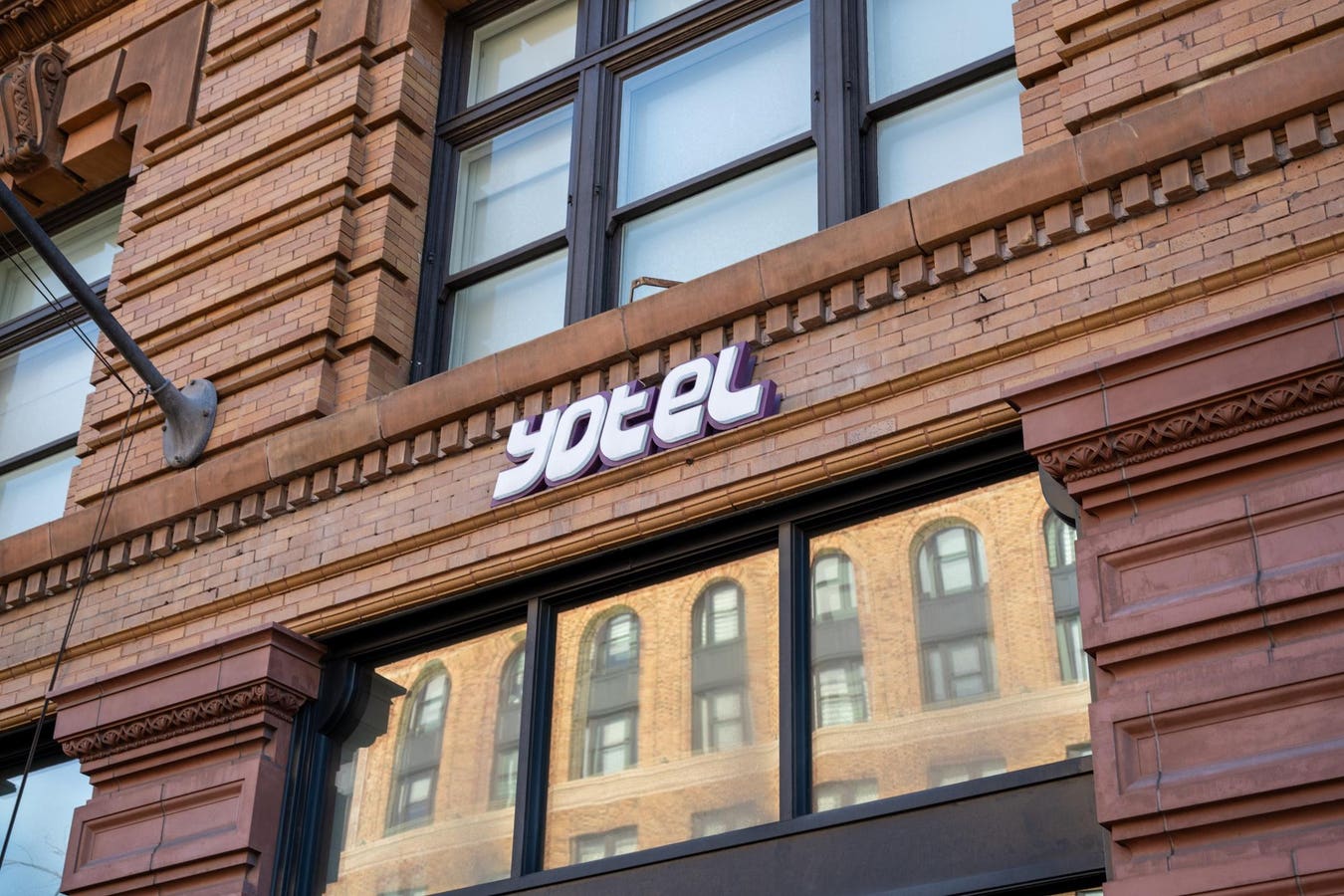
Yotel offers another useful example of simplicity, and what happens when technology is designed around real behavior instead of novelty.
I recently stayed at the Yotel New York Times Square, and had a chance to sit down with Jorge Tito, the hotel’s manager, to talk about the guest experience and some of the choices the hotel has made.
At Yotel, automation starts with arrival. Self-service kiosks and mobile-first check-in compress what is often the most frustrating part of travel into a quick, predictable flow. Tito sees it as a matter of respecting time. “I don’t need guests losing time on lines,” he told me. “They want to arrive, go to the room, and get on with their day.”
Inside the room, technology stays deliberately practical. Adjustable beds make compact rooms more flexible. Lighting and climate controls are visible and easy to understand. Sustainability features like motion-based climate control operate quietly in the background. “From a sustainability perspective, it makes perfect sense,” Tito said, noting that systems can be overridden when comfort requires it.
One of Yotel’s most visible features—the robotic luggage system known as Yobot—works because it solves a real problem. Guests can store bags securely before check-in or after checkout without waiting or worrying. “It’s probably the most visible feature we have,” Tito said. “But it’s also the most practical.”
Yobot is a centerpiece of the Yotel New York Times Square lobby—an automated luggage concierge that can securely lift, store, and retrieve guests’ luggage.
Tony Bradley
Yotel’s broader design philosophy is simple: provide what guests actually use and remove what they don’t. “You have what you need, and you don’t have what you don’t need,” Tito explained. That thinking extends beyond rooms into shared workspaces, charging-friendly common areas, and policies designed to reduce friction rather than shift it elsewhere.
The Quiet Advantage
The most tech-forward hotels may not look futuristic at all. They feel calm. Nothing breaks. Nothing demands attention.
For modern travelers—especially those blending work and travel—that’s the real luxury. Not more screens. Not more apps. Just a space that works the way they do, without getting in the way.