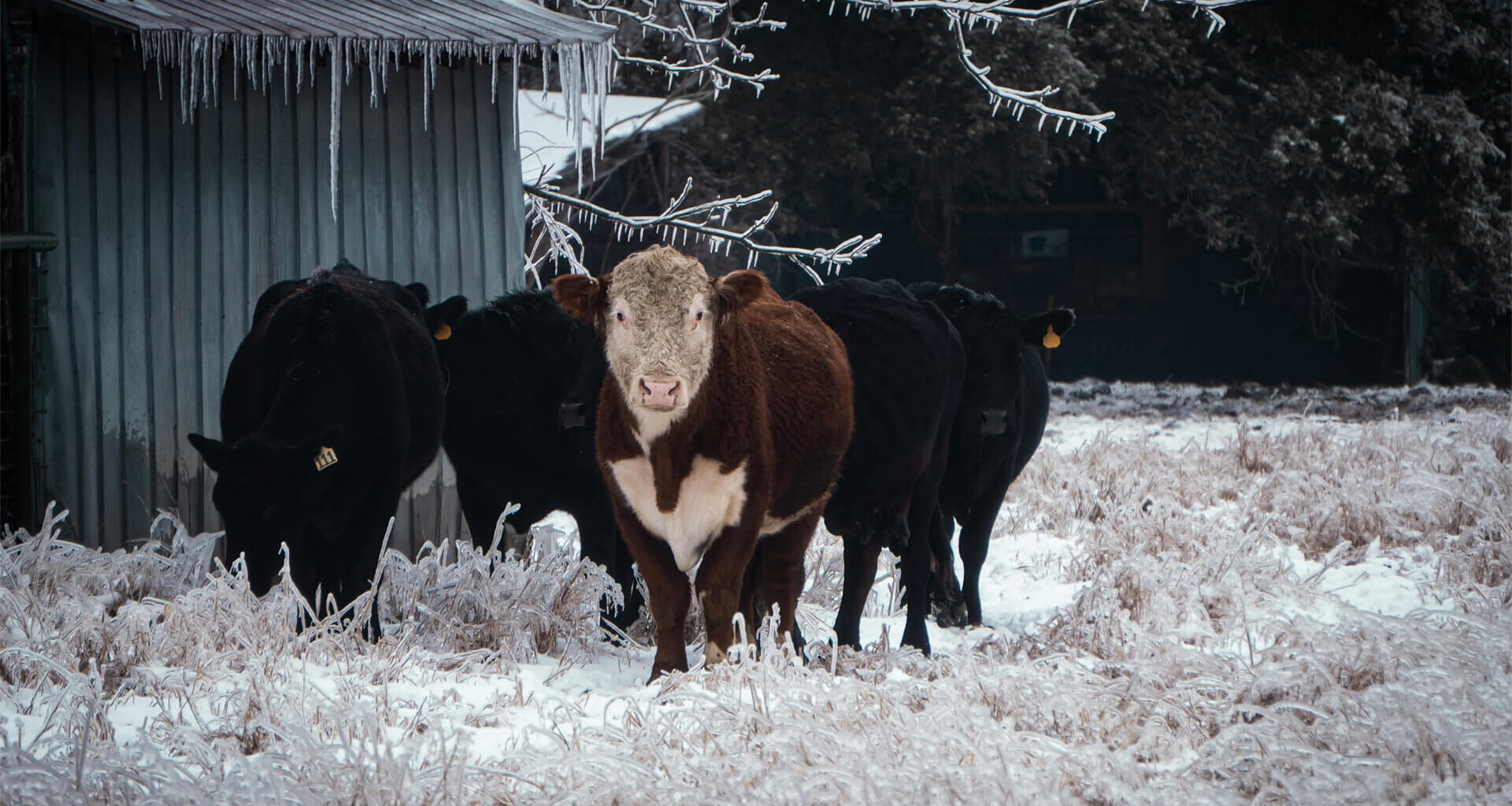
Hey all, Peter Zeihan here. Coming to you from Colorado. As everybody knows, there’s a cold front that’s pushing down from Canada that’s affecting basically the entire Midwest down to Texas and over into the South and the eastern seaboard.
For those of you who are in Texas, this is for you. You see, the power grid in the eastern part of the United States is interconnected.
So if you’re east of the Rockies, everybody’s on the same grid, and people can pump power from one zone to another without a problem. Texas, however, is on its own. Texas does not like regulation at the federal level at all, in case you didn’t know. And, sometimes this works for them and sometimes it doesn’t. And this weekend we’re going to find out what it is.
The issue is, kind of 2 or 3 fold. Number one, if you get ice, ice lands on the power lines. The power lines weigh more. Sometimes they snap. Number two, in times of extreme temperature variation, like a high cold front, people are going to be using a lot more energy than they would normally.
So there’s a lot more stress on the system in general. And then third and freezing temperatures, natural gas production can be interrupted. A lot of natural gas fields bring up a little bit of water as a side effect and ends up in the pipes. And if the temperature drops enough, that will turn into ice, and eventually they’ll clog and freeze.
So if you remember to a winter storm we had a few years ago, I think was 2021. The area around Dallas got so bad that the pipelines were frozen solid, and they basically had to deliberately ignore all safety regulations and go out there with blowtorches and heat up the ice so that the energy would flow. This cold front is both better and worse than that one.
Better in that it is not going to last as long. We’re probably only going to have subfreezing temperatures in Texas for 2 or 3, maybe at most four days. Number two, Texas has made a lot of advances since then in making their system more stable, both at the grid level and at the production level. More pipelines are buried, for example, because if you just put your pipe under six inches of dirt, that insulation is probably going to be enough.
Not a real crazy thing here. Almost everywhere in the United States that produces petroleum puts them underground. Texas was really unique because it just never really got cold enough for them to care. Now they do. Third, there are three different production regions in Texas, and it’s really going to depend upon what happens with the ice line here. the biggest one around the Dallas Fort Worth area is called the Barnett Shale. It’s almost exclusively natural gas. It is the primary source of energy for most of the region’s natural gas power plants. If we get ice in the Dallas area, but not lots of subfreezing temperatures along it, as long as it stays above, like 2025, we’ll be okay.
That’ll probably be fine. Further south is Eagle Ford. Now, usually Eagle Ford, because it’s East of San Antonio stays warm enough that there. No, this is an issue. It’s unclear if that’s how it’s going to be this time. Probably they’ll get a lot of ice. Ice is not a big problem for pipelines, because it’s not cold enough to freeze the inside, and it just makes things very uncomfortable. So you could have high traffic incidents in San Antonio. While this is going on. Don’t drive in Texas if there’s ice because oh my God, they don’t know how to drive anything that’s not dry.
Third one is the Permian that’s out west, Odessa, Midland, getting into New Mexico. That one’s probably going to be fine.
A quirk of this particular storm is it’s blowing down from Alberta on the east side of the Rockies. And when you get down towards that part of Texas in New Mexico. Yes, you’re still to the east of the Rockies, but the Gulf Stream starts pushing everything further east. So it’s kind of like a hurricane in reverse, if you will.
So while those areas are expected to be cold, they’re not as expected to get as cold or for as long, which would suggest that the largest oil natural gas producing basin in the country, the Permian Basin, is probably going to be able to maintain operations. So none of this is risk free. We’re probably going to have some sporadic power outages, but between the improvements and the dynamics of this specific storm, it looks like we’re not going to be looking at mass blackout events.
And that’s a good day.