
January 25, 2026 — 2:30am
AAA
A decade after blackouts crippled South Australia, forcing intensive care beds to close, traffic to seize, and industry to shut down, the state is on the cusp of completing a green energy revolution of global significance.
In little more than two decades, renewable energy in the South Australia grid has leapt from about 1 per cent to almost 75 per cent in net terms, and the state is within reach of achieving its goal – its legislated target – of 100 per cent green power by 2027.

South Australia leads the world in renewable energy.Artwork by Matt Davidson
“I’m convinced we can [reach it], I’m convinced we can,” Energy Minister Tom Koutsantonis told this masthead.
“We’ve got approved, sitting on the books with development approval, about $20 billion worth of renewable energy. So I have no doubt whatsoever we will be able to achieve [the target].
Not everyone is as optimistic as Koutsantonis that the target will be met on time, but few doubt the state’s extraordinary achievement.
Energy nerds tracking power generation in the National Energy Market – the system that most of us call the grid, which provides power to South Australia and the eastern states – have been able to see that on any given day, South Australia is often relying largely on renewables, and often exporting excess power to the east.
On December 1, the Facebook group NEM Watch celebrated a record when the state hit 100 per cent net renewable energy consumption for an entire week. Last year, there were 289 days during which renewables met the entire consumption demand for the state for part of the day.
“It’s globally significant,” says Richie Merzian, chief executive of the Clean Energy Investor Group. “You have a major jurisdiction that now can operate a grid on such high levels of renewables with really modest connection back into the rest of our national grid … It’s extraordinary. It’s right up there along with Denmark’s achievements.”
Indeed, the International Energy Agency ranked South Australia alongside Denmark as leading the world in integrating high volumes of renewables into its grid in a report in 2024.
If any region was going to win a global renewables race, South Australia once seemed an unlikely contender. It is the driest state in the world’s driest continent, devoid of the rivers and dams that in some countries drive turbines and store energy. It lacks the geothermal energy resources that Nordic nations have tapped to drive their ambitious green transitions.

New Vestas wind turbines will be used at Tilt Renewables’ Palmer wind farm in South Australia.
When a new Labor government took office in 2002, determined to begin a transition, South Australia relied entirely on fossil fuels for its electricity.
By 2016, the state was producing 48 per cent of its energy from renewable resources. Later that year, disaster struck in the form of gale force winds, two tornados and at least 80,000 lightning strikes. Three out of four interconnectors linking Adelaide to the rest of the state, and 23 transmission line pylons, were damaged.
The state’s grid was shut down – in part by safety features designed to protect generators – leaving some homes without electricity for days.
The blackout was used as evidence by some that renewable energy was unreliable at best and a danger at worst. One Nation senator Malcolm Roberts demanded governments “exit all climate change policies”, while then-treasurer Scott Morrison cited the blackout as evidence that Labor would return the state to the dark ages.

Then-treasurer Scott Morrison brandishing a lump of coal in Federal Parliament in 2017, after the South Australian blackouts.AAP
Despite the setback, which was later found not to be the fault of renewables, South Australia maintained its focus on transition, even under a subsequent Liberal government.
After the blackouts, the state was determined not only to ensure that it could provide enough power, but that the system be made stable even without the big old power stations that once provided grid security.
This is where a pair of billionaires swaggered in with a social media exchange that has had global consequences.
Elon Musk had speculated online that he could use Tesla batteries to fix South Australia’s stability problems. In March 2017, Atlassian chief Mike Cannon-Brookes responded via Twitter.
“How serious are you about this bet? If I can make the $ happen (& politics), can you guarantee the 100MW in 100 days?” he tweeted to Musk.
Musk took the bait. “Tesla will get the system installed and working 100 days from contract signature or it is free. That serious enough for you?”
Less than 100 days later, what was at the time the world’s biggest battery by a factor of three was up and running. Within two years, it had paid for itself. Today, far larger batteries are being thrown up around the state and the world, not only stabilising grids but storing green power made during the midday gluts for use during evening peaks.
This balancing act has been crucial to South Australia’s efforts, says Koutsantonis.
“The question for us, like every other jurisdiction, is, how do we integrate that into a system that is safe and secure and that can provide power when it’s needed?”

Energy Minister and Treasurer Tom Koutsantonis.Ben Searcy
In the past year, net 73.5 per cent of the state’s energy use relied on renewables, and renewables as an overall proportion of the state’s energy sources hit 75.3 per cent.
The biggest proportion was wind, with turbines accounting for 46 per cent of South Australia’s energy use.
Solar accounted for 27.6 per cent of the state’s energy sources, and the vast majority of that (22.3 per cent) was rooftop solar.
While new technology and infrastructure have made this green revolution possible, much of the energy produced has come from the state’s households.
“Most of the heavy lifting has physically been rooftop solar,” says Koutsantonis. “And the rooftop solar penetration in metropolitan Adelaide in South Australia is dramatic. It’s getting really close to one in two houses.”
The lessons the rest of the country can learn from South Australia (which goes to the polls in March) are mixed.
One, says Koutsantonis, is that gas must remain an ingredient in the energy mix as jurisdictions transition from highly polluting fossil fuels to renewables.
It is crucial, he says, to have a readily deployable alternative to firm the system when solar and wind do not provide sufficient power loads.
“This is the great contradiction amongst a lot of activists. Without gas-fired turbines sitting idle with gas and pipelines, and gas fields being mined, we can’t get to 100 per cent net renewables,” he says.
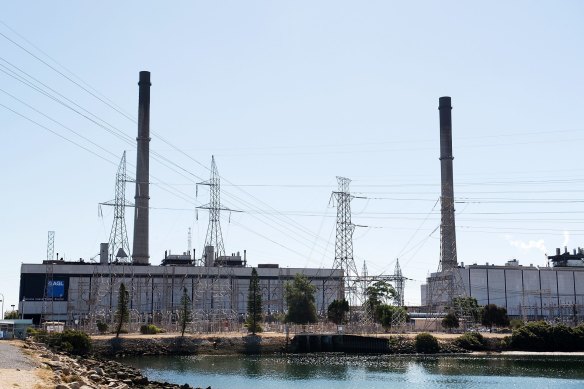
AGL’s Torrens Island power station in South Australia.Daniel Kalisz
“Otherwise, we’ll have to have fossil fuels in the system until we can find that breakthrough technology … until then, it’s going to be gas because gas is the only [fuel] that can respond quickly, and it’s relatively cheaper than having baseload coal on 24/7.”
Renewable energy and energy systems analyst Dr Dylan McConnell is not convinced South Australia will achieve its legislated target to reach – on a net annual basis – 100 per cent of consumption coming equivalently from renewable energy.
But he says the state will come close, and predicts it could reach that goal within six to12 months of the legislated timeframe.
So how has South Australia done it?
Beyond incentives for rooftop solar, the state has exploited its natural advantages, and early permissive planning regimes, and South Australia, says McConnell, simply has “really good wind”.
But policy has also been crucial, says Merzian. Even when a Liberal government was installed in 2018, the new premier, Steven Marshall, stayed the course.
This consistency has been crucial, says Jean-Christophe Cheylus, chief executive of the Australian operations of Neoen, the French-based global renewables giant that has invested $2 billion into wind, solar and battery assets in South Australia.
Early incentives to switch to renewables and permissive planning regimes for new renewables – particularly wind – played a role too.
Neoen is currently developing its Goyder South wind farm, which will soon boost South Australia’s wind capacity by 20 per cent. The project has been under way since 2018.
“That might seem relatively long, but for [a] wind farm project, this is actually very short and very efficient.” In other states, he says, the permitting process would have dragged on for 10 years or more. He also notes that local councils, which have challenged renewables development in other states, have supported the industry in South Australia.

Stage 1 of Neoen’s Goyder South wind farm.
Communities that have battled drought for years have welcomed Neoen and the jobs and investment it brings to the regions.
The state is an outlier. NSW has about 43 per cent renewable-sourced power, while Victoria has 48.6 per cent and Queensland, 34 per cent.
“It might be a little bit unfair to South Australia, but it’s also historically true, that one of the main reasons they’ve had such a success with renewable energy is really good renewable energy resources – really good wind,” McConnell says.
Related Article

“And they also have, historically, and still to some extent today, been the sort of highest-priced region [for fossil-fuel supplied power].”
Since the adoption of renewables, power prices in South Australia have dropped to generally below NSW and Queensland.
Still, it’s not all smooth sailing in the windy state.
In the past year, South Australia imported 11 per cent of its energy, mostly from the brown-coal heavy Victorian market.
Underscoring the difficulties of a rapid transition to renewables, the government in August asked AGL to extend the life of its Torrens Island gas generator for two years, after warnings from the energy regulator that the state could face energy shortages without ready reserves of back-up gas.
This is partly because Project EnergyConnect, the $4.1 billion electricity cable linking NSW to South Australia, needed to bring renewables into the system, has been beset by delays.
The Liberal’s state branch in June voted to formally reject net zero targets.
But Koutsantonis says the state cannot afford not to go down this path.
“When you look at the way the energy market is structured, you have to recover the cost of every new investment, whether it’s a coal-fired generator or a wind farm or more transmission lines,” he says.
Related Article

“Suppose I gave you a counterfactual and said, ‘Let’s suspend reason, let’s suspend scientific endeavour and say climate change is not real’, we’d be going through an even more expensive transition now by building a whole new fleet of coal-fired power stations.
“And that cost would be being passed on to consumers, and it would be the same level of angst now as there is with renewables about costs in the grid because of that transition. So this happens in electricity systems every 30 to 40 years anyway.”
According to Merzian, the benefits of South Australia’s green energy revolution extend far beyond climate and energy policy. Yes, its energy prices are falling along with its carbon emissions, but its stable and ongoing support for the transition has attracted $20 billion in investment from global energy giants.

Richie Merzian, pictured at The Financial Review’s Energy and Climate Summit.Oscar Colman
Excess energy can be exported to Victoria and NSW, he says. Cheylus notes that Neoen’s South Australia wind farms are being used to decarbonise the ACT.
But in the longer term, says Merzian, South Australia’s green power will be used to boost its heavy industry. Green steel and hydrogen plants can effectively export renewable electrons embedded in their products around the world.
“If it’s going to be hitting 100 per cent next year, the trick is not to stop there, but to keep going.”
Get to the heart of what’s happening with climate change and the environment. Sign up for our fortnightly Environment newsletter.
 Nick O’Malley is National Environment and Climate Editor for The Sydney Morning Herald and The Age. He is also a senior writer and a former US correspondent.Connect via email.
 Bianca Hall is The Age’s environment and climate reporter, and has worked in a range of roles including as a senior writer, city editor, and in the federal politics bureau in Canberra.Connect via Twitter, Facebook or email.
From our partners