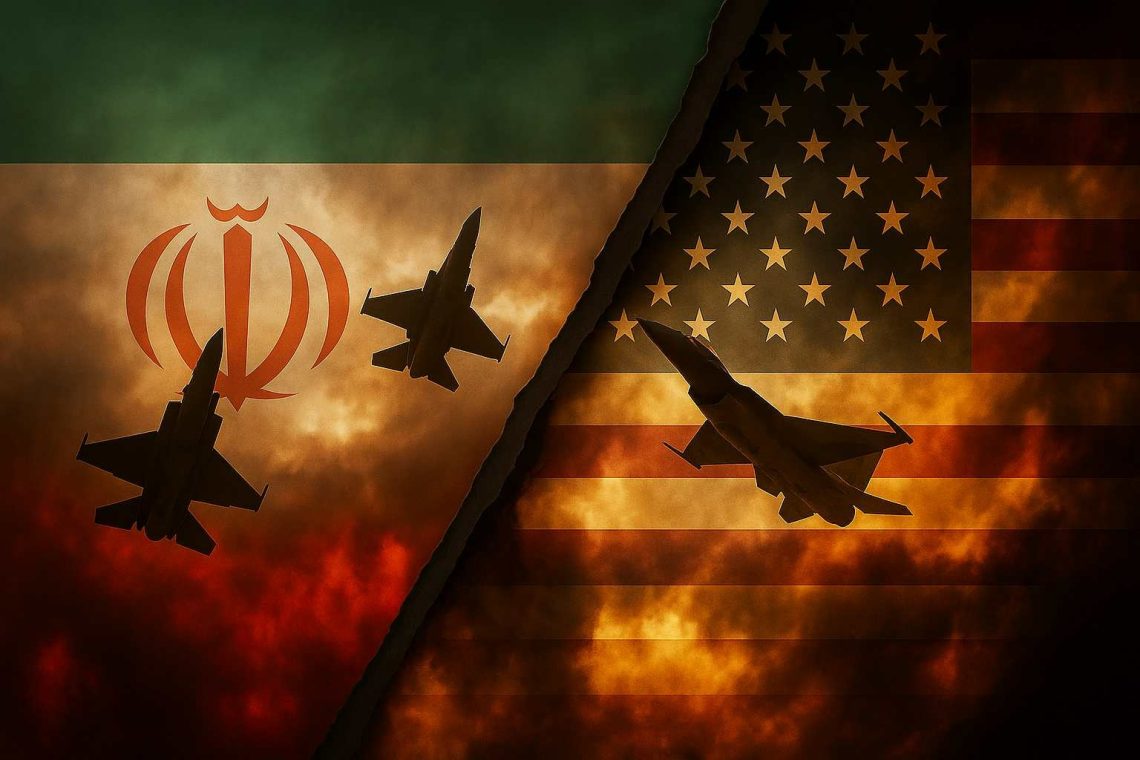
Recent developments surrounding Iran cannot be analyzed merely within the framework of a classic interstate conflict or as a series of sporadic domestic protests. What is now taking shape in the relationship between Iran and the United States is a complex amalgam of a crisis of credibility, geopolitical calculations, the historical experience of failed protest movements, and the gradual preparation for a prolonged confrontation, one defined not necessarily by a swift, decisive strike, but by sustained political, economic, and security attrition.
In recent years, the United States, particularly through its formal and informal discourse, has encouraged Iranian citizens to protest, engage in civil disobedience, and demand change. This encouragement, whether voiced by officials or amplified through media outlets, has carried a clear, if implicit, message: Washington positions itself on the side of “the Iranian people” against “the Islamic Republic regime.” Regardless of the true intentions behind this stance, it has elevated the issue from the realm of foreign policy to that of political credibility.
Under such circumstances, the Iranian government’s widespread and violent suppression of protests is no longer perceived as a purely internal matter. Every death, every imprisonment, and every documented account of state violence effectively becomes a challenge to U.S. credibility, credibility that Washington itself placed at stake by encouraging resistance. As a result, by repressing protesters, the Islamic Republic has not only targeted domestic opponents but has also indirectly pushed the United States into a position of either passivity or response.
Historical experience with protest movements in Iran shows that, however broad and costly they may be, such movements, absent a decisive external factor, have not been able on their own to bring about the collapse of the power structure. From the student protests of the late 1990s to the Green Movement and the nationwide uprisings of recent years, a recurring pattern has emerged: social mobilization, harsh repression, societal psychological exhaustion, and ultimately the reproduction of authoritarian order. This sobering reality has led many observers to conclude that the Islamic Republic will fall only if internal pressure coincides with, and is reinforced by, external intervention or pressure.
Within this framework, the crimes committed by the Islamic Republic during recent protests have paradoxically strengthened the interventionist argument in Washington. Bloody repression has narrowed the space for any form of soft compromise or “gradual behavioral change,” pushing U.S. foreign policy options toward confrontation. In other words, through its own actions, the Islamic Republic has handed Washington the axe handle and reinforced the narrative of the necessity of maximum pressure.
That said, the notion of an immediate, conventional war between Iran and the United States owes more to media sensationalism than to strategic realities. Available evidence suggests that Washington is preparing not for a short, costly conflict, but for a long, multilayered struggle, one in which the principal battleground will not be limited to Iranian territory, but will encompass the country’s economy, political legitimacy, regional networks, and social cohesion.
The current relative quiet in the international arena, and even on Iran’s streets, can be understood as a “calm before the storm.” This silence is not a sign of retreat, but rather the result of a recalibration of forces. Washington is well aware that any hasty move could temporarily consolidate Iran’s ruling establishment and trigger nationalist mobilization. Gradual attrition, therefore, appears more rational and less costly.
In this strategy, sanctions are only one tool, not the entirety of the arsenal. Information warfare, targeted support for the opposition, human rights pressure, diplomatic isolation, and regional containment of the Islamic Republic are complementary pieces of a larger puzzle. The ultimate objective is not necessarily regime change imposed from the outside, but pushing Iran’s power structure to a point where it can no longer reproduce itself.
On the other side, the Islamic Republic also understands this equation and seeks to raise the cost of confrontation by projecting strength through regional activities and missile programs, among other means. Yet this strategy has its own limitations. A depleted economy, a deepening rift between state and society, and a crisis of legitimacy have significantly reduced the regime’s long-term room for maneuver. A system that relies on internal repression for survival becomes more vulnerable on the international stage.
A key variable in this equation is Iranian society itself, simultaneously exhausted, angry, and distrustful. The current silence does not necessarily signal satisfaction or submission; rather, it reflects waiting, reassessment, and calculation. Past experiences have taught people that protesting without a clear horizon or effective backing is costly and often futile. This collective awareness makes any future movement more complex, but potentially more decisive.
For the United States as well, Iran has become a test of credibility. Washington cannot simultaneously encourage Iranians to resist and remain silent in the face of their repression without damaging its global standing. Particularly in a world of intensifying great-power competition, any sign of inconsistency or weakness is quickly exploited by rivals.
Ultimately, what looms on the horizon is not an explosion, but a process of attrition, one in which time is the most critical variable. Today’s silence may be the prelude to a storm whose shape, timing, and intensity cannot yet be fully predicted. One thing, however, is clear: after what transpired during the recent protests, returning to the previous status quo has become far more difficult for both the Islamic Republic and the United States.
Iran stands at the threshold of a historic turning point, a moment that cannot be navigated through slogans, repression alone, or threats. If a storm is indeed approaching, its signs are not found in loud slogans or dramatic gestures, but in this heavy, calculated silence. The Islamic Republic’s severe repression of protesters has turned the issue into a matter of credibility for Washington.
You can read the Persian version of this analysis here:
سکوتی که بوی جنگ میدهد؛ چرا حمله امریکا به جمهوری اسلامی قطعی شده است؟