Speaking to Fox News on Thursday, the U.S. president said he was “not sure” the military alliance would be there for the US “if we ever needed them”.
“They’ll say they sent some troops to Afghanistan,” he said: “And they did, they stayed a little back, a little off the front lines”.
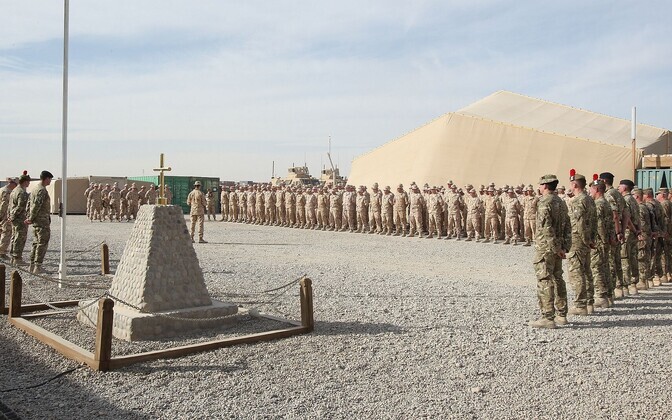
The USA is the only country to have ever invoked NATO’s Article 5 collective defense clause, which led to the war in Afghanistan. In total, 2,448 U.S. soldiers and 1,114 soldiers from other NATO states lost their lives in the conflict between October 2001 and April 2021.
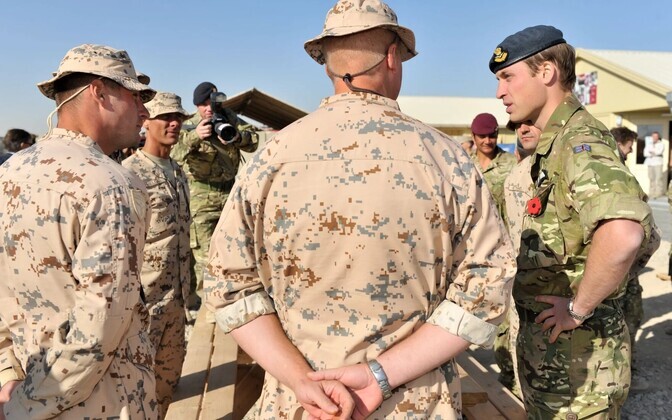 Prince William visited Estonian troops based at Camp Bastion, Afghanistan, back in 2010. Source: British Forces Afghanistan
Nine Estonian soldiers died in Afghanistan and dozens more returned home injured between 2002 and 2021.
Estonians primarily fought alongside British troops, including in the south in Helmand province, described by the U.S. State Department in 2007 as “one of the most volatile and dangerous regions in Afghanistan.” Estonia deployed “highly trained, proficient, and competent units” to Iraq and Afghanistan, it added.
While Trump’s comments have not been commented on by Estonian ministers, the president or the Estonian Defense Forces so far, other officials have shared the facts on social media.
Chairman of the Riigikogu’s Foreign Affairs Committee Marko Mihkelson (Reform) pointed out Estonia had the third-highest losses per capita, behind Denmark and the United Kingdom.
NATO countries with the highest soldier losses per capita in Afghanistan (2001–2021):
1️⃣ Denmark
2️⃣ United Kingdom
3️⃣ Estonia
4️⃣ Canada
5️⃣ United States
— Marko Mihkelson (@markomihkelson) January 22, 2026
Former President Toomas Hendrik Ilves (2006-2016) said he went to every one of the nine funerals of Estonia’s fallen servicemen.
My countrymen. I went to every funeral. https://t.co/awPdZRvNqf
— toomas hendrik ilves (@IlvesToomas) January 23, 2026
Deputy Head of Mission at Estonia’s Embassy in London, Kati Laus shared a photograph of 20-year-old Sgt. Herdis Sikka’s casket “on the shoulders of his brothers in arms” when it returned to Estonia.
“He left his life in Helmand, in Afghanistan, August 2010. We answered the call,” she wrote on X.
Sgt Herdis Sikka returning to Estonia on the shoulders of his brothers in arms.
He left his life in Helmand, in Afghanistan, August 2010.
We answered the call. pic.twitter.com/hsnEWlw4EL
— Kati Laus (@LausKati) January 23, 2026
Estonia’s Ambassador to the UK Sven Sakkov also posted the casualty rates per million residents, which ranks Estonia fourth after the U.S., UK, and Denmark.
Other NATO countries “stayed a little back, off the front lines” in Afghanistan? Highest casualties per million:
7,96
7,82
7,25
6,92
4,68https://t.co/H1UWDk8TUv
— sven sakkov (@sakkov) January 23, 2026
UK Ambassador to Estonia Ross Allen said in a comment that both British and Estonian personnel “fought together side-by-side” in Afghanistan alongside the Americans.
Setting the record straight…
and personnel fought together side-by-side in some of the toughest parts of Afghanistan. https://t.co/HTiIv75YxC
— Ross Allen (@rceallen) January 23, 2026
On Saturday evening, Secretary General of the Ministry of Foreign Affairs Jonatan Vseviov said Estonia responded to the USA’s request for assistance “with boots on the ground, no caveats, on the front lines.”
“Belittling our soldiers’ sacrifices is insulting,” he said in a comment on X.
When the United States was attacked on 9/11, we answered the call — with boots on the ground, no caveats, on the front lines.
Estonia’s per-capita losses in Afghanistan were among the highest of all allies.
Belittling our soldiers’ sacrifices is insulting. pic.twitter.com/6PyXN3EaXV
— Ambassador Jonatan Vseviov (@vseviov) January 24, 2026
Riigikogu member Eerik Niiles Kross (Reform) posted a broadcast of Estonian troops in Helmand in 2008, and another of the UK’s Prince Harry’s visit to Estonia in May 2014.
“You get the job done, with minimal fuss, and I love that,” he said while expressing gratitude to the Estonian soldiers who fought alongside the United Kingdom.
Right, Estonians troops “staying a little back off the front lines”
A video of Estonian positions in Helmand – 1 Aug 2008 https://t.co/CRjEZgpZzw via @YouTube
— Eerik N Kross (@EerikNKross) January 24, 2026
Trump’s comments are not the first time his administration has been critical of the support of its allies.
Speaking before a Senate committee last year, Defense Secretary Pete Hegseth – who served in Afghanistan – said the Nato ISAF badge soldiers wore in the conflict, which stands for International Security Assistance Force, really stood for “I saw Americans fighting”.
Frustrated allies
Trump’s comments on Thursday came after weeks of threats from the U.S. administration about seizing Greenland, an autonomous territory of the Kingdom of Denmark, also a NATO ally.
During the tense discussions and rounds of inflammatory media statements, members of the U.S. administration also sought to downplay Denmark’s defense forces and justify Washington’s alleged need to annex the Arctic island for “security reasons”. However, Denmark had one of the highest casualty rates in the Afghanistan war after the U.S. and UK.
NATO allies have tried to balance the difficult situation between two of its members, showing support for Denmark and Greenland while not directly criticising the U.S. But the situation boiled over after Trump’s comments on Thursday, with many members of the alliance openly criticizing his words.
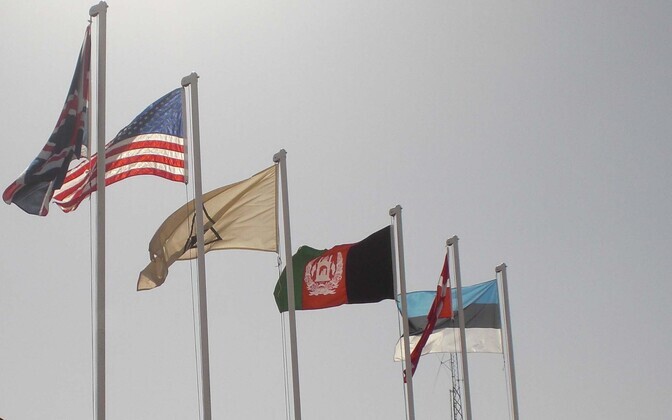 The flags of the US, UK, Afghanistan, Denmark and Estonia flying at the base in Helmand. Source: EDF
Dr. Eoin McNamara, researcher at the Finnish Institute of International Affairs (FIIA), told ERR News on Saturday that allies are frustrated.
“In Afghanistan, NATO was involved in a diverse range of tasks, ranging from humanitarian relief to military combat. Although allies (like Estonia) willing to deploy their troops in Afghanistan’s volatile southern provinces were at a premium,” he said in a written comment.
The researcher explained that more allies in the south would have benefited NATO, but others were still needed to hold the fort in the north. “It’s a complex picture,” McNamara said.
“The problem with Trump’s comments is that they ignore specific allies that battled and sacrificed much directly alongside U.S. forces in Afghanistan – Canada, Denmark, Estonia and the UK. This is why frustrations are acute in these countries,” he added.
Estonia and military combat in Helmand
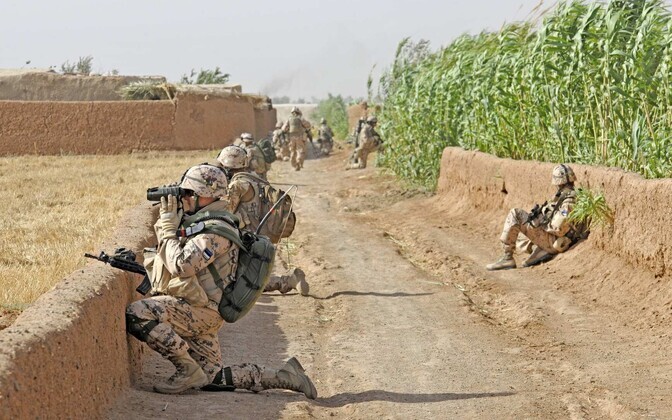 Estonian Defense Forces in Helmand province, Afghanistan. Source: EDF
McNamara outlined Estonia’s contribution to the wars in Afghanistan and Iraq in an article in 2021. A section has been republished below.
Washington expected stronger collective NATO burden-sharing for military combat in the unruly provinces of southern Afghanistan. While crucial for stabilization, many NATO allies were reluctant to contribute to these operations because they involved the significant risk of soldier casualties. Starting in 2006, Estonia deployed rotations of approximately 165 troops without caveats limiting combat exposure to Helmand province, an area that soon became a target for Taliban violence (Conversely, many established NATO allies hesitated to send troops into the province). The Estonian Defense Force (EDF) suffered nine soldier fatalities in Afghanistan — among NATO’s highest per capita fatality rates. Many more Estonian soldiers returned home wounded.
Through this involvement, Estonia became a highly effective “niche contributor” to this vital part of NATO’s stabilization effort. This has been acknowledged by many directly involved. Speaking in 2012, NATO Secretary-General, Anders Fogh Rasmussen, stated: “I particularly welcome the fact that Estonian forces are operating in Afghanistan without restrictions. Because that means they can be deployed quickly whenever, and wherever, extra troops are needed to improve security.”
The diplomatic and military benefits of ISAF participation were also stressed by Estonia’s leaders. Visiting EDF units in Afghanistan in 2013, then Minister of Defense Urmas Reinsalu remarked: “Thanks to your [Estonian military] contribution to our relations with allies, our international ties, credibility and visibility are greater than ever before. Everyone knows how good Estonian soldiers are in battle.”
Working closely with the US, the UK was a leading NATO ally for operations in Helmand; writing in 2014, British Ambassador to Estonia Christopher Holtby praised the EDF’s achievements in Afghanistan, noting that this would improve military ties between Tallinn and London into the future: “Fundamentally, the UK military wants to work closely in the future with Estonian forces because we know they are capable and effective. This has been proved in Afghanistan.”
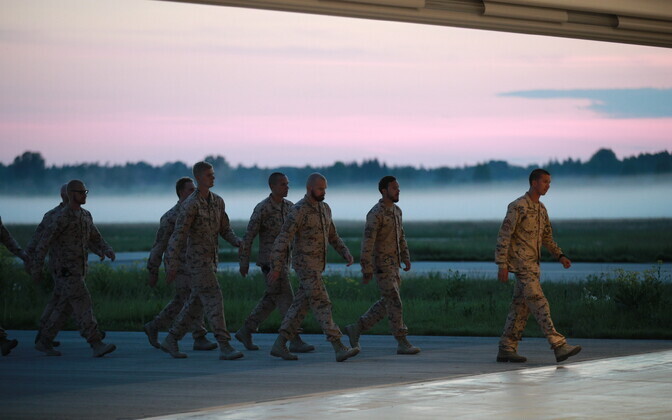 EDF members arriving in Ämari after serving in Afghanistan. Source: Siim Lõvi/ERR
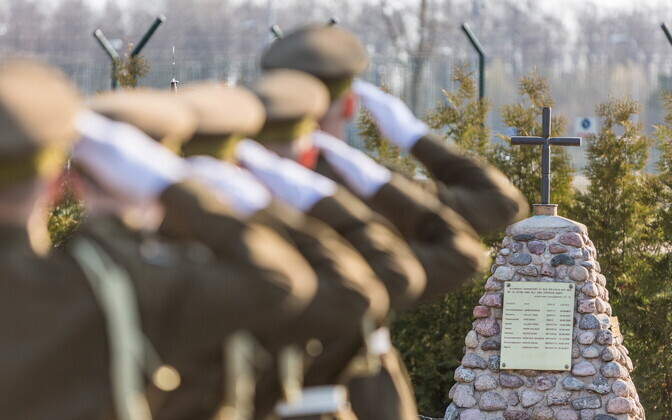 The memorial to the nine Estonian soldiers who died in Afghanistan. Source: Estonian Defense Forces
This article was updated to add a comment from Jonatan Vseviov.
—
Follow ERR News on Facebook and Twitter and never miss an update!