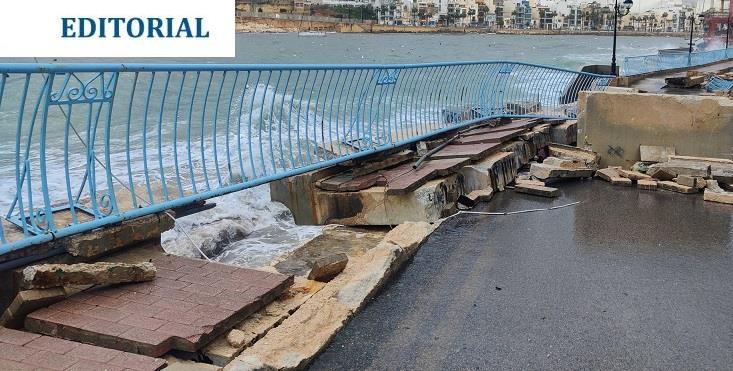

Storm Harry was a stark reminder of how exposed Malta remains to extreme weather events. The storm brought widespread disruption, flooding and damage, particularly in coastal and low-lying areas, once again highlighting the country’s vulnerability when severe weather strikes.
First and foremost, we must acknowledge the considerable efforts made to keep Malta as safe as possible during those crucial days. First responders, members of the Civil Protection Department and other emergency services worked tirelessly throughout the storm, often in dangerous conditions, and their professionalism and dedication played a key role in preventing far more serious consequences.
They dealt with flooding, stranded motorists, fallen trees and debris, and dangerous coastal conditions, often in situations that put their own safety at risk. In many instances, their swift intervention prevented situations from escalating into far more serious incidents. They deserve our collective gratitude.
The general public, too, largely acted responsibly. Most people followed official instructions, avoided unnecessary travel and stayed away from exposed coastal areas. This collective sense of caution undoubtedly reduced the burden on emergency services.
Unfortunately, there were exceptions. Such behaviour was not merely reckless; it put lives at risk. Had anything gone wrong, first responders would have been forced to intervene in extremely hazardous conditions, potentially endangering themselves. These actions should be unequivocally condemned.
At the same time, Storm Harry exposed weaknesses that must be addressed honestly if Malta is to improve its response to future extreme weather events. One of the most problematic aspects was the timing and clarity of government decisions, particularly regarding schools and workplaces.
The government left it too late to announce that schools would remain open while students would be excused if their parents or guardians preferred to keep them at home. This announcement came on Monday afternoon, when schools had already ended for the day and many people were preparing to leave work. The severity of the storm had been forecast long before then. Earlier, clearer communication would have allowed parents and employers to plan properly, reducing uncertainty and unnecessary movement during dangerous conditions.
In practice, the decision to keep schools open while excusing students made little sense. Most children stayed at home anyway. Home Minister Byron Camilleri later confirmed that out of 26,908 students enrolled in government schools, only 3,137 attended classes. Similarly, of 6,276 children registered with Jobsplus childcare centres, just 1,738 attended. These figures demonstrate that the vast majority of families chose to keep children at home. A one-day closure of schools would have been a clearer, safer and more coherent decision, also sparing teachers and staff from unnecessary travel risks. The Malta Union of Teachers was right in expressing its concern as to why the government had chosen to keep schools open while indirectly telling students to stay away.
Workplace directives also suffered from a lack of urgency. The government did allow its own employees to work from home wherever this was possible, acknowledging the risks posed by the storm. However, when it came to the private sector, it stopped short of issuing firm guidance. Even so, clearer direction – both for government employees and, by extension, the private sector – should not have come at the eleventh hour. Government departments and private companies need time to make logistical arrangements, particularly those that do not routinely operate remotely, and last-minute announcements undermine their effectiveness while increasing the likelihood of unnecessary travel during dangerous conditions.
The storm’s impact on certain localities was particularly severe. Marsaskala bore the brunt of the weather, with seawater flooding roads and damaging property. This is not a new phenomenon. The area is well known for being vulnerable when tides are high and storms are strong.
These recurring scenes point to a deeper issue: infrastructure and planning have not kept pace with the realities of climate change. Extreme weather events are becoming more frequent and more intense. Malta must accept that storms like Harry are no longer rare anomalies but part of a new normal. Low-lying and coastal areas need better protection, whether through improved drainage, barriers, or redesigned road layouts. Future projects must factor in rising sea levels and stronger storms, rather than relying on outdated assumptions. The situation in Msida is a classic example.
The damage inflicted on farmers and fishermen should also not be overlooked. For many, a single storm can wipe out months of work and investment. The government is right to assess the damage carefully and to offer assistance, including the possibility of compensation through European Union funds.
The government should also explore a different way on how national emergencies should be announced and prepared for. Something like Storm Harry could be anticipated, but other serious incidents could occur without there being prior warning, such as a hijacked plane or a traffic accident that blocks a major artery. The government should consider having a mobile alert system in place that informs citizens of such happenings, offering guidance on how to proceed.
Ultimately, Storm Harry should be treated as a learning exercise. The response was not without merit, but it was also not without flaws. As climate change continues to reshape our environment, Malta must improve its preparedness, decision-making and communication. Mistakes that were made should be analysed and corrected. The safety of the public, and of those tasked with protecting them, depends on it.