Published on
January 25, 2026
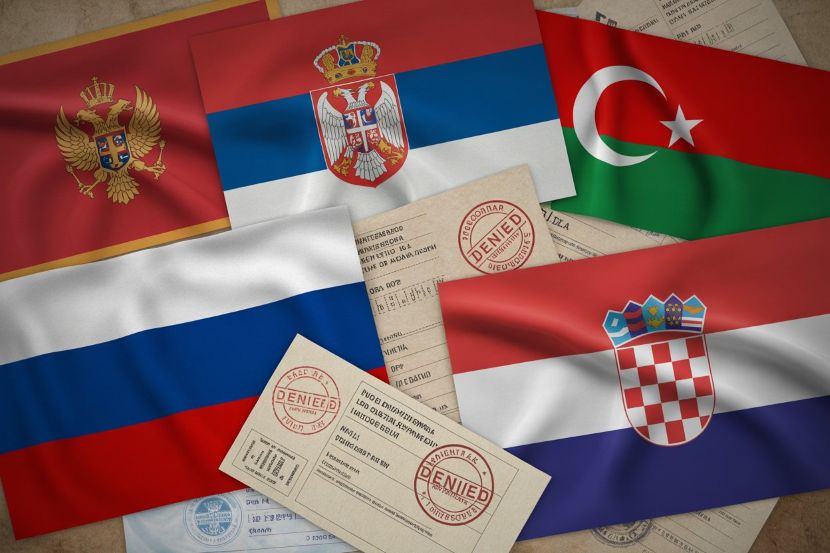
Montenegro has joined Serbia, Turkey, Russia, Croatia, and other nations in facing restricted travel access and limited visa-free destinations in the 2025 Henley Passport Index. This development highlights a growing trend among several countries where passport strength does not guarantee freedom of movement. Despite being located in Europe, Montenegro finds itself in a group of nations with limited travel opportunities, reflecting political, diplomatic, and regional challenges. As Serbia, Turkey, Russia, and Croatia continue to face restrictions, Montenegro’s passport also struggles to provide its citizens with easy access to key global destinations. While other European countries benefit from unrestricted access to numerous countries, these nations remain constrained by various factors that limit their ability to travel freely. The Henley Passport Index is a stark reminder of the varying degrees of mobility that exist around the world.
Montenegro: Limited Mobility Despite European Location
Montenegro’s passport, in 2025, holds a position of 41st globally, offering visa‑free access to about 136 destinations. While this may seem like a decent number, it pales in comparison to the passports of other European nations. Citizens of Montenegro still face visa requirements for key global destinations, particularly in Western Europe, North America, and parts of Asia.
The relatively low rank reflects Montenegro’s position as a non‑EU member state, which limits its access to certain privileges that EU citizens enjoy, such as Schengen visa‑free travel. While Montenegro is a part of the Western Balkans, which has been pushing for greater integration with the EU, it is still playing catch-up when it comes to diplomatic agreements and visa waivers.
Advertisement
Advertisement
Advertisement
Advertisement
The lack of full EU membership and political hurdles play a significant role in its restricted travel freedom. For Montenegrin citizens, getting to destinations like the UK, Canada, or the US still requires a visa, unlike their Western European counterparts. This creates unnecessary bureaucracy and delays that can make international travel cumbersome and costly.
Serbia: A Growing Economy, Yet Limited Mobility
Advertisement
Advertisement
Serbia sits at 34th place in the Henley Passport Index, offering visa‑free access to 140 destinations. While this is better than Montenegro, Serbia still lags behind many of its European peers in terms of travel freedom. The absence of Schengen visa‑free access is a major constraint for Serbian passport holders. Although Serbia has made strides in its diplomatic efforts, it has yet to achieve full integration into the European Union, which limits the passport’s strength.
Serbia’s geopolitical position further complicates things. While it maintains strong diplomatic ties with many countries, it still faces limitations due to the non-recognition of Kosovo and ongoing regional tensions. These political issues hinder Serbia from joining the EU or entering visa‑free agreements with countries like the United States or Canada. Serbian citizens often find themselves needing additional paperwork and visas, making travel more difficult and expensive compared to those with more powerful passports.
Turkey (Türkiye): A Major Player, But Stuck in the Middle
Despite being a geopolitical bridge between Europe and Asia, Turkey’s passport is still stuck in the mid-tier mobility tier of the Henley Passport Index, sitting around 46th place, with visa‑free access to only 116 destinations. While Turkey’s economy is one of the largest in Europe and it plays a significant role in international politics, its passport strength remains weak due to its non‑EU membership.
Turkey’s restricted visa‑free access is especially noticeable when compared to the EU Schengen zone countries. While Turkish citizens can travel to countries in the Middle East, some African nations, and parts of Asia without needing a visa, the Schengen Area remains off-limits unless a visa is obtained. This restriction makes Turkey one of the European countries with the least freedom to travel despite its geographical proximity to Europe.
For Turkish citizens, gaining access to popular destinations such as the UK, the US, or much of the EU requires long visa processes, additional costs, and even bureaucratic delays. This places an enormous strain on people who need to travel for business, education, or leisure, affecting global mobility for Turkish citizens.
Russia: A Giant with Restricted Access
Russia, despite its size and economic power, has a passport ranked near 50th globally, with visa‑free access to only about 115 destinations. This ranking is shockingly low for such a large and powerful country. Russian passport holders face significant travel restrictions compared to European nations. The biggest hurdle is limited access to the EU, the United States, and other key global destinations. Visa requirements for these regions often mean Russian citizens face long waits and complicated processes just to visit popular destinations.
Geopolitical tensions also play a massive role in Russia’s travel limitations. Relations between Russia and many Western countries have deteriorated in recent years, resulting in visa restrictions, embargoes, and political friction. This has severely affected Russia’s passport strength, limiting access to international opportunities for its citizens. While Russian passport holders have access to several countries in Central Asia, Eastern Europe, and parts of Latin America, getting into Western nations is still a major challenge.
Croatia: A Schengen Member, But Still Limited
Croatia is one of the newest members of the Schengen Area, joining in 2023. Despite its EU membership and Schengen status, its passport still offers modest visa‑free access to 184 destinations — a stark contrast to other EU countries like Germany and Sweden, whose passports rank in the top 10 globally.
Although Croatia is part of the EU and Schengen Zone, it still struggles with limited global mobility when compared to its more powerful European counterparts. For instance, while Croatian citizens can travel freely within Europe, they still face visa requirements for many destinations in North America and Asia, particularly the United States and Canada. This shows that even EU membership doesn’t guarantee complete travel freedom. The relatively low ranking of Croatia’s passport highlights the complexities of the global travel system and the diplomatic relationships that influence passport strength.
Croatia’s position on the Henley Passport Index reveals that Schengen membership alone is not enough to secure complete global travel access, and even new EU members like Croatia still face challenges in achieving full global mobility.
The Passport Paradox: Europe’s Disconnected Mobility
The case of Montenegro, Serbia, Turkey, Russia, and Croatia highlights a fundamental truth: a passport is more than just a travel document; it reflects a country’s global standing. While Western European nations enjoy near‑universal travel freedom, several countries in Eastern and Southeastern Europe still face limitations. These limitations are driven by a mix of political, economic, and historical factors.
The Henley Passport Index demonstrates that passport power does not always align with a country’s economic power or geographical position. For instance, Russia and Turkey, despite being major players in international politics, have passports that face significant mobility barriers due to political friction, diplomatic isolation, and historical tensions.
Why Restricted Access Matters
For citizens in Montenegro, Serbia, Turkey, Russia, and Croatia, the impact of restricted travel freedom is far‑reaching. These visa restrictions affect business opportunities, education prospects, and cultural exchange, making it more difficult for citizens to engage globally. For instance, business leaders may find it harder to establish international networks, students may face barriers to studying abroad, and tourists may be discouraged by the complexities of obtaining visas.
In the modern world, travel freedom is key to global mobility. Countries with restricted passports face a competitive disadvantage when it comes to attracting foreign investment, international partnerships, and tourism. The lack of visa‑free access hampers not only individual citizens’ freedom but also limits the country’s overall development and global influence.
Global Mobility in Flux
As the Henley Passport Index for 2025 reveals, global mobility is not just a matter of geographical proximity. Even countries within Europe, such as Montenegro, Serbia, Turkey, Russia, and Croatia, face significant travel constraints due to geopolitical, economic, and diplomatic factors. These countries may be geographically close to top European nations but are still held back by their passport rankings.
For these nations, achieving greater global mobility will require stronger diplomatic agreements, regional integration, and more robust international partnerships. Until then, citizens in these countries will continue to experience the passport paradox — a frustrating reminder that mobility is more than just geography.
As travel becomes an essential part of business, education, and personal freedom, it is important to understand how global travel inequalities persist, even in modern Europe. It’s a complex issue, but one that affects millions of people every day. For now, those in restricted countries must navigate the roadblocks of international visas—but change may be on the horizon as these nations work toward greater integration on the global stage.
