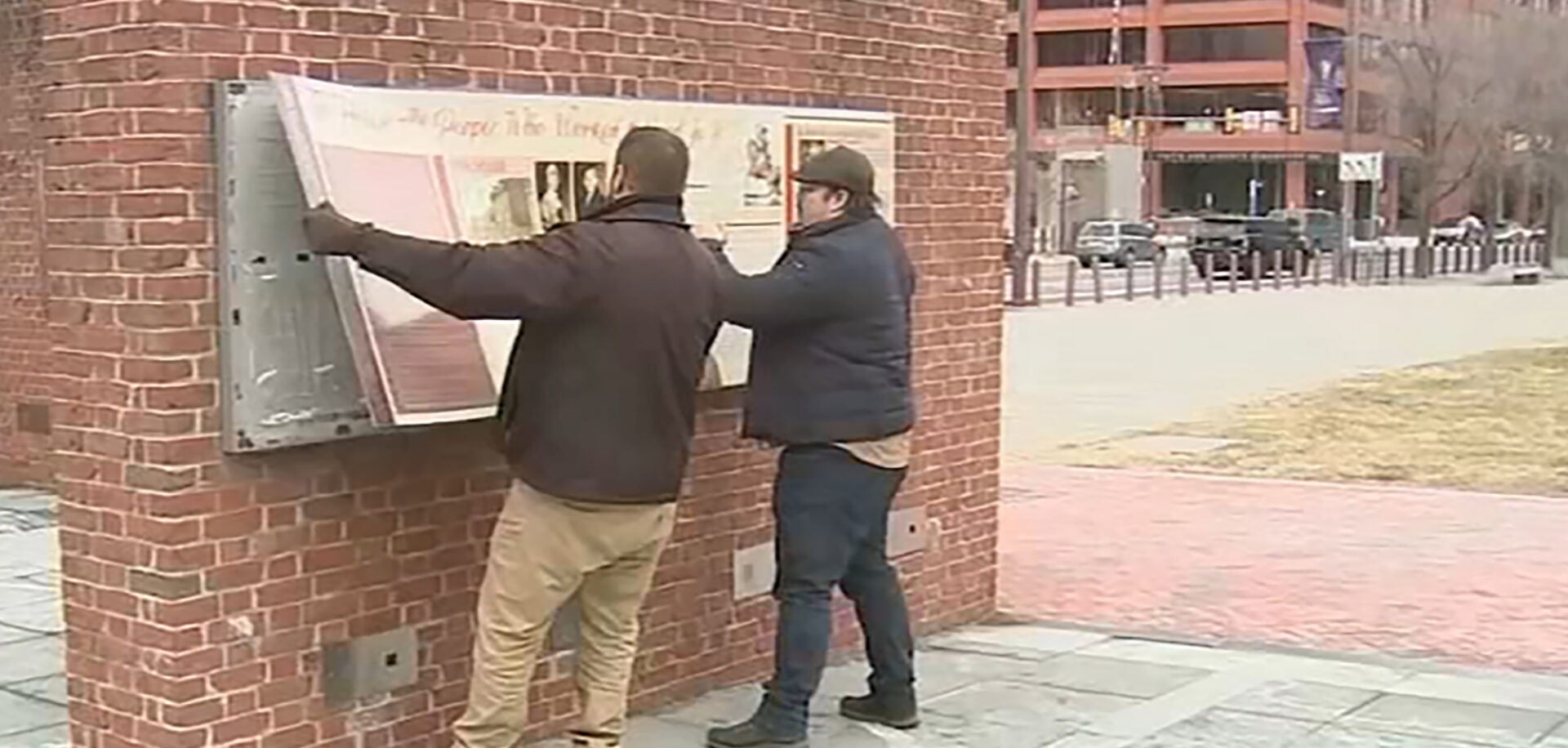
We are in the midst of an American civil war.
This time, wool uniforms have been replaced by whistles, backpacks and face masks worn by ICE agents, and drafts have been replaced by calls from community organizers and federal recruitment pleas.
Still-life photographers have been replaced by personal cell phone cameras that livestream violence instantaneously to the entire world. Cannons have been replaced by hand-held weapons of mass destruction. The battlefields continue to be ordinary locations — but now they are neighborhood streets, schools, parking lots and homes.
Ginny Brown Daniel
This American civil war has been a long time coming. We have returned to it because we never resolved the nation’s original sins — white supremacy and Christian nationalism — in the 19th century. We ended formal slavery without dismantling the theology that justified it. We reunited the nation without repentance. We chose reconciliation without truth-telling. We allowed the defeated to reclaim public space — erecting monuments that honored their cause while inflicting racial violence and terror on Black and brown communities.
Reconstruction was not simply allowed to fade away. It was actively abandoned — by allowing the losing side to regain power through violence, altered legislation and immoral rationale preached from Christian pulpits. White terror was tolerated. Laws were rewritten to reassert control. Theology was weaponized to sanctify racial hierarchy and state violence.
For many communities of color, this war never paused at all — a truth the prophets knew well, condemning those who cry “peace, peace” when there is no peace (Jeremiah 6:14).
And what is abandoned does not disappear. It resurfaces.
If we do not finally do the work we refused then — truth, repentance, repair, healing — we will face this American civil war again and again.
This is where we are.
What is happening in Minneapolis is not a matter of perception or interpretation. It is violence experienced, recorded and mourned in real time. Federal power is being exercised in ways that shape daily life through fear, and communities are absorbing the cost. This is not abstract conflict; it is lived reality.
“Minneapolis is not an outlier. It is one battlefield in a much larger war.”
Minneapolis and Charlotte, Memphis and Chicago mark intentional targets — places the current administration has publicly labeled “dangerous,” a designation that functions less as a public safety assessment than as a political judgment about who belongs and who does not. These are cities marked not by chaos, but by resistance to a particular vision of power.
Minneapolis is not an outlier. It is one battlefield in a much larger war. Just as Gettysburg, Antietam and Fort Sumter once marked flashpoints in a national conflict already under way, Minneapolis marks a place where the fractures of this unfinished American civil war are being forced into the open. Similar confrontations between federal authority and ordinary life are playing out in cities, towns, schools, parking lots and homes across the country.
Minneapolis names the war, but it does not contain it.
Faith communities are not engaging this moment as theory. They are responding to neighbors afraid to leave their homes, to children carrying anxiety into classrooms, to streets that now hold both memory and mourning. Churches are delivering groceries, organizing accompaniment, praying at sites of loss, wrestling publicly with what faithfulness requires when neutrality becomes abandonment.
This is not simply a political crisis. It is a moral and spiritual reckoning.
To name this history is not to rehearse old grievances. It is to tell the truth about the moral terrain we are standing on now. Civil wars do not end simply because fighting pauses or administrations change leadership; they end when truth is spoken, responsibility is taken and repair is pursued. When those steps are skipped, the conflict waits — reshaped, renamed, returned.
“We are not bystanders in this American civil war. We are participants, whether by action or by silence.”
That means we are not bystanders in this American civil war. We are participants, whether by action or by silence. The question before us is not whether we are involved, but how. What moral responsibilities do we carry when violence becomes ordinary, when fear governs daily life, when federal power is exercised in ways that fracture communities rather than heal them?
This is where faith matters — not as rhetoric, but as moral formation.
If this is an American civil war — and it is — then the church cannot afford the luxury of denial or distance. We already are inside this conflict, formed by the choices we make under pressure and by the truths we are willing, or unwilling, to speak.
The question before the church is not how to regain influence or protect credibility. It is whether we will tell the truth about where we are and how we arrived here. Whether we will listen to those bearing the cost of this war without rushing to defend institutions or explain away harm. Whether we will refuse to provide theological cover for violence, fear or exclusion — simply because doing so feels safer than disruption, or because the speaker touts Jesus in their words.
Recently, Robert Hirschfeld, the Episcopal bishop of New Hampshire, urged clergy in his diocese to get their affairs in order — a sober acknowledgment that faithful witness may now carry real personal risk. His words were not reckless; they were honest.
And yet, if I were offering that counsel today, I would not give it only to clergy. I would include all people of faith.
This moment will not be led primarily by ordained ministers, rabbis or imams. It will be led by ordinary people of conscience — neighbors, parents, teachers, workers — who are sick and tired of being sick and tired of white Christian nationalism suffocating our beloved country.
“The moral center of this struggle will not come from pulpits alone.”
The moral center of this struggle will not come from pulpits alone, but from people who have decided they can no longer live with silence, denial or fear disguised as faith. It will be dangerous and deadly for the layperson and clergy alike.
That does not diminish the church’s role. It clarifies it.
The church’s responsibility is not to control this moment, but to serve it — to tell the truth about our national sin past and present, to refuse the false peace of neutrality, to stand with those whose lives are being constrained, endangered or erased in the name of God and country.
Faithfulness in this moment will not be measured by volume or certainty, but by moral clarity. By our willingness to stand where the fractures are visible. By our courage to name what is killing the soul of the nation without outsourcing responsibility to another generation or another administration.
The church has faced moments like this before. We know the cost of silence. We know the damage done when reconciliation is declared without truth, when unity is pursued without justice, when peace is confused with order. We also know faith can be a force for repair when it refuses denial and chooses presence instead.
This American civil war will not be resolved by rhetoric or restraint alone. It will end — if it ends at all — through truth-telling, repentance and repair. The church does not control that outcome. But we do control whether we will participate in the work required of us or repeat the failures that brought us here.
This is where we are.
Ginny Brown Daniel is an ordained minister who is a keynote speaker and writes on faith and politics in Texas. Visit her website at www.ginnybd.com.