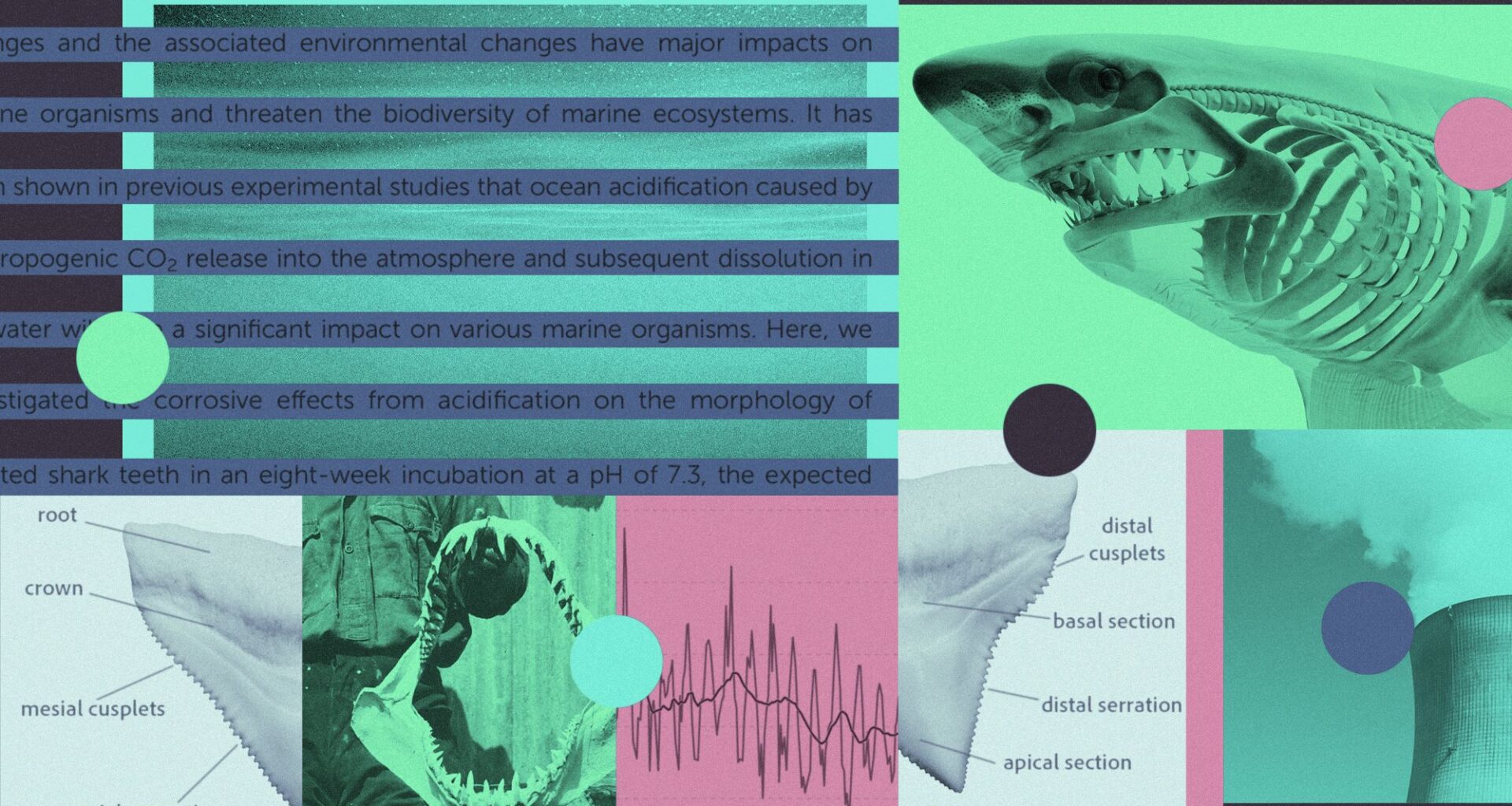
While many people are scared of sharks thanks to their rows of razor-sharp teeth, the changing waters might be rendering the creatures from “Jaws” a little less fearsome. Increasing acidity in the world’s oceans is changing the structure of sharks’ teeth and making them weaker, according to a study published last year, and scientists are worried this could affect the greater marine ecosystem.
To simulate this, the study kept blacktip reef shark teeth in a pair of water tanks for eight weeks; one tank had a pH of 8.1 while the other had a pH of 7.3, the expected acidity of the ocean by 2300. It was found that the “teeth exposed to the more acidic water became much more damaged, with cracks and holes, root corrosion and degradation to the structure of the tooth itself,” said The Associated Press. Ocean acidification “can’t be disregarded as a threat facing sharks,” Maximilian Baum, a marine biologist at Heinrich Heine University Dusseldorf and the study’s lead author, told the AP.
From our morning news briefing to a weekly Good News Newsletter, get the best of The Week delivered directly to your inbox.
From our morning news briefing to a weekly Good News Newsletter, get the best of The Week delivered directly to your inbox.
This dental stress “would add to sharks’ other problems, which include prey shortages caused by overfishing,” said The Guardian. Many shark species are able to replace lost teeth naturally, but increasing ocean acidity “could speed losses past replacement rates.” And more than just sharks could be affected, as there could be “effects on the teeth of ocean predators in general when they are highly mineralized structures like we have in sharks,” Baum said to The Guardian.
What can be done about this?
Not all is lost, as the study “does have a few limitations,” said Smithsonian magazine. Most notably, the “repair process for teeth may be different in living species compared to in teeth that have fallen out.” And some experts have suggested that the rate of tooth replacement “could potentially keep up with any damage the animal’s teeth might face.” It will be “interesting to see in future studies if the damage to teeth seen in studies like this one results in a functional effect on a tooth’s ability to do its job,” Lisa Whitenack, a shark tooth expert at Allegheny College who was not part of the study, said to The Guardian.
Still, others are more pessimistic about the outlook on sharks and overall marine life. The study’s “main takeaway is that not only small organisms like corals or mollusks are at risk: even the teeth of apex predators show visible damage under acidified conditions, suggesting that ocean acidification could impact sharks more directly than previously assumed,” Baum said to CNN. By “isolating the chemical effects of acidified seawater on the mineralized structure itself, we want to provide a baseline for understanding vulnerability of shark teeth,” which could “highlight the potential damage to exposed hard tissues like teeth.”