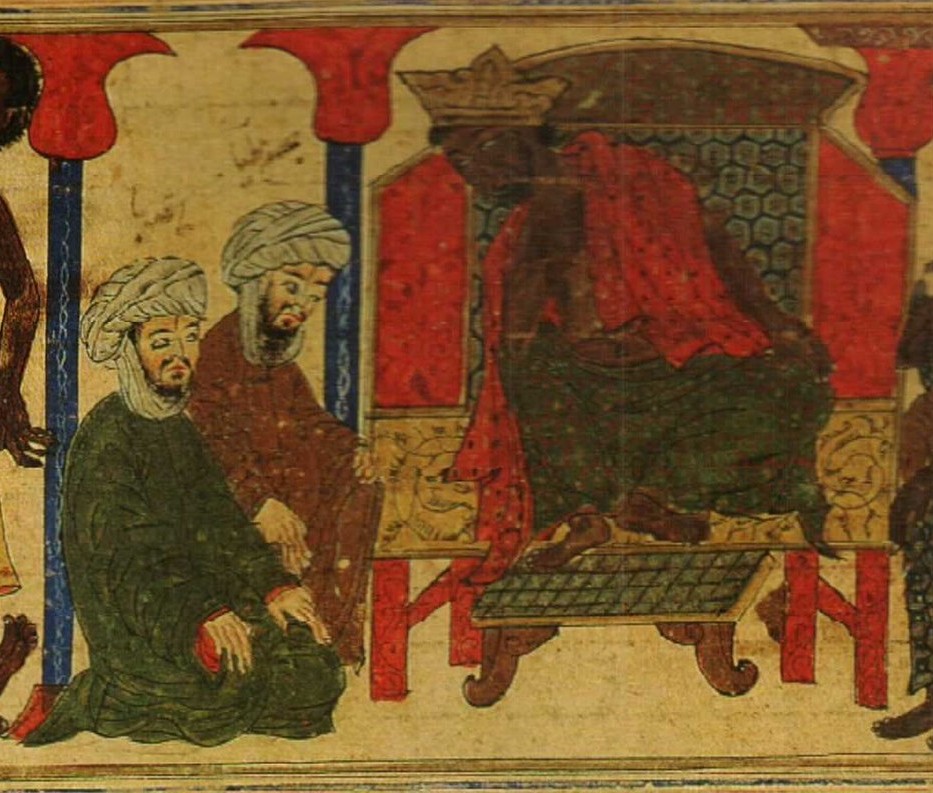
In the seventh century, Muhammad, the Prophet of Islam, advised persecuted Muslims to leave Mecca and seek refuge across the Red Sea in Christian Abyssinia (modern day Ethiopia/Eritrea). That kingdom was ruled by a Christian king known in Islamic sources as the Negus.
When envoys from Mecca arrived demanding the refugees return, the king did something remarkable: he listened. He did not judge before hearing their story. He invited the Muslims to speak for themselves. Ja‘far ibn Abi Talib, representing the refugees, recited verses from the Qur’an about Mary and Jesus. According to the accounts, the king wept and offered them safety.
The king did not deny theological differences. Yet the Muslim’s apparent love for Jesus, even if Christians and Muslims profoundly disagree about who he is, something central and indispensable to Christianity, did not prevent a measure of solidarity. Muslims affirmed common values—justice, care for the poor, protection of the weak, love of neighbor, and the spiritual equality of men and women. This was an early model of interfaith integrity: affirming sameness and difference alike, without coercion or compromise.
This posture feels painfully relevant today. Muslim refugees seem to be judged today before being heard. In public debates on immigration in the United States and in other nations, they remain objects of conversation rather than participants in conversation. Policies are formed without listening to the people whose lives are most affected. The Abyssinian Christian king offers a corrective: deep listening as an act of faith. Judging people without knowing their story is unacceptable. To amplify marginalized voices is not charity; it is justice.
Equally striking is what the king did not do. He did not approach the refugees with a utilitarian mindset. He refused the bribes offered by the Meccan elite. He did not ask what benefit these refugees would bring to his kingdom, or what burdens they might impose. He acted out of a faith-based conviction, one grounded in the dignity of human beings.
Today, immigration debates often begin with calculations—economic gain, political risk, social cost. While such considerations matter, they cannot be the starting point for Christians or Muslims. Human beings are not commodities, and their worth cannot be measured by usefulness.
The Christian King Negus also rejected the logic of reciprocity. He did not say, “I will protect you if your people protect mine.” Today, I hear arguments that Western countries should welcome Muslim refugees only if Muslim-majority countries treat Christian minorities well. Justice for one group, however, cannot be conditional on the behavior of another. Refugees cannot be held hostage to the politics of their governments. Faithfulness demands moral clarity, not transactional generosity.
Hospitality stands at the heart of this encounter. In both Christian and Islamic traditions, hospitality is not optional. Jesus’ command to love one’s neighbor as oneself leaves no room for exclusion (Mark 12:30-31; Matt. 22:37-39). The Qur’an similarly teaches that God has already shown hospitality to all humanity, providing sustenance and shelter during our temporary dwelling on earth (Sura 15:51-56; 51:24-30). To welcome the stranger, then, is to mirror divine mercy. The Muslim scholar Bediüzzaman Said Nursi captures this attitude succinctly when he writes, “The mercy of faith embraces every creature.” Here, faith is expressed not through exclusion, but through responsibility for the other—especially where power, fear, or political interests would otherwise push toward exclusion.
The king granted the Muslims asylum, freedom of religious practice, and protection from persecution. The Muslims, in turn, pledged loyalty to their new home. Some even converted to Christianity; others remained Muslim. Conversion happened on both sides, including, according to Islamic tradition, the king himself. These accounts were preserved honestly, without embarrassment or censorship.
The Muslim refugees did not isolate themselves. They contributed economically, defended Abyssinia in times of war, and prayed for the king’s victory against rebels in their new home. They obeyed local laws and refrained from undermining their hosts. Islamic jurists later pointed to this example to argue that integration into a non-Muslim society is not only permissible but necessary.
Education, language acquisition, and civic participation were seen as religious duties. To live with dignity meant becoming an asset to the broader society.
Muslims can look back with pride on a long history of migration and contribution—from advances in medicine and philosophy to art, architecture, and agriculture. These achievements were not despite faith, but because of it. Yet the goal of participation was never domination or forced conversion. As the Abyssinian model shows, Christians and Muslims freely shared their spiritual treasures while respecting personal choice.
When people today insist on an “us versus them” narrative, they suffer from what theologians call historical amnesia. Many faith communities, including Christianity and Islam, began at the margins. All were once vulnerable, displaced, and dependent on the mercy of others. The first Muslim community, by its own telling, survived because a Christian king chose compassion over fear. Many Muslim scholars argue that without this protection, Islam itself might not have endured.
This is why I refuse narratives that exclude Muslims from Western moral history. The story of Abyssinia belongs to all of us. It challenges both receiving societies and immigrant communities. It calls hosts to listen deeply, reject dehumanization, and practice hospitality rooted in faith. It calls newcomers to engage, contribute, and honor the laws and values of their new homes without surrendering their identity.
This encounter is not just a memory of a distant past, but a vision of a world still to come. In an age of walls and suspicion, here is a vision of a world marked by the recognition of universal human dignity.
Zeyneb Sayilgan, Ph.D., is the Muslim Scholar at Institute for Islamic, Christian, Jewish Studies and an affiliated faculty at Virginia Theological Seminary.