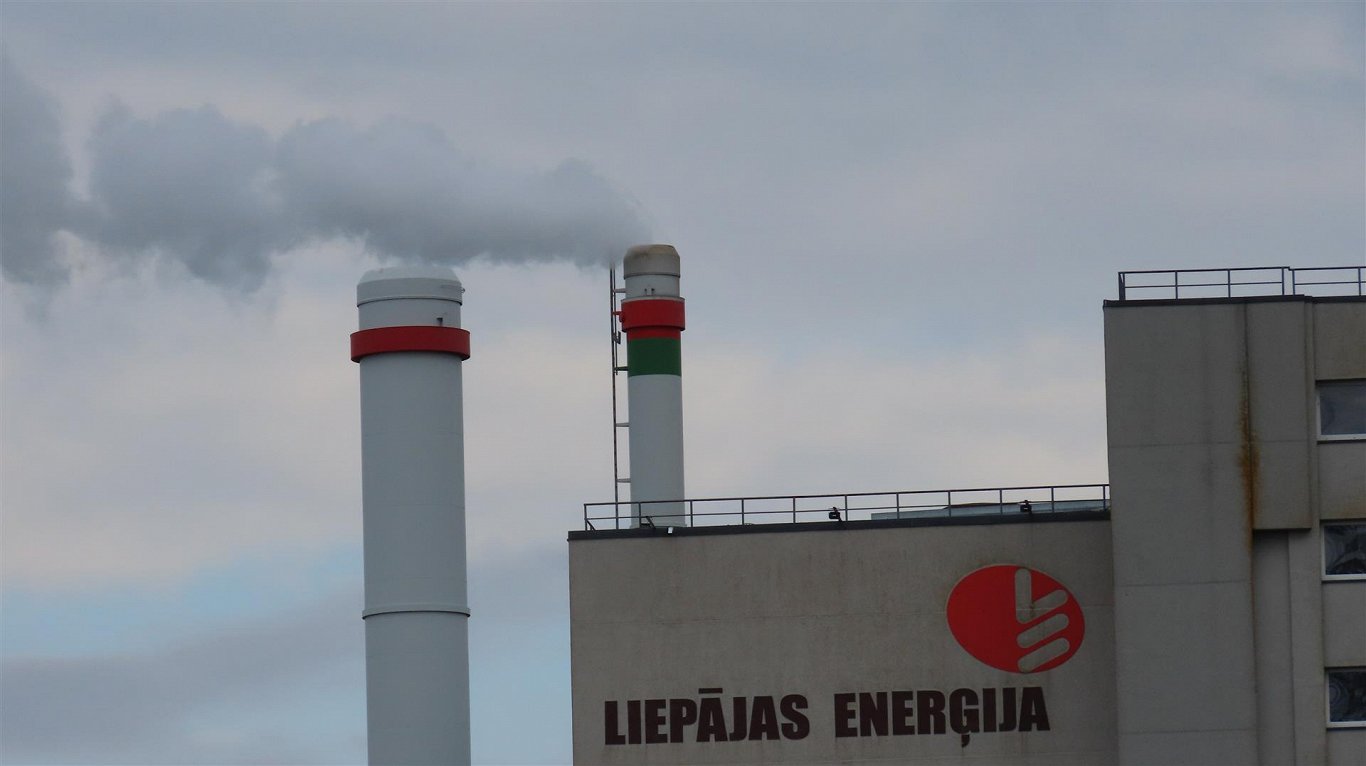
Latvia has managed to substantially reduce its greenhouse gas emissions between 2013 and 2024, according to fresh Eurostat data.
Data on greenhouse gas emissions intensity measures the amount of emissions (measured in CO2 equivalents) per unit of gross value added (measured in euros) in an economy. It is an indicator of the climate efficiency of economic production. A decrease in the emissions intensity means fewer emissions for the same generation of value added.
The greenhouse gas emissions intensity in the EU decreased by 34% from 2013 to 2024. This is the result of the simultaneous decrease in greenhouse gas emissions by the EU economy and the increase in its value added (+20%). The largest reductions were recorded in Estonia (-64%), Ireland (-50%) and Finland (-44%). Only Malta (+17%) saw its emissions intensity increase since 2013.
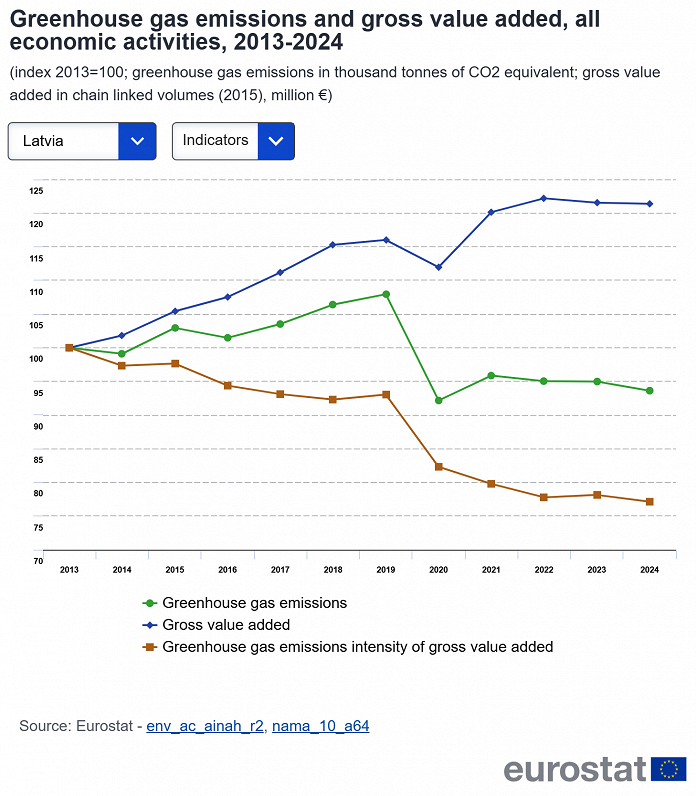
Latvia greenhouse gas emissions trends
Photo: Eurostat
Latvia saw a 23% reduction and Lithuania saw an 18% reduction. Estonia’s huge reduction is most likely partly a result of its gradual move away from using oil shale as a source of power.
Interestingly, in Latvia the agricultural sector was the largest source of emissions, accounting for around 30% of total emissions, while in Lithuania the largest source was transportation and in Estonia is was electricity and gas supply.
Select text and press Ctrl+Enter to send a suggested correction to the editor
Select text and press Report a mistake to send a suggested correction to the editor
Tell us about a mistake