The broad-based S&P 500 is coming off its third consecutive year with a gain of at least 16%.
A historic level of division within the Federal Open Market Committee (FOMC) appears to foreshadow trouble for the stock market.
Furthermore, Jerome Powell’s term as Fed chair is up in less than four months, yielding more questions than answers at this point.
10 stocks we like better than S&P 500 Index ›
For the better part of the last three years, investors have had plenty to be thankful for. In 2025, the widely followed Dow Jones Industrial Average (DJINDICES: ^DJI), broad-based S&P 500 (SNPINDEX: ^GSPC), and growth stock-dependent Nasdaq Composite (NASDAQINDEX: ^IXIC) rallied by 13%, 16%, and 20%, respectively. This was a continuation of a three-year streak for the S&P 500 where it’s delivered annual gains of at least 16%.
Catalysts have been abundant, with the rise of artificial intelligence and the advent of quantum computing spurring innovation and promising to increase the long-term growth potential of many of Wall Street’s most influential businesses.
A resilient U.S. economy has also provided a boost to equities. Most S&P 500 companies are leapfrogging Wall Street’s profit projections. To boot, President Donald Trump’s Tax Cuts and Jobs Act, passed during his first term in the White House, has incentivized publicly traded companies to repurchase their own stock, which can have a positive impact on earnings per share.

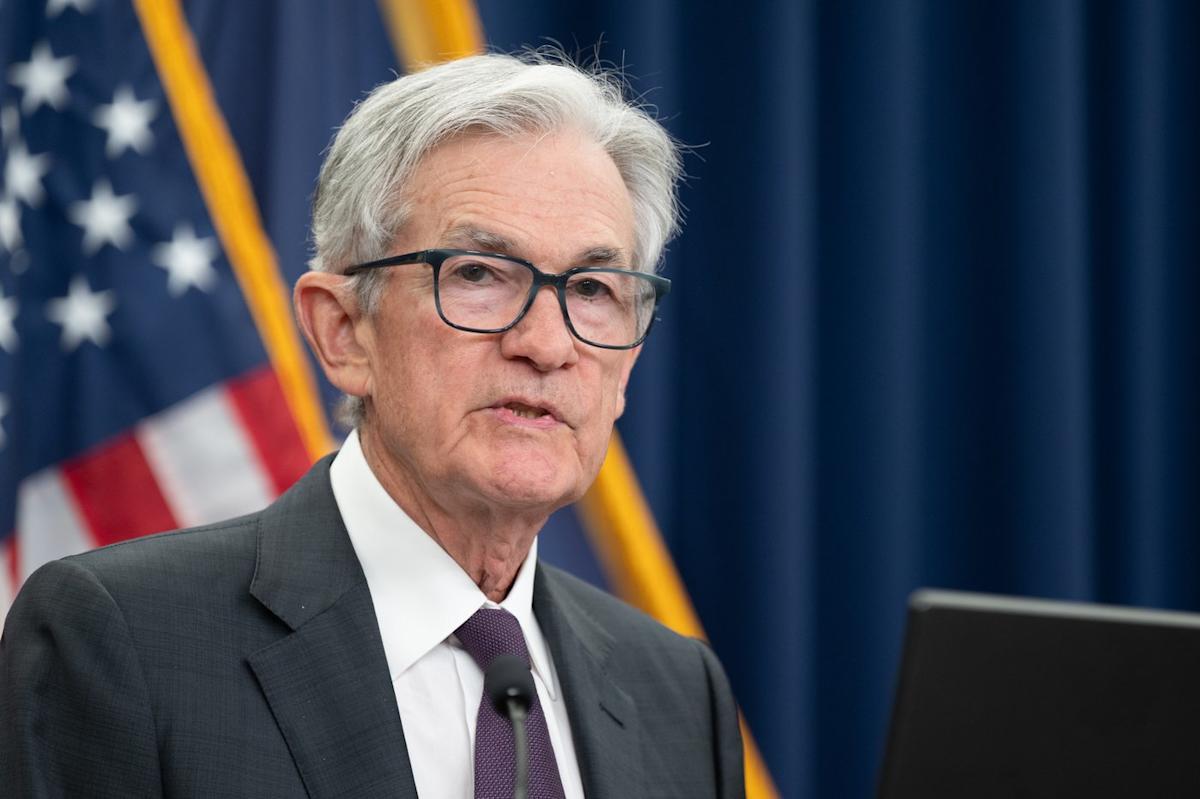
Fed Chair Jerome Powell delivering remarks. Image source: Official Federal Reserve Photo.
Furthermore, investors are excited about the prospect of additional interest rate cuts by the Federal Reserve in 2026. Lower interest rates can encourage businesses to borrow with the purpose of hiring more workers, acquiring other companies, and increasing capital devoted to research and development.
While the Fed is often viewed as a stabilizing force for the stock market, it may represent Wall Street’s undoing, with a double whammy expected in the new year.
Although the mission of the nation’s central bank is straightforward — maximizing employment and stabilizing prices — accomplishing this task is complicated.
The primary action taken by the Federal Open Market Committee (FOMC) — the 12-member body, including Fed Chair Jerome Powell, responsible for making and overseeing our nation’s monetary policy — is adjusting the federal funds target rate. This figure, which represents the overnight lending rate between financial institutions, can be reduced to spur borrowing or increased to pump the brakes on lending activity.