A first test for a new political constellation

Petr Macinka, Andrej Babiš and Tomio Okamura|Photo: Zuzana Jarolímková, iROZHLAS.cz
All of Czechia’s highest constitutional representatives are meeting at Prague Castle on Monday to discuss the country’s foreign policy, security priorities, and international coordination. It is the first such gathering in a newly reshaped political constellation and comes at a time of heightened attention to Czech positions within the European Union and NATO.
According to the president’s office, the talks are expected to cover current foreign-policy challenges, visits by foreign leaders to Czechia, and coordination of international travel by senior politicians. Particular attention is being paid to preparations ahead of this summer’s NATO summit in Turkey, where Czechia is expected to present concrete commitments.

Pavel Havlíček|Photo: Kateřina Cibulka, Czech Radio
From an international perspective, the meeting itself carries symbolic weight. Pavel Havlíček, a foreign policy analyst at the Association for International Affairs, says the gathering is being closely watched abroad. “Seeing today’s meeting from the international point of view, it is really significant, because it is one of the first instances in which the newly inaugurated political leadership will meet with the president,” Havlíček told Radio Prague International.
He adds that Prague Castle is trying to act as a coordinating hub. “The aim is to make Czechia look coherent in its international standing, in its foreign policy and security positioning,” he said.
Continuity in policy, tension in politics
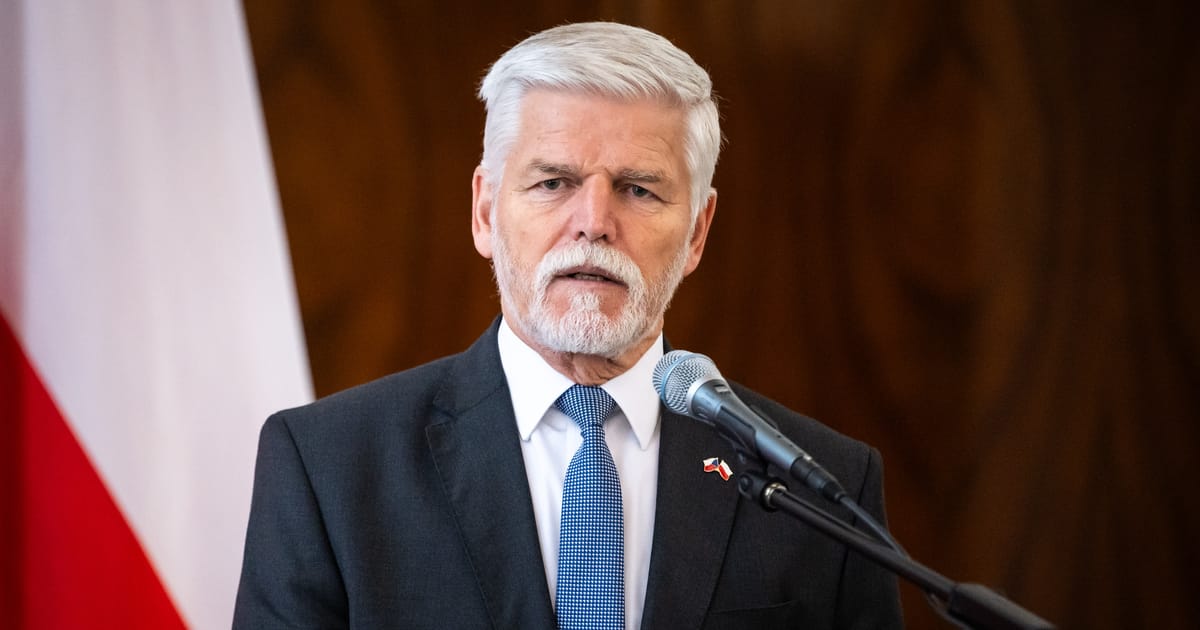
President Pavel has framed the meeting as a sign of continuity in Czech foreign policy, despite changes in government and parliamentary leadership. Yet recent public disputes among senior politicians have raised questions about how smooth that continuity will be in practice.
One area under scrutiny is policy toward Ukraine. While the president has consistently backed strong support for Kyiv, the foreign minister has adopted a more cautious public tone, especially regarding military assistance. Despite this, Havlíček argues that practical differences may be smaller than they appear. “When it comes to the actual content of foreign and security policy, I do not think there needs to be major turbulence, and on many issues — including Ukraine — there is still a large degree of agreement,” he said.
Where friction becomes more visible, according to the analyst, is in personal and political relations. Strained ties between the president and the foreign minister have complicated coordination, even when their underlying assessments of international developments are not fundamentally opposed.
Wider divides and unanswered questions

L-159|Photo: Michal Voska, Czech Ministry of Defense
The deepest divides may lie elsewhere. Havlíček points to broader discrepancies between Prague Castle and other constitutional actors, particularly the Speaker of the Chamber of Deputies. “There is a much bigger discrepancy between Prague Castle and other constitutional representatives, especially when it comes to figures like Tomio Okamura, whose positions on Ukraine and Russia are fundamentally different,” he said.
Among the topics likely to surface in today’s discussions are the possible transfer of four L-159 aircraft to Ukraine, Czech involvement in new international initiatives proposed by U.S. President Donald Trump, and questions surrounding diplomatic appointments, including reports that the government may revisit previously approved ambassadorial nominations.

Andrej Babiš and Petr Pavel|Photo: Zuzana Bönisch, Office of the President of the Republic
Prime Minister Babiš has meanwhile emphasized a pragmatic approach to foreign policy focused on exports and economic interests. Whether he will now assert stronger leadership in coordinating Czech diplomacy remains unclear. Havlíček notes that, so far, the prime minister’s voice has been less dominant than expected, with foreign-policy messaging often driven by smaller coalition partners.
No major announcements are expected immediately after the meeting, which is taking place behind closed doors. Still, for international observers, the image of all key constitutional figures meeting at Prague Castle may prove as important as any concrete decision — offering early clues about whether Czech foreign policy will project unity or remain shaped by internal tensions.