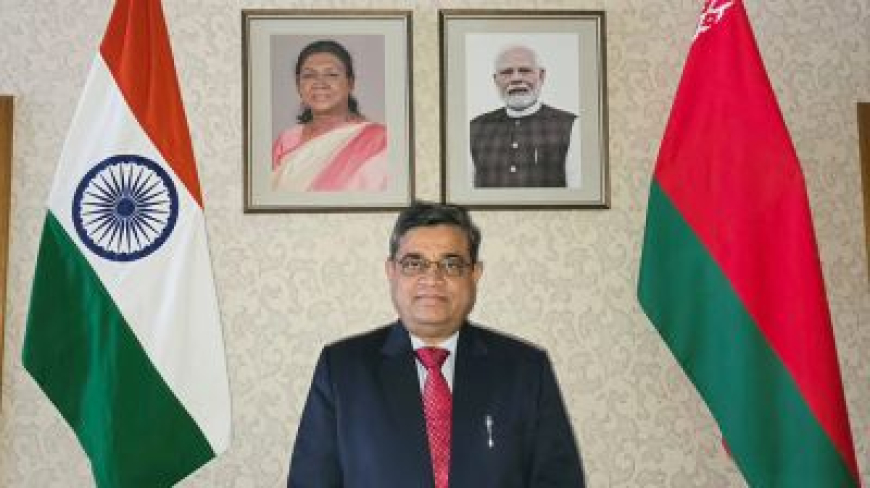
Belarus-India trade and economic relations have become an important part of interaction in major international organizations such as BRICS, the Eurasian Economic Union, and the Shanghai Cooperation Organization. Ambassador Extraordinary and Plenipotentiary of India to Belarus Ashok Kumar made the relevant statement in an interview with BelTA on the occasion of the Republic Day that India celebrates on 26 January. India is an ancient civilization but a young democracy, gaining strength year after year. In his greetings to the Indian prime minister the Belarus president mentioned that this holiday embodies centuries of wisdom of the Indian civilization that provides a reliable foundation for the world’s largest democracy. India’s accomplishments in economic development, innovations, and social sphere invoke respect and represent an example for many states. India’s national holiday offered a reason for a conversation with the head of the diplomatic mission of the country that is friendly to Belarus about friendship, bilateral relations, and the mutual understanding between the nations that has evolved over many years.
Belarus is proud of its long-standing friendly relations with India, which is a reliable partner and friend of our country. How would you evaluate the current bilateral cooperation between the two countries?
I’d like to share some important aspects of development of India’s bilateral relations with Belarus. India was among the first few countries, which established diplomatic relations with Belarus in 1992 right after Belarus became independent from the USSR. India got a stable base to build diplomatic relations with Belarus thanks to its historically excellent relations with the USSR.
India’s bilateral relations with Belarus are warm, marked by mutual support at the international level, for instance, within the framework of the United Nations Organization, by high-level visits, good mutual understanding based on the principle of multilateralism, which provides a platform for sharing views on many important global matters like international terrorism, free trade agreements, supply chain management, climate change problems, international security, and other strategic areas.
Both countries are members of the Non-Aligned Movement and share common views on global problems, with recent efforts focusing on boosting economic interaction, promoting strong diplomatic ties, and expanding cooperation in security and technology.
Apart from that, cooperation in the field of Eurasian security is on the rise. Cultural exchanges like Hindi classes, Indian film festivals, and yoga centers are growing stronger. On the whole, opportunities for exploring new areas of interaction are opening up thanks to the invigoration of the bilateral relations.
In his congratulatory message to India, the head of state expressed confidence that through joint efforts we will fully realize the significant potential for cooperation in manufacturing, digitization, agriculture, and security. Please tell us about trade and economic cooperation between India and Belarus.
Yes, indeed, the time has come to go beyond the traditional strengths of bilateral trade and explore new product categories and areas of cooperation.
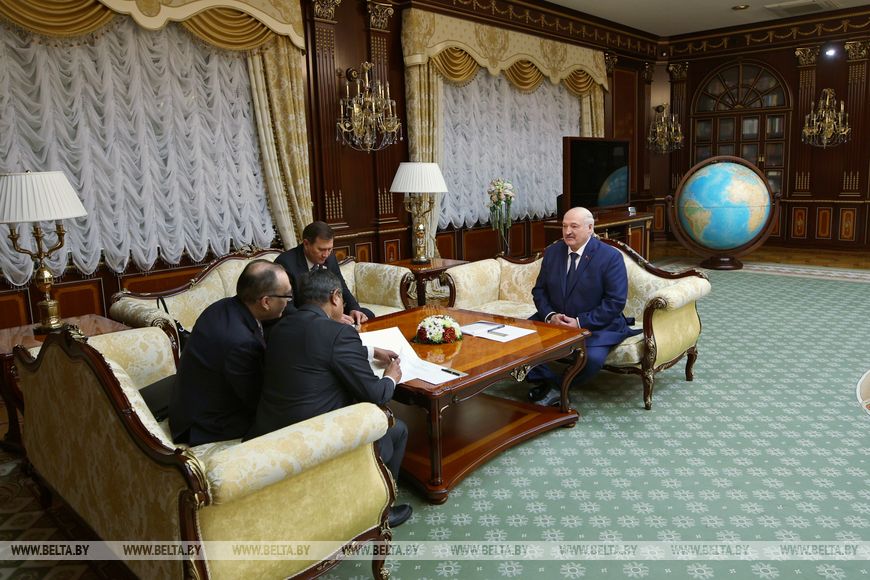
I would like to draw attention to the important role played in these matters by the intergovernmental commission on cooperation in trade, economy, science, technology, and culture. The Indian side is headed by the minister of state for commerce and industry. The 11th session of the commission was held in New Delhi in November 2022. The next, 12th session of the intergovernmental commission is supposed to take place in March 2026. Current prospects for Belarusian-Indian contacts will be discussed at this meeting among other things.
In my opinion, despite the steady growth of the bilateral trade, the figures are still below existing potential. Problems with payments and logistics under sanctions, especially those related to the export of potash fertilizers from Belarus, have had a negative impact on the bilateral trade. This is why it is so important to explore new categories of products for exchange and new avenues of cooperation.
It is also important to note that a large delegation of representatives of 40-50 pharmaceutical companies led by senior officials of the Pharmaceuticals Export Promotion Council plans to visit Belarus in March 2026. Without a doubt, it will open up opportunities for strengthening cooperation in the pharmaceutical sector.
The embassy is actively involved in organizing meetings between businesspeople from both sides through webinars and the dissemination of information about existing opportunities. Within the next two months we expect two large delegations and hope to further strengthen business ties between Belarus and India.
In the field of science and technology we hope to hold the 10th session of the relevant joint working group this year. The National Academy of Sciences of Belarus cooperates with the Indian Council of Scientific and Industrial Research and other scientific and technical institutions and is working on the details of an agreement to formalize these relations.
It is very important that Belarusian-Indian trade relations are no longer simply bilateral, but are part of large multilateral structures such as BRICS, the Eurasian Economic Union, and the Shanghai Cooperation Organization. India will assume the BRICS presidency in 2026. At the end of 2025 India and the Eurasian Economic Union, of which Belarus is one of the founders, signed a framework agreement committing to start formal negotiations on a free trade agreement. All of this is a way to expand our trade and investment cooperation. At present, it is imperative to strengthen various institutions and support interaction between our business communities.
Interaction between the ministries of foreign affairs has become an important factor in the development of Belarusian-Indian ties. Using the example of the 8th round of consultations between the ministries of foreign affairs of the two countries, which took place in Minsk, please tell us what topics are currently on the agenda.
Consultations between the ministries of foreign affairs of India and the Republic of Belarus are a crucial mechanism for maintaining and strengthening bilateral ties. These regular diplomatic meetings cover the entire spectrum of bilateral relations, including political, economic, trade, defense, and cultural cooperation.
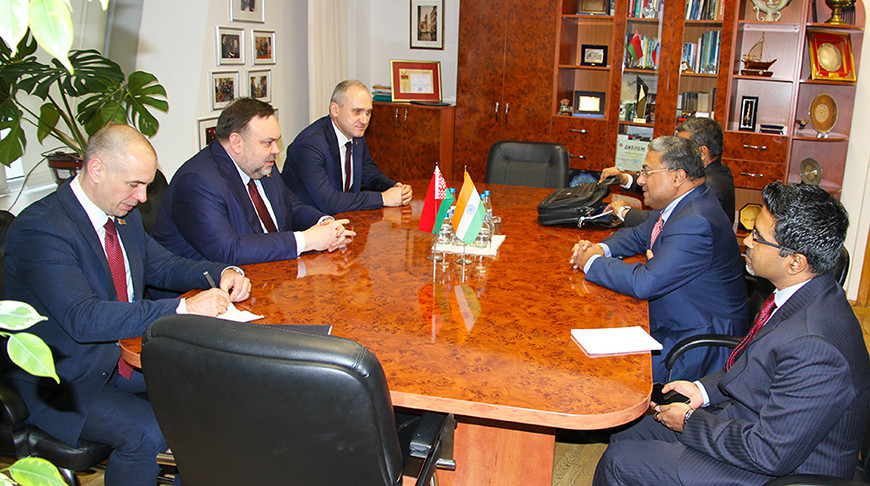
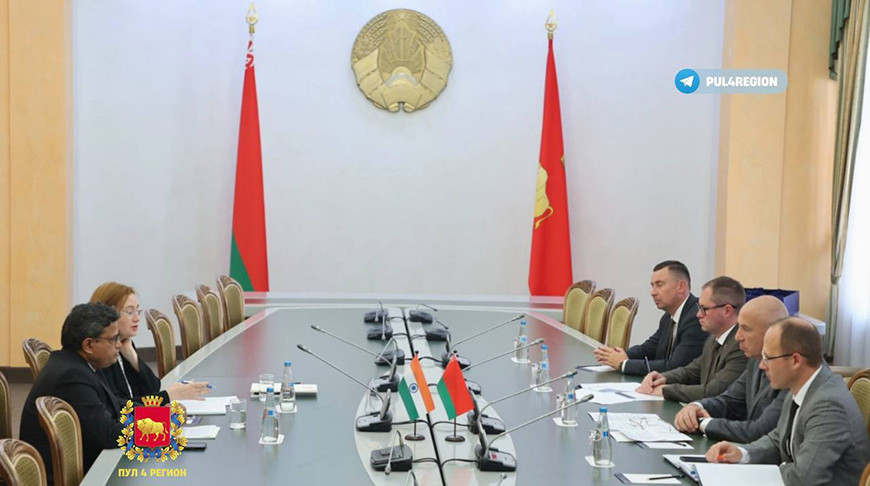
After the 7th round of consultations in New Delhi in August 2022, the latest, 8th round of consultations took place in Minsk on 27 October 2025. The Indian delegation was led by Secretary (West) at the Ministry of External Affairs Sibi George while the Belarusian delegation was led by Deputy Minister of Foreign Affairs of the Republic of Belarus Evgeny Shestakov. The discussions focused on intensifying bilateral contacts amid the current global geopolitical instability, strengthening mutual trust and enhancing cooperation, especially within multilateral structures such as the Shanghai Cooperation Organization, BRICS and the Eurasian Economic Union. The Indian delegation was also received by Belarusian Minister of Foreign Affairs Maxim Ryzhenkov to discuss key avenues of cooperation.
During the consultations between the ministries of foreign affairs several key areas of bilateral partnership were identified. In particular, trade and the economy, which is why a significant part of the negotiations was devoted to expanding the bilateral trade. By the way, Belarus is the most important supplier of potash fertilizers to India.
Much attention was paid to contacts in the field of manufacturing, with both countries emphasizing the importance of cooperation in industrial production, mechanical engineering, and technology transfer. Defense and security matters were discussed separately, with consultations covering matters such as counterterrorism, which is consistent with interaction within the Shanghai Cooperation Organization and the Non-Aligned Movement.
Educational and cultural cooperation was also discussed at the consultations. By the way, about 1,000 Indian students attend Belarusian medical universities, and the interconsular dialogue in 2024 was devoted to this very topic.
An increasing number of students from India are coming to Belarus. How would you assess the overall relations between our countries in the field of education?
Yes, indeed, a large number of Indian medical students receive their education at Belarusian state medical universities, undergo professional retraining, and improve their qualifications. A vast majority of them receive medical education in Minsk, Grodno, Vitebsk, and Gomel. In order to attract even more Indian applicants, Belarus has significantly expanded the range of English-language courses, especially in the field of healthcare. The number of Indian students in Belarus has been growing steadily over the years.
In my opinion, this partnership is a key pillar of humanitarian cooperation, which was highlighted during the consultations between the two ministries of foreign affairs.
There is also a joint working group on education dealing with matters of cooperation between India and Belarus in the field of education. Its first session was held in 2016. The next session is planned for this year.
We invite Belarusian higher education institutions to cooperate in joint projects and research with their Indian counterparts. We are also interested in the Belarusian side offering more technical courses, such as engineering, in English, which will increase the number of Indian students coming to study in Belarus.
Indian art and culture, dance, yoga, Ayurveda, and the Hindi language are gaining popularity in Belarus. What are the main avenues of cultural cooperation between India and Belarus?
India is proud of its many centuries of cultural and civilizational heritage, which has been passed down from generation to generation and enriched. We are proud about the fact that Indian art is gaining popularity in Belarus. Indian films participate in the Minsk international film festival Listapad. In the last few years Indian Movie Days have been organized, giving Belarusian viewers an opportunity to enjoy Indian movies. India also takes part in the art festival Slavianski Bazaar in Vitebsk. In turn, Belarus is a significant participant in the annual international craft fair Surajkund in India to where it sends large artistic delegations.
The Indian embassy in Belarus organizes free classes in dance, yoga and Hindi, which are taught by Belarusian teachers. It is gratifying that a large number of Belarusians study Indian classical dance, yoga and Hindi in these classes. Ayurveda also attracts a lot of attention from Belarusians.
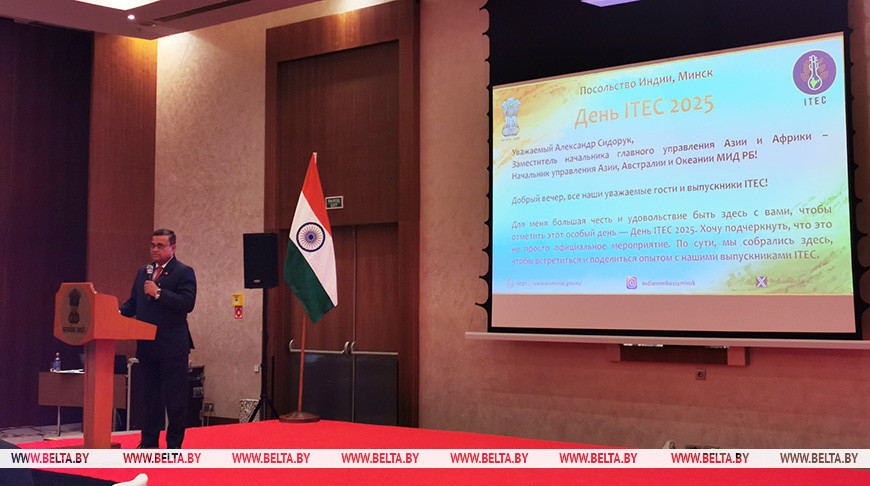
I would like to draw attention to another important initiative of the Indian government. This is the Indian Technical and Economic Cooperation (ITEC) Program, which promotes professional development in various fields. To date, about 330 Belarusians have taken advantage of its benefits. Last year 15 Belarusians participated in the ITEC program, and the embassy also organized special training in mobile forensics for 21 employees of the Ministry of Internal Affairs at the Gandhinagar Institute.
Mr. Ambassador, how do you see the immediate prospects for Belarusian-Indian cooperation?
I believe that in the future we will further strengthen the traditionally strong areas of cooperation along with mastering new mechanisms and areas of interaction.
India is opening Vostro accounts in rupees for international trade with friendly foreign countries. Many already work with these. Some are interested and are working out the conditions. We encourage Belarus to explore this opportunity to make our bilateral trade even more successful.
We are also interested in agricultural machinery such as tractors manufactured by MTZ. India also imports BelAZ haul trucks for its coal mines.
Given the size of the Indian market and India’s key position at the crossroads of West, South, and Southeast Asia, we welcome investments by Belarusian companies in manufacturing under our Make in India initiative and invite them to take advantage of the manufacturing incentive program and other similar government programs. I am confident that India can become a regional center for the production, export, and servicing of Belarusian equipment, machines, and vehicles.
Apart from that, both our countries have a strong base in the field of information technology and services. We could cooperate more actively in human resource development, advanced training, and the implementation of projects aimed at promoting e-government. As India is becoming a global center for financial technology, Indian IT and ICT (information and communication technology) companies can support Belarus in creating a reliable digital infrastructure for the country’s financial sector.
The defense sector is another area where potential for cooperation between our countries is available.
We welcome when companies explore the possibility of setting up joint ventures under the Make in India program and take advantage of production incentive mechanisms. For example, India has recently implemented reforms in the area of goods and services tax (GST), which have led to a significant reduction in taxes on the one hand, brought enormous benefits to consumers on the other, and increased sales volumes.
We are also interested in promoting the traditionally long-standing and friendly relations between the people that were established back in the days of the Soviet Union. An opportunity is also available for the development of tourism on both sides. Apart from that, Belarus has the potential for shooting Indian films, and if the efforts of Indian Bollywood and the Belarusian film industry are combined, we can see very good prospects here as well.
I am convinced that Belarus and India will be able to realize their existing potential and strengthen mutually beneficial cooperation.
By BelTA’s Alina Grishkevich