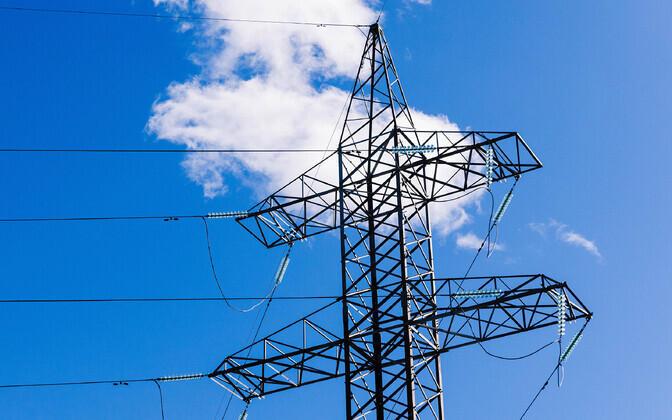
On Monday, electricity prices in Estonia reached their highest level of the year so far, peaking at €505 per megawatt-hour (MWh). Prices are expected to stay high until the end of the week.
The price of electricity in Estonia is being driven up by the cold weather and the associated high levels of consumption. The lack of wind is also a major contributing factor. Prices are not just high in Estonia at the moment but also in Lithuania and Finland, where there are large numbers of wind farms.
According to Marko Allikson, a member Baltic Energy Partners’ management board, Estonia does not have sufficient production capacity.
“Today, our prices are even higher than elsewhere. We do not have sufficient production capacity – Auvere is out of operation and the production of the eighth block of the Estonia [power plant] is also limited. That impact is undoubtedly reflected in these prices,” said Allikson.
Allikson noted that if Estonia’s oil shale-powered plants were operating at full capacity, the price of electricity would be lower.
“Estonia is expecting oil shale power plants to be available at a capacity of 1,000 megawatts. However, at the moment, they are operating at just over 500 megawatts. If they were all operating, the prices would certainly be somewhat lower,” said Allikson.
Tiit Hõbejõgi, acting head of energy trading at Enefit, said all operational capacities are currently available for supply.
“In Estonia, all operational capacities that are in working order are constantly available for supply. Today, we have several power plant units in operation at both the Baltic power plant and the Estonia power plant. Everything that allows us to lower the price is in operation,” said Hõbejõgi.
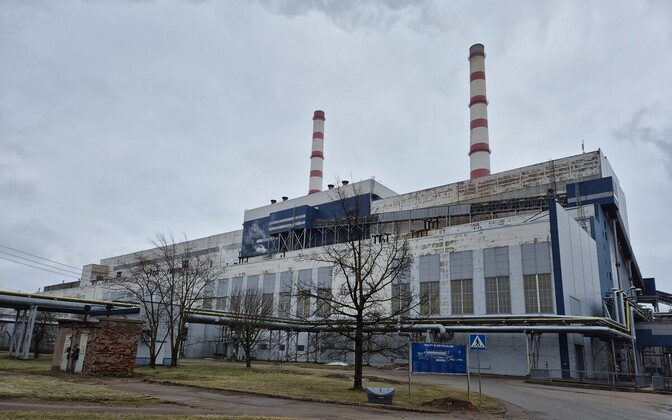 Narva’s Baltic Power Plant with its twin red and white striped smokestacks. Source: Eesti Energia
“The two oldest blocks are not operating now because they did not fit into the market. They are constantly on offer though, there is no doubt about that,” he added.
Starting up the old stations would not be a viable solution at the current electricity price, as doing so would not lead to a drop in prices.
“The main problem with these plants is that their fuel consumption is very high and very expensive. In order to start them up and make them profitable for the producer, they have to be able to keep them running for a longer period of time. But the current electricity market prices are extremely volatile. At one moment the price is high, then at another it is low, and these plants are not suitable for using in such short bursts,” said Kalle Kilk, chair of Elering’s management board.
According to Elering, a total of 8.3 terawatt-hours of electricity was consumed in Estonia last year, which is 1 percent more than in 2024. Domestic production covered 63 percent of total consumption, and the Estonian electricity system had a deficit of 3 terawatt-hours.
“If we look further ahead, Estonia would actually need more storage capacity for these kinds of periods, or, on top of that, gas-fired power plants, for example, which can be started up very quickly and the cost of which is not very high in comparison with current peak prices,” said Kilk.
Hõbejõgi said that as the current spell of cold weather continues, electricity prices will remain high until the end of the week.
“From the second half of the week, starting Thursday, wind conditions may improve and wind production could increase significantly in the Baltics. In that case, prices might also fall somewhat,” Hõbejõgi explained.
—