By 2030, agentic AI will have the full attention of shoppers, and grocery retailers must ensure their data is ready to work with the technology.
That was the primary message of the final keynote session Friday at the FMI Midwinter Executive Conference in Chula Vista, Calif., which brought together grocery executives to discuss grocery technology and trends.
Dan O’Connor, an executive fellow at Harvard Business School who works with AI and data companies, said some shoppers could have their own AI agents as early as 2028. Those agents would influence how people shop and which brands they choose.
“One of the implications I think about a lot is that the world we’ve lived in for the last 20 years had lots of time between the data and the decision,” O’Connor said. “The competitiveness of agentic commerce is such that data and decisions are going to come together and happen instantaneously.”
O’Connor said everyone who buys a new smartphone in the next few years will likely have agentic AI built in. After answering a few questions, the AI agent will be able to make product recommendations and handle repetitive purchasing tasks.
These task agents will operate based on rules set by consumers and retailers.
“This is just like your health app on your iPhone,” O’Connor said. “We’re going to set it and forget it. These models run on trust and transparency.”
That trust depends on the recency and credibility of a retailer’s content, as well as transparency about what products do well, what they do not do well, when they should be used and what other consumers say about them. The right product data will be essential.
“Data is now your product,” O’Connor told retailers in attendance.
One retailer already moving ahead with AI agents is Walmart. This past summer, the Bentonville, Ark.-based retailer rolled out a new framework for its AI tools consisting of four “super agents” that act as access points for customers, employees and external partners.
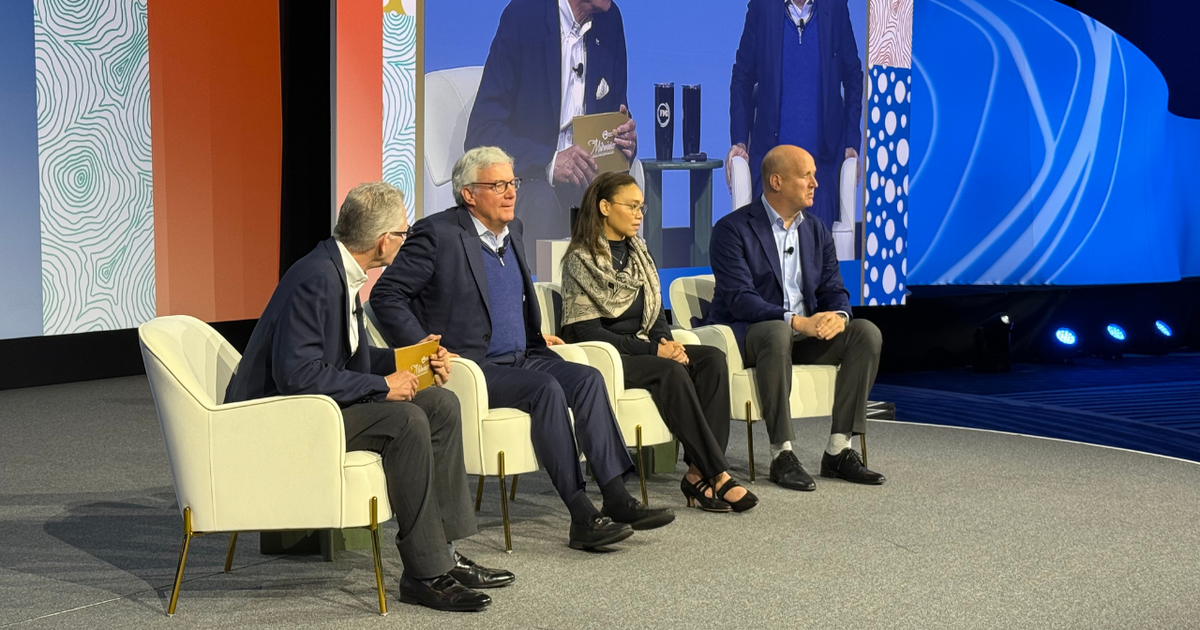
“We want to reduce the cognitive burden for everyone, so we simplify things through these agents that help orchestrate and streamline the process,” said Desiree Gosby, senior vice president of enterprise tech strategy and emerging technology for Walmart Global Tech. Gosby spoke on a panel with O’Connor and Guy Peri, chief information and digital officer at McCormick & Company.
Trust will also be critical. Consumers must trust the algorithm and their own agents to make purchases on their behalf.
Peri said suppliers and retailers must provide accurate, complete data to AI agents to build that trust.
“In this agentic era, trust is elevated,” Peri said. “A lot is changing, but what’s not changing is the importance of brand trust and loyalty, retailer trust and loyalty, and delivering quality every time.”
O’Connor said retailers will need large language models, or LLMs, and knowledge graphs that LLMs can discover. Knowledge graphs function like databases, pulling together internal and external data. Retailers, he said, will need to learn how to promote and project those knowledge graphs so they connect effectively with LLMs.
“You can’t control the LLM. You can control the knowledge graph,” O’Connor said. “These two systems work together.”