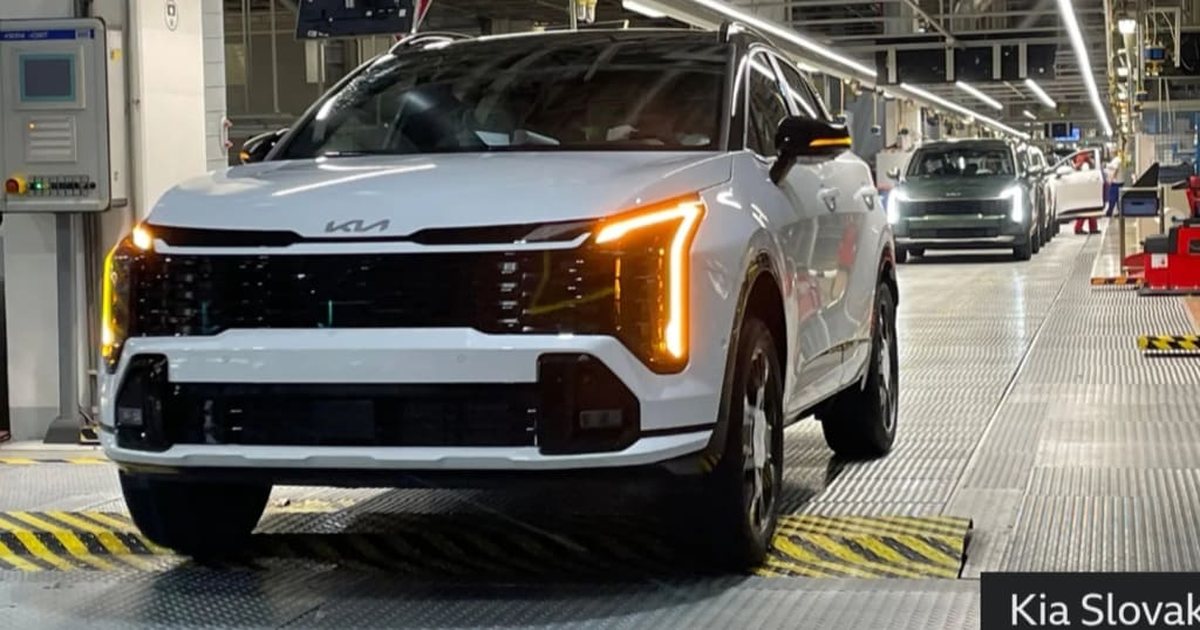
In a giant factory surrounded by snow-capped mountains, an elevator lowers the steel car bodies to the start of the assembly line. They have just been welded together by robots, a total of 690 of which work in this factory.
Then, an “army” of workers in red pants and white T-shirts transform these metal skeletons into finished vehicles. Every minute, a car rolls off the end of the production line, its lights flashing.
This is the European factory of the Korean company Kia, located near the city of ?ilina, in northern Slovakia. According to Kia, the total investment here amounts to 2.5 billion euros.
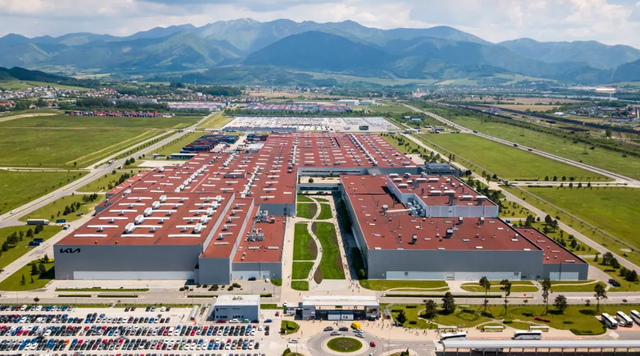
Slovakia has become an important center of the European automotive industry. In addition to Kia, the country also produces cars for Volkswagen, Stellantis (formerly Peugeot-Citroën, Fiat and Chrysler), Jaguar Land Rover, while Volvo is expected to open a factory for electric cars in 2027.
With a population of just 5.4 million, Slovakia produces nearly one million cars a year, more cars per capita than any other country in the world.
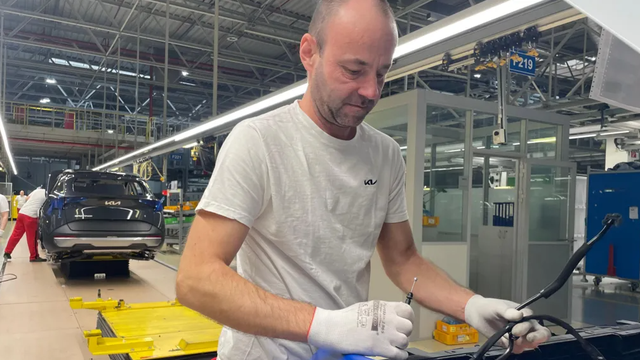
“Since I was a kid, cars have been my passion,” says Marcel Pukhon, 48, an assembly line worker and one of 3,700 employees at the Kia factory. “Now I’m part of the team and I make the cars myself, it’s a dream job.”
Pukhon previously lived in Northern Ireland and England before returning to her homeland to work at the factory. On another section of the production line, Simona Krnova, 23, works insulating doors. She studied business but admits it’s not her dream job. There are positives, though.
“Half of my family works here, so I wanted to try it. I like the people,” she says. Simona earns about 1,300 euros a month, a salary she considers good compared to other companies. According to Kia, the average salary at the factory is about 2,400 euros a month.
This figure is significantly higher than the average monthly salary in Slovakia, which in 2023 was 1,403 euros, but remains much lower than the European Union average, which amounts to 3,417 euros.
Workers express pride in the role of the automotive industry in the country.
“Car production here supports our society,” says Simona. Almost all of the factory’s employees are Slovak, the Korean presence is mostly limited to a few dozen senior executives who live in a gated community near the factory.
After the fall of the communist regime in 1989 and the Velvet Revolution, the Slovak automotive industry began a profound transformation. In 1991, Volkswagen began investing in the Czech manufacturer Skoda, taking full control in 2000. Similar investments followed from other Western and Asian manufacturers.
Automotive industry expert Peter Prokop says that at that time labor costs in Slovakia were only 20% of those in Germany. Even today, he says, the country maintains a competitive advantage.
“Wages are about 60% of those in Western Europe, but productivity is high. This makes Slovakia very competitive,” says Prokop.
Another advantage is the geographical position. “Slovakia is located in the heart of Europe and is very well connected to major markets,” says Kia Europe CEO Marc Hedrich. The United Kingdom is the largest market for cars manufactured here, followed by Spain, Italy and Germany.
Low-carbon energy from hydropower and nuclear power plants, as well as the growing use of renewable sources, makes electric car production in Slovakia more favorable for state subsidies in markets like the UK.
The Slovak government offers financial incentives to car manufacturers, citing the huge economic benefits. According to the mayor of ?ilina, Peter Fiabane, Kia’s investment has significantly reduced unemployment and strengthened the region’s economy.
“Today, over 20,000 people are directly employed by Kia and its affiliated companies,” he says.
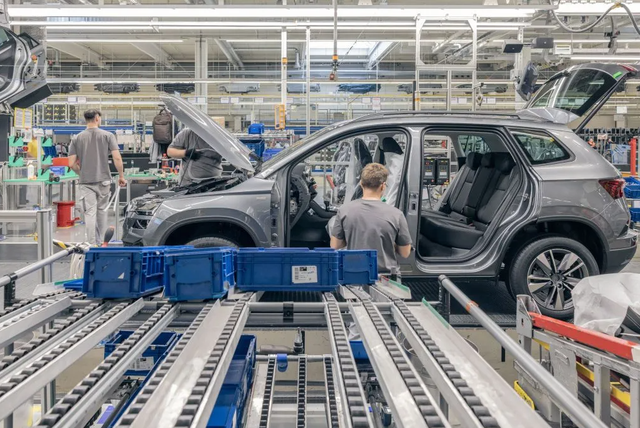
The automotive industry is also supported by technical education. At the Zhilin Technical School, 100 students follow a dual program supported by Kia, while around 400 graduates from the University of Zhilin are employed in the automotive sector each year.
Meanwhile, other former Eastern Bloc countries are attracting similar investments. Hyundai, Toyota and Volkswagen produce in the Czech Republic; Toyota, Stellantis and VW in Poland; and Audi, Mercedes-Benz and Suzuki in Hungary. Manufacturers such as Ford and Renault have factories in Romania and Serbia.
All of these countries attract large manufacturers for the same reasons: lower wages, industrial tradition and a skilled workforce./ BBC