Facebook
Twitter
LinkedIn
Pinterest
Reddit
Email
Print
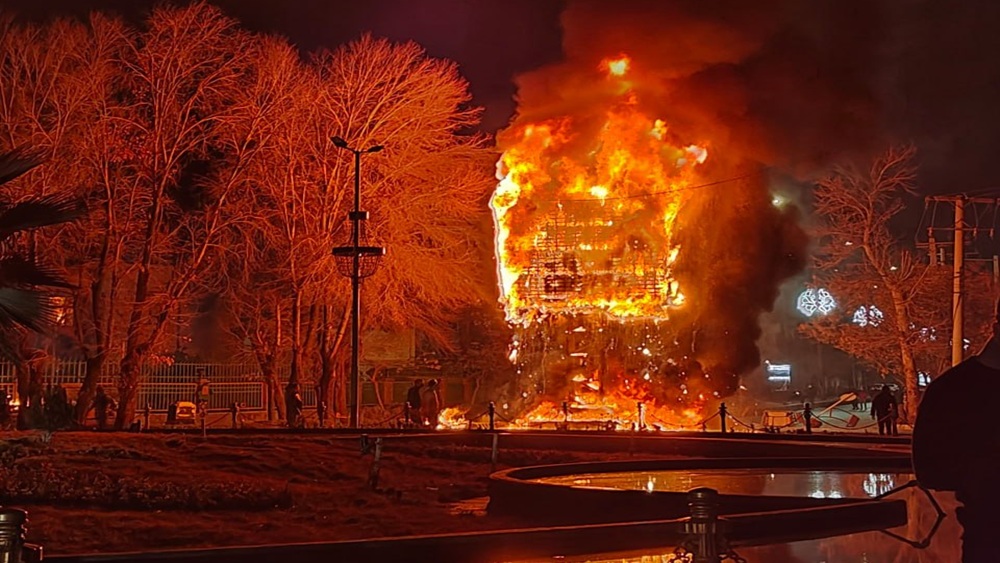 Iran Protests, January 2026
Three-minute read
For Iran’s rulers, the most dangerous part of the January 2026 uprising was not simply that crowds poured into the streets. It was that the PMOI-led Resistance Units were there with them—helping people stay together under attack, getting families out of kill-zones, aiding the wounded, and refusing to let fear dissolve the uprising into silence. And when the regime’s security forces moved to crush the demonstrations, these units fought back to defend the crowds. Many paid for that role with their lives.
The regime did what it has always done when confronted by peaceful dissent: it met citizens with force, not politics. Security units fired into gatherings, carried out sweeping raids and mass arrests, and tightened the blackout tactics that keep accountability out of reach. Reports from inside the country and international coverage describe civilians—women, children, and entire families—caught in the line of fire as the state treated public protest itself as a crime to be punished.
The regime, with the blood of thousands on its hands, is now trying to launder its crimes by spinning new narratives about foreign-led terrorism. What prevented an even greater massacre was not mercy, restraint, or any sudden respect for life—it was the fierce resistance across the country, who protected crowds and, when the security forces moved in, confronted them rather than submit, denying the regime a free hand. That is why officials obsess over “networks” and “leaders”: this state recognizes only one red line—its own survival—and it fears an organized force that makes mass slaughter harder to execute in silence.
“And every crimson flower that blooms from the blood of the fallen today carries the promise of freedom tomorrow.”
The deepest respect of the risen people of Iran goes to the eight vanguard protesters who were killed last night after hours of confrontation with the regime’s Basij…
— Maryam Rajavi (@Maryam_Rajavi) January 8, 2026
The word officials chose
On January 24, 2026, Parliament Speaker Mohammad-Bagher Ghalibaf said the unrest unfolded “simultaneously and in an organized way” across multiple cities—but he attributed that organization to a foreign hand, a familiar tactic used to deny genuine domestic outrage and to justify repression.
The regime’s own “analytical statement” from the Supreme National Security Council (published by IRNA and others) leans on the same concept. It separates early economic-driven protests from what it calls “organized riot nuclei/cells,” then describes later days as featuring “targeted and organized” attacks.
A Fars-affiliated account carried by the state-run Fekrshahr makes the organization argument even more explicit, contending the unrest escalated after “organized cores” entered, and presenting internet restrictions as a measure intended to disrupt “the platform of organization.”
⚠️ Update: #Iran‘s internet blackout continues through its 18th day, obscuring the extent of a deadly crackdown on civilians.
Meanwhile, gaps in the filternet are being tightened to limit circumvention while whitelisted regime accounts promote the Islamic Republic’s narrative. pic.twitter.com/Jj76EGrkJz
— NetBlocks (@netblocks) January 26, 2026
Fear of PMOI
Where the regime uses the slur “Monafeqin” for the People’s Mojahedin Organization of Iran, it is not merely name-calling. For a state that has spent decades trying to erase and censor the organization, the fact that it now publicizes claims of arresting PMOI-linked “teams,” “elements,” and organizers is revealing. It is propaganda meant to intimidate—yet it also inadvertently advertises what the regime most fears: that an organized resistance network exists inside the country and is influential enough that the authorities feel compelled to keep invoking it.
A widely circulated state-run report claims a Telegram channel described as issuing calls to bazaaris (Iran’s merchants) was set up and directed by the PMOI.
An IRGC’s Khorasan Razavi statement reported on two armed “terror teams,” including a five-person team it said was “linked to” the PMOI, while the Ministry of Intelligence announced it had detained two alleged PMOI “elements” in Tehran and claimed they were acting under direction from abroad. In Fars province, the judiciary (as reported by Mehr) said it arrested an individual it described as connected to PMOI-linked media activity.
These are official allegations, not independently verified findings, but their very repetition shows something the regime would normally avoid conceding: it is sufficiently alarmed by the prospect of affiliation with an organized opposition network that it keeps naming the PMOI in arrest announcements, treating even suspected links as a central security concern.
#Iran Sham Trial Censorship Campaign Targets @Mojahedineng as Uprising Fear Growshttps://t.co/7V79gBMgmk
— NCRI-FAC (@iran_policy) December 17, 2025
Global community reacts
International pressure has risen sharply in recent weeks, increasingly targeting the IRGC as the central instrument of repression.
Italy’s foreign minister Antonio Tajani said he would urge EU partners to list the IRGC as a terrorist organization, explicitly tying the push to protest killings and the need for a “clear response.”
The European Parliament adopted a resolution condemning “brutal repression” and reiterating calls for IRGC designation and stronger measures.
In parallel, UK politics has seen renewed calls to proscribe the IRGC; LBC reported MPs pressing the government again on formal designation.
At the UN, the Human Rights Council condemned the regime’s violent crackdown and extended international documentation of abuses—an accountability move that directly challenges the regime’s attempt to control the record.
From the streets of Tehran to the heart of the European Parliament, the message is clear:
Iran must be free. Iran will be free.
The @Europarl_EN has overwhelmingly voted to back the aspirations of the Iranian people. We have called for decisive action to:
• Stop the violence:…
— Roberta Metsola (@EP_President) January 22, 2026
Self-defense, not surrender
A regime that shoots into crowds and then lectures the world about “terror” is not describing reality—it is laundering brutality into legitimacy. The legal baseline is clear: peaceful assembly is protected, and intentional lethal force by law enforcement is lawful only when it is “strictly unavoidable” to protect life, not as a tool of deterrence or punishment.
That is why the global debate cannot be trapped inside the regime’s foreign-plot narrative. The UN system is built on the idea that rights must be protected by the rule of law so people are not driven, “as a last resort,” to rebellion against tyranny and oppression—and that peoples have a right to self-determination. When a state answers peaceful protest with unlawful, life-threatening violence, people do not forfeit the right to preserve life and defend themselves from imminent harm; recognizing that baseline is not romanticizing conflict—it is refusing to normalize brutality as governance.