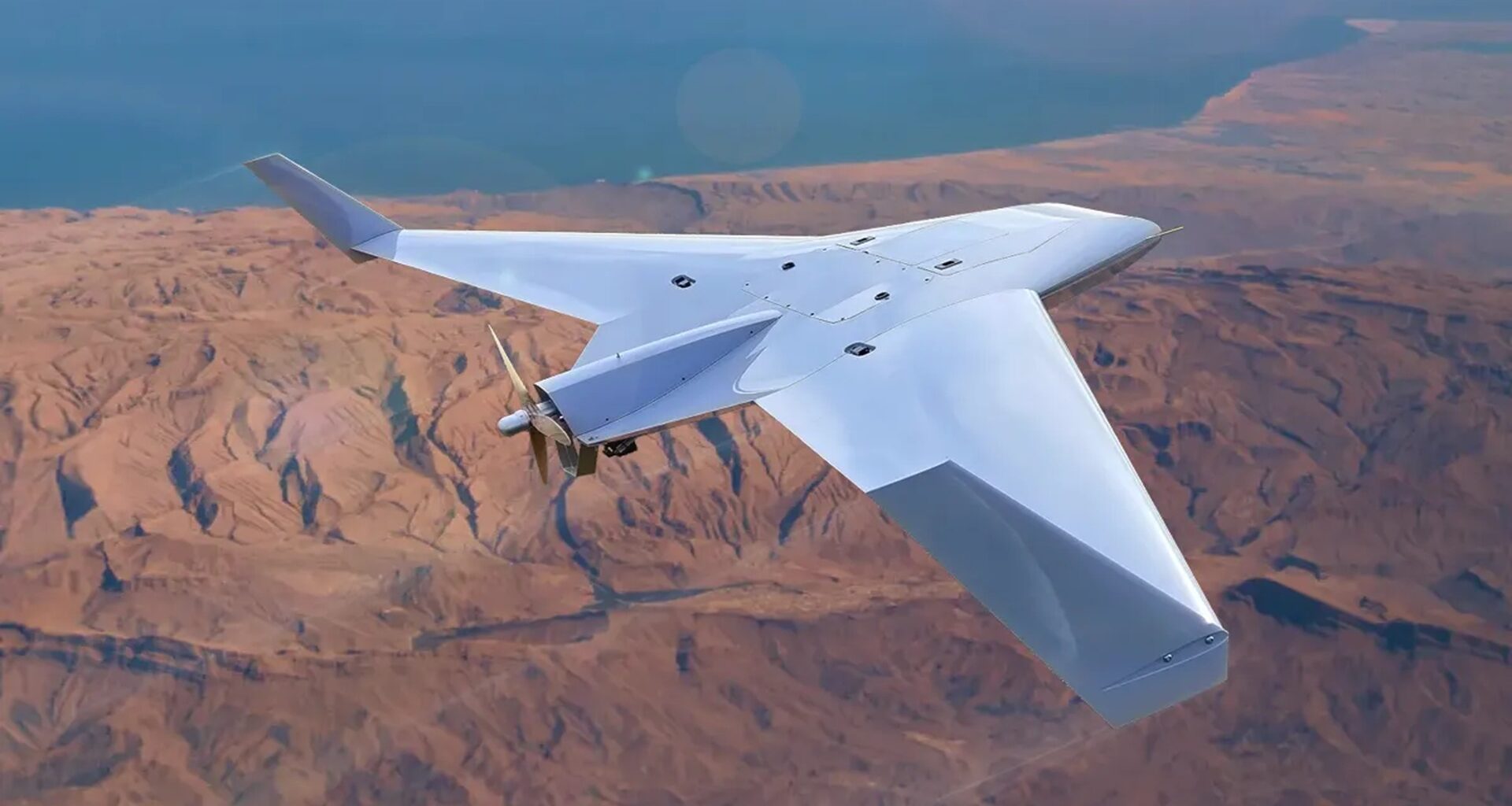
French defense firm EOS Technologie has delivered its first Rodeur 330 loitering munitions to Ukraine, marking a new addition to Kyiv’s long-range strike and reconnaissance capabilities, French daily La Croix reported, citing AFP.
The Rodeur 330 is designed for both intelligence gathering and strike missions. According to EOS Technologie president Jean-Marc Dzuliani, the platform can operate autonomously and is intended to support modern battlefield requirements where speed, range, and survivability matter.
The drone has a reported flight range of up to 310.7 miles (500 km) and can loiter for up to 5 hours over a designated area. During this time, it can collect reconnaissance data and engage targets without direct human control.
It carries a 8.8 pounds “anti-tank” warhead, placing it in the category of anti-armour loitering munitions rather than lightweight FPV drones widely used in Ukraine.
Built for autonomy
One of the Rodeur 330’s defining features is its ability to navigate without GPS. The drone relies on an optical navigation system, allowing it to operate in contested environments where satellite signals are jammed or unavailable.
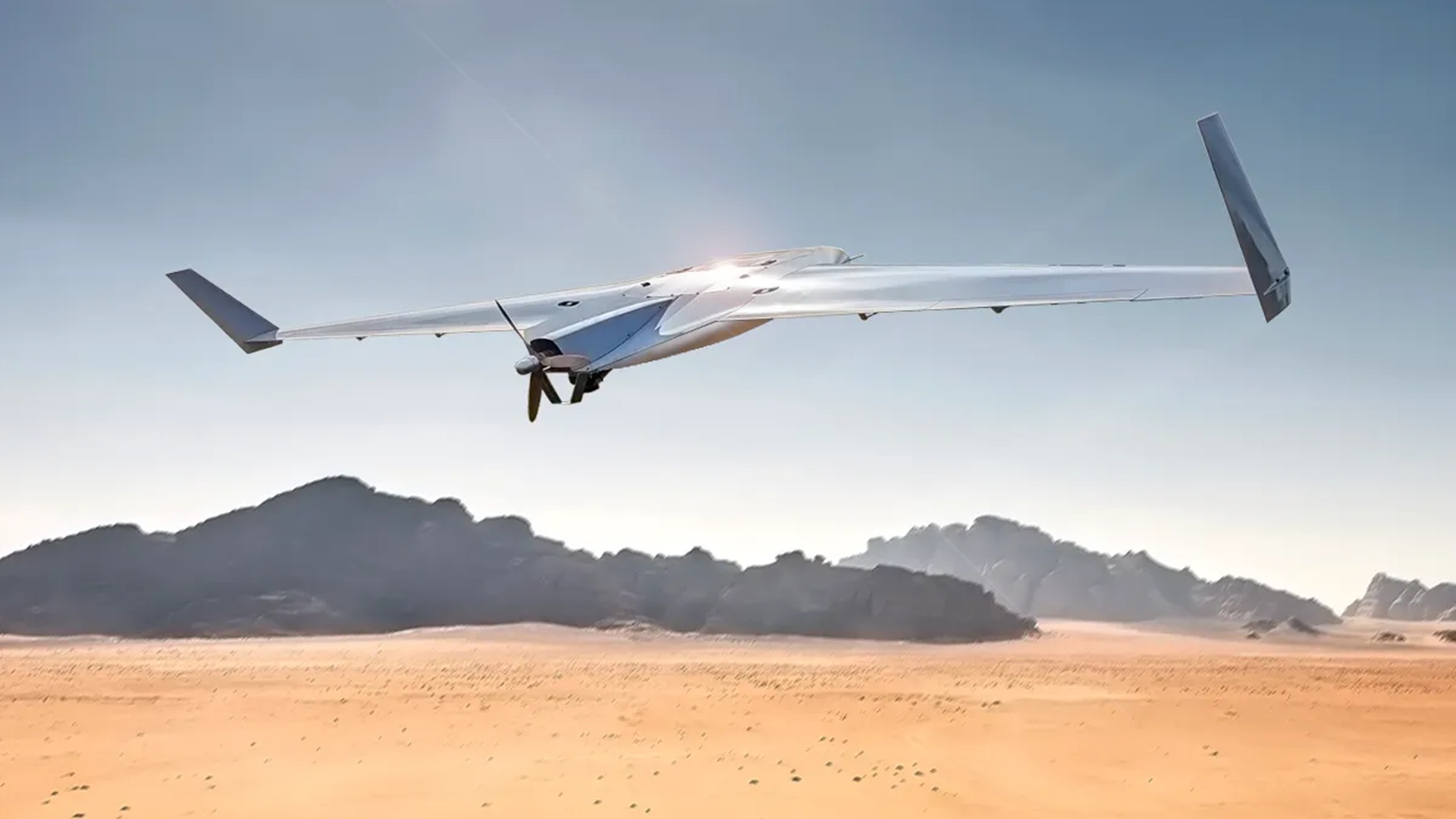 The Rodeur 330 is part of a broader family that includes the rocket-powered Veloce 330. EOS Technologie
EOS has also equipped the drone with a parachute system. This enables a safe recovery during training exercises or if a strike mission is aborted, a feature aimed at reducing losses during non-combat operations.
While the platform’s maximum flight range reaches hundreds of kilometers, EOS says its current combat radius is about 49.7 miles.
The company plans to extend this to 62.14 miles in the near term and eventually to 93–124 miles, suggesting further upgrades are already underway.
Testing of the system has progressed steadily. In June 2025, EOS demonstrated the destruction of a tank using a Rodeur 330 fitted with an inert warhead, controlled via FPV. By November, the company confirmed the drone could strike targets in fully automatic mode.
Swarms and scale next
According to Dzuliani, Rodeur drones are also capable of swarm operations. EOS says it can deploy up to 30 drones simultaneously, a capability increasingly viewed as critical for overwhelming air defenses and striking multiple targets at once.
The Rodeur 330 is part of a broader family that includes the rocket-powered Veloce 330. Both systems were reportedly delivered to Ukrainian forces for testing in December 2025, as Kyiv continues to expand its use of long-range unmanned strike platforms.
The delivery comes as Ukraine leans heavily on drones to offset shortages in traditional missiles and aircraft.
For manufacturers like EOS, the conflict has also become a proving ground, allowing systems to be refined under real combat conditions rather than controlled test environments.
While EOS has not disclosed the number of units delivered, the Rodeur 330’s range, autonomy, and payload place it closer to high-end loitering munitions than the disposable drones dominating much of the battlefield today.