For many women, menopause brings changes in mood, sleep, and thinking, but what is happening in the brain is less clear.
Now, researchers at the University of Cambridge report that menopause is linked to reduced gray matter in brain regions involved in memory and emotional control, with similar or greater changes seen in women who used hormone replacement therapy (HRT).
Menopause and brain health
Menopause is a biological stage that many women experience, and yet its effects on the brain are still not well understood. Research has focused far more on pregnancy or aging, leaving menopause relatively understudied, particularly when it comes to brain structure.
Symptoms associated with menopause can persist for years, affecting work, relationships, and mental health.
HRT is commonly prescribed to help manage menopausal symptoms, and use has risen sharply in recent years, with 15% of women aged 45–64 years in England prescribed treatment in 2023.
“Most women will go through menopause, and it can be a life-changing event, whether they take HRT or not,” said co-author Dr. Christelle Langley, a cognitive neuroscientist from the University of Cambridge.
Some studies suggest estrogen loss during menopause may be linked to a higher dementia risk. Others report neutral or positive effects of HRT, depending on when treatment starts and who is studied.
Earlier work on this topic has been limited by small samples or a narrow focus on cognition alone. Large population studies that assess mental health, thinking skills, and brain structure together have been rare.
The new study aimed to examine how menopause and HRT relate to mood, sleep, cognition, and gray matter volume across key brain regions.
Studying menopause and HRT using brain MRI
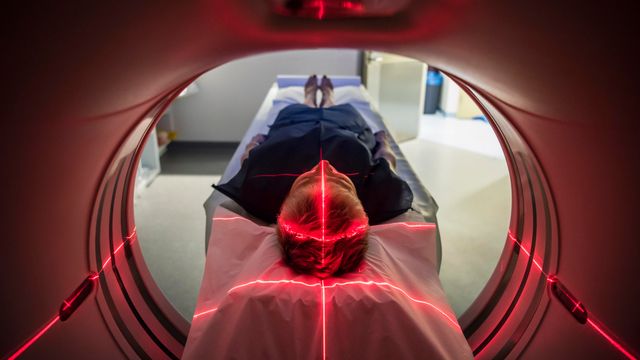
The team analyzed data from nearly 125,000 women from the UK Biobank. Participants were grouped as pre-menopausal, post-menopausal without HRT, or post-menopausal with HRT. Around 11,000 of these women also underwent magnetic resonance imaging (MRI) scans.
Participants completed questionnaires on mood, sleep, and health, and some took part in simple thinking tasks that measured reaction time and memory. Brain scans were used to measure gray matter volume in areas linked to memory and emotional control, including the hippocampus, entorhinal cortex, and anterior cingulate cortex.
A brain region involved in forming and storing memories and supporting learning.
Entorhinal cortex
A gateway region that passes information between the hippocampus and the rest of the brain, important for memory processing.
Anterior cingulate cortex
A brain area involved in emotional regulation, attention, and decision-making.
The analyses accounted for factors that could influence the results, such as age, education, income, smoking, body mass index, and past depression.
Post-menopausal women reported more anxiety, depression, sleep problems, and antidepressant use than pre-menopausal women. Women who had used HRT reported higher levels of anxiety, depression, and tiredness than post-menopausal women who had never used it.
Reaction times were slower after menopause, but this slowing was less pronounced in women using HRT. Memory performance did not differ between groups.
“As we age, our reaction times tend to get slower—it’s just a part of the natural aging process, and it happens to both women and men. You can imagine being asked a question at a quiz—while you might still arrive at the correct answer as your younger self, younger people would no doubt get there much faster. Menopause seems to accelerate this process, but HRT appears to put the brakes on, slowing the aging process slightly,” explained lead author Dr. Katharina Zühlsdorff, a graduate medicine student and neuroscience researcher at the University of Cambridge.
The strongest effects were seen in brain scans. Gray matter volume was lower in post-menopausal women across all three regions examined. Volumes were lowest in women who had used HRT, particularly in the hippocampus and anterior cingulate cortex.
What gray matter loss after menopause may mean for women
Changes in brain structure are harder to ignore than shifts in mood or sleep. The MRI results place menopause firmly in the conversation about long-term brain health.
“The brain regions where we saw these differences are ones that tend to be affected by Alzheimer’s disease. Menopause could make these women vulnerable further down the line. While not the whole story, it may help explain why we see almost twice as many cases of dementia in women than in men,” said corresponding author Dr. Barbara Sahakian, a professor of clinical neuropsychology in the Department of Psychiatry at the University of Cambridge.
The results challenge simple claims that HRT protects the brain. Women using HRT showed smaller gray matter volumes and worse mental health scores than those not using it.
However, these results may have been due to a biased baseline. Women who went on to use HRT already had higher levels of anxiety and depression before starting treatment, and women with more severe symptoms may be more likely to receive HRT.
Menopause status and symptoms were also self-reported, and the study lacked information on HRT type, dose, or timing. The UK Biobank population is also healthier and less diverse than the general public, and the study only captured a single snapshot in time, meaning it cannot show how brain changes develop before or after menopause.
Long-term studies that follow women through the menopausal transition are needed, and separating different forms and timings of HRT will also matter.
“We all need to be more sensitive to not only the physical, but also the mental health of women during menopause, however, and recognize when they are struggling. There should be no embarrassment in letting others know what you’re going through and asking for help,” said Langley.
Reference: Zühlsdorff K, Langley C, Bethlehem R, Warrier V, Garcia RR, Sahakian BJ. Emotional and cognitive effects of menopause and hormone replacement therapy. Psychological Med. 2026. doi: 10.1017/S0033291725102845
This article is a rework of a press release issued by the University of Cambridge. Material has been edited for length and content.