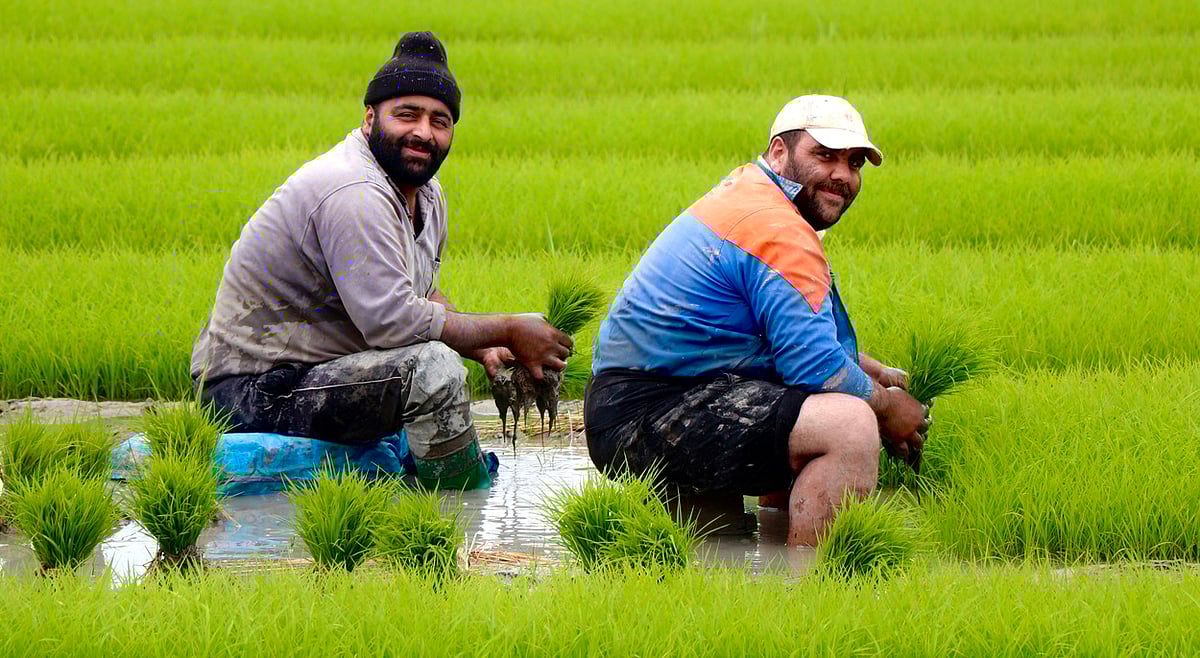
From the demand side, India accounts for approximately 10 per cent of Iran’s total agricultural imports; however, this aggregate figure masks much higher commodity-specific dependence. Iran meets nearly 30 per cent of its domestic rice consumption through imports, of which about 43 per cent is supplied by India. For tea, roughly 39 per cent of Iran’s demand is import-dependent, with close to 60 per cent sourced from Indian exporters. A contraction in bilateral trade would therefore not only exacerbate supply constraints in Iran but will also disrupt India’s agricultural export earnings.
Humanitarian exemptions vs economic reality
At this point, the distinction between humanitarian intent and economic reality becomes critical. In principle, food and agricultural inputs are widely exempt from sanctions on humanitarian grounds, reflecting an international consensus that essential goods should not be weaponised. In practice, however, humanitarian exemptions coexist uneasily with powerful economic compulsions. Constraints on banking channels and settlement systems raise transaction costs and payment risks, while heightened compliance burdens, insurance premia, and reputational concerns lead private exporters, insurers, and financiers to scale back exposure even when trade is legally permitted. As a result, market behaviour often reproduces the effects of trade restrictions without any formal policy change.
Humanitarian assistance can provide emergency relief, but it cannot substitute for routine commercial food imports that underpin national food systems. For import-dependent economies such as Iran, this creates a two-track food system: limited relief-oriented inflows alongside contracting market-based imports. The result is rising domestic prices, dietary compression, and a cumulative erosion of food access, even when headline food availability appears adequate.
Moreover, humanitarian logic does not address long-term food system sustainability. Conflict-related fiscal stress, financial frictions, and trade volatility crowd out investments in climate-resilient agriculture, water management, and rural infrastructure. While humanitarian carve-outs may alleviate short-term hunger risks, they do little to prevent the longer-term degradation of domestic production capacity and institutional resilience that ultimately determines food security.
In this sense, food trade disruption operates less as a discrete policy event and more as a cumulative risk process, shaped by financial frictions, logistics constraints, and private-sector risk perceptions. Iran’s experience demonstrates how import dependence heightens vulnerability to price volatility, while domestic self-sufficiency, as seen in wheat, can partially protect food security. Sustainability, therefore, extends beyond environmental concerns to include economic and institutional resilience. Strengthening these elements is essential to ensure price stability, access, and affordability in an era of persistent geopolitical uncertainty.
Ultimately, food trade is not geopolitically neutral, but it is socially non-substitutable. Allowing food flows to become collateral damage in geopolitical rivalries imposes long-run costs on consumers before policymakers and on importing countries before exporters. The gap between humanitarian intent and economic reality thus represents a market-mediated transmission channel through which geopolitical tensions undermine food security.