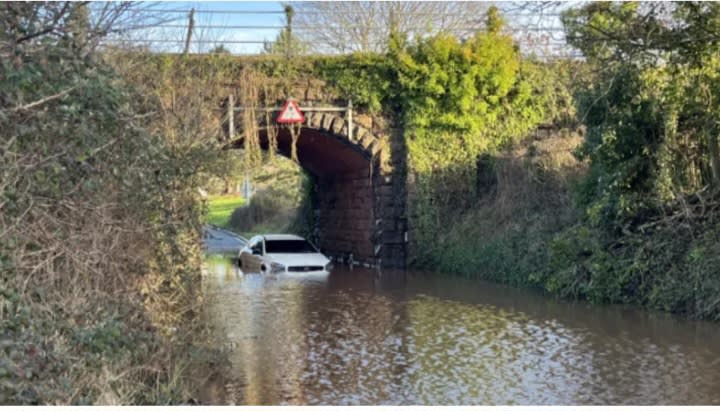
Storm Chandra has swept across the United Kingdom with relentless force, triggering widespread flooding, dangerous road conditions, and a wave of weather warnings that have placed millions of residents on high alert. Torrential rainfall, fierce winds, and already saturated ground have combined to create one of the most disruptive weather events of the season, bringing daily life to a standstill in several regions.
From southern England to Scotland and Northern Ireland, communities have faced overflowing rivers, submerged streets, and severe travel disruption. Authorities have urged the public to remain vigilant as conditions continue to evolve, warning that the full impact of the storm may not yet be over.
Flooding Spreads Rapidly as Rivers Burst Their Banks
The most devastating effect of Storm Chandra has been extensive flooding. Days of persistent heavy rain have overwhelmed drainage systems and caused rivers to rise at alarming speeds. Low-lying areas, particularly in parts of southwest England, Wales, and the Midlands, have been hit hardest as water spilled into homes, businesses, and farmland.
In several towns, floodwaters turned streets into rivers within hours. Residents were forced to move belongings to higher ground, while emergency crews worked tirelessly to reinforce flood defenses and assist vulnerable households. Authorities issued multiple flood alerts and warnings, some of them severe, indicating a serious risk to life in the most affected locations.
Experts warn that the danger does not end when rainfall eases. Floodwater can linger for days, weakening building foundations, contaminating water supplies, and making roads structurally unsafe long after the storm has passed.
Road Closures and Travel Disruption Paralyze Transport Networks
Storm Chandra has caused widespread disruption to the UK’s transport infrastructure. Dozens of major and minor roads have been closed due to flooding, fallen trees, landslides, and debris. Motorists in several regions found themselves stranded as vehicles became trapped in deep water, prompting repeated warnings not to drive through flooded roads.
Key routes across southern and western England were rendered impassable, while high winds made driving hazardous on exposed roads and bridges. In northern areas, the storm brought a mix of heavy rain and wintry conditions, compounding the risks and forcing additional closures.
Rail services were also severely affected. Flooded tracks, damaged signaling equipment, and fallen trees caused cancellations and delays across large parts of the network. Thousands of commuters faced uncertainty, while freight and supply chains experienced knock-on effects from the disruption.
Air and sea travel did not escape unscathed. Strong winds and rough seas led to flight cancellations and ferry suspensions, particularly affecting coastal regions and island communities.
Communities Isolated and Schools Forced to Close
Beyond travel chaos, Storm Chandra has disrupted daily life in more personal ways. Many schools were forced to close as a precaution, either due to flooding, unsafe travel conditions, or power outages. Parents faced sudden childcare challenges, while local authorities scrambled to ensure the safety of students and staff.
In some rural and coastal areas, entire communities were temporarily cut off. Flooded roads and damaged bridges made access difficult for emergency services, increasing anxiety among residents. Volunteers and local support networks played a vital role, checking on elderly neighbors and distributing essential supplies.
The storm has once again highlighted how extreme weather disproportionately affects smaller communities, where infrastructure is often less resilient and recovery can take longer.
High Winds and Additional Weather Hazards Add to the Threat
While flooding has dominated headlines, Storm Chandra has also brought powerful winds capable of causing structural damage. Gusts strong enough to tear roof tiles loose, topple trees, and bring down power lines were recorded in exposed areas.
Power outages affected thousands of homes, leaving families without heating or electricity during harsh winter conditions. Emergency repair crews worked around the clock, but continuing poor weather slowed restoration efforts in some locations.
In northern and high-altitude regions, colder air introduced additional hazards, including sleet and snow. These conditions further complicated travel and increased the risk of accidents, particularly on untreated roads.
Emergency Services Under Pressure
The scale of Storm Chandra has placed immense pressure on emergency services. Fire and rescue teams responded to hundreds of calls, including water rescues, pumping operations, and assistance for stranded motorists. Police forces focused on road safety and evacuations, while medical services prepared for weather-related emergencies.
Authorities repeatedly stressed that many incidents were preventable, urging the public to follow official advice and avoid unnecessary travel. Even shallow floodwater can hide open drains, strong currents, or damaged road surfaces, making it far more dangerous than it appears.
Warnings Issued as Climate Concerns Grow
Meteorologists and climate experts have pointed out that storms like Chandra are becoming more frequent and intense. Warmer air holds more moisture, increasing the likelihood of extreme rainfall events. Combined with aging infrastructure and expanding urban development, the risk of severe flooding continues to grow.
Government agencies issued weather warnings covering rain, wind, and flooding, urging people to stay informed through official channels. Residents were advised to prepare emergency kits, secure outdoor objects, and check on vulnerable family members and neighbors.
What Comes After the Storm?
As Storm Chandra begins to move away from the UK, attention is shifting toward recovery and assessment. Cleanup operations, damage inspections, and insurance claims will take time, and some communities may face long-term consequences from repeated flooding.
Authorities caution that even after skies clear, dangers remain. Flooded roads may be structurally unsound, and rivers can rise again with little warning. Vigilance remains essential.
Storm Chandra has served as a stark reminder of nature’s power and the growing challenges posed by extreme weather. As the UK recovers, questions will once again be raised about preparedness, resilience, and how the country adapts to a changing climate.