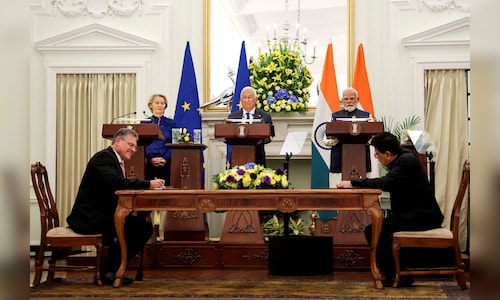
Maroš Šefčovič and Piyush Goyal built a strong bond during India–EU FTA talks, with over 10 meetings. The balanced pact may be implemented by 2027 after legal and parliamentary steps.

EU Trade Commissioner Maroš Šefčovič said he has built a strong personal and professional relationship with Commerce and Industry Minister Piyush Goyal over the course of the India-EU free trade negotiations, marked by frequent in-person interactions and open, wide-ranging discussions.
Speaking exclusively to CNBC-TV18, Šefčovič said he has had more than 10 face-to-face meetings with Minister Goyal and noted that the two have developed a personal friendship over time. He said their conversations were not limited to trade alone and often extended to family and personal matters, which helped build mutual trust. According to Šefčovič, whenever negotiating teams ran into roadblocks, both sides tried to resolve issues in the spirit of friendship and at a personal level.
Earlier, on January 26, Commerce Secretary Rajesh Agrawal said that official-level negotiations for India’s Free Trade Agreement (FTA) with the European Union are being concluded, with both sides set to announce the successful conclusion of talks on January 27. He described the agreement as “balanced and forward-looking” and said it would deepen economic integration and significantly boost trade and investment flows between India and the EU. Agrawal added that the formal signing of the pact would take place after legal scrubbing, a process expected to take around six months.
However, the agreement will take some time to come into force given the procedural steps that follow the announcement. In his exclusive interaction with CNBC-TV18’s Parikshit Luthra, Šefčovič said legal scrubbing would begin after the conclusion of talks, followed by translation of the text into the EU’s 24 official languages. The deal will then require ratification by the European Parliament before being formally signed by trade ministers of both sides. He expressed optimism that the agreement could be implemented by 2027.
Continue Reading