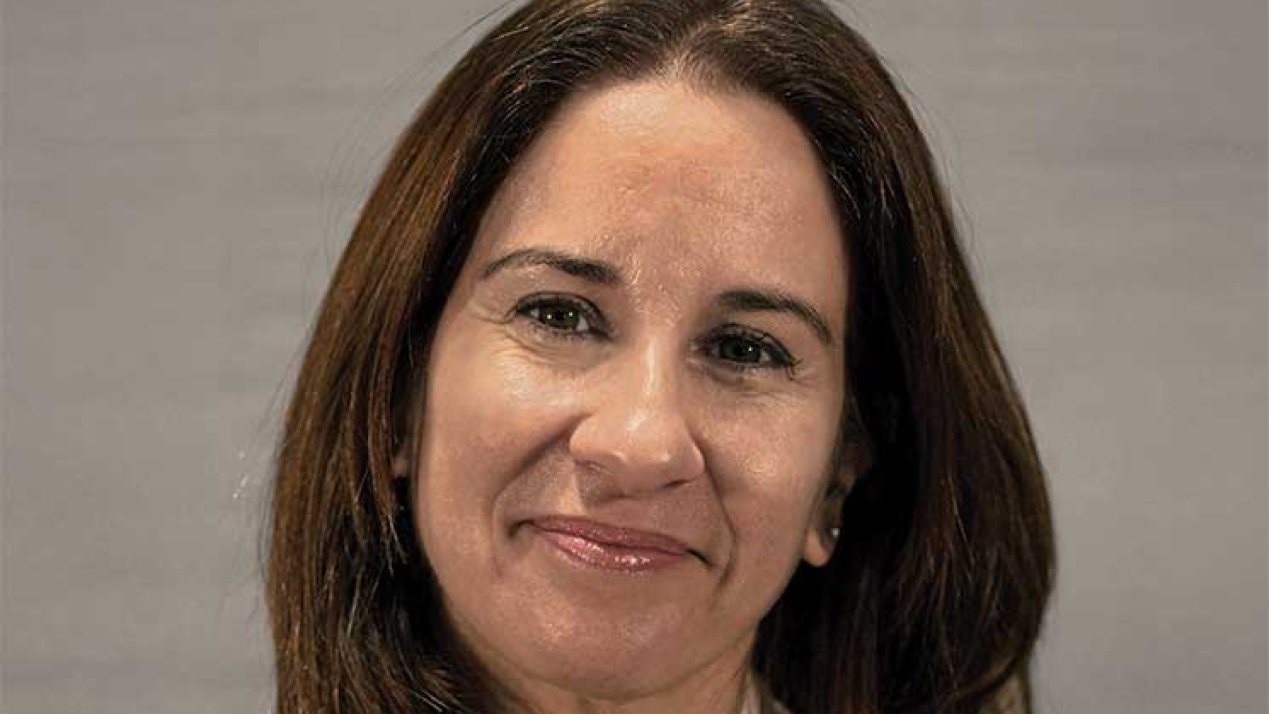
Payoneer is a global payments and financial services platform that enables businesses and professionals to securely manage collections, payments, and capital across multiple countries and currencies.
Q: How does Payoneer position itself within the Latin American digital financial services market and what is the central element defining its identity?
A: Our core identity is simple: We want Latin American companies, especially in a priority market like Mexico, to conduct international business as easily as they operate locally. We are the bridge that enables Mexican entrepreneurs and SMEs to expand globally. We provide a single platform to operate in nearly 190 markets, solving key needs: cross-border payments and collections, access to global marketplaces and freelance platforms, and working capital solutions, which are often difficult to secure locally.
Q: In an environment with such strong competitors, how is Payoneer differentiating itself?
A: Our strongest advantage is our exclusive B2B focus. While many competitors concentrate on peer-to-peer (P2P) transfers or remittances, especially in the Mexico-US corridor, Payoneer is specifically designed for entrepreneurs, startups, and SMEs that need to expand globally. This B2B focus dictates everything we do. Our product development, customer service processes, and security frameworks are built to handle the larger volumes and complex needs of businesses. This provides a fundamentally different and more robust security and usability framework than what is required for individual P2P transactions.
Q: What is Mexico’s role within Payoneer’s regional strategy?
A: Mexico is crucial not just regionally but globally. The country is a top-tier strategic market. By capitalizing on geopolitical frictions, Mexico is becoming the primary trading partner of the United States. Beyond being a critical nearshoring hub, Mexico is the fastest-growing large economy in Latin America. This growth, combined with a growing middle class and new regulations requiring local partners, makes it highly attractive for international business.
Q: Who are your main clients within the Mexican market?
A: First are importers who integrate into global value chains, sourcing materials to produce in Mexico for domestic sale or export. Second are Business Process Outsourcing (BPO) providers, such as call centers, IT help desks, and professional services that serve international clients and manage global payrolls. Third are technology companies, particularly those developing services for US clients. Finally, we serve the B2B side of the travel industry, facilitating payments between Mexican tour operators and their international suppliers or agency partners, rather than processing individual consumer payments.
Q: What remains the main barrier preventing companies from using the Payoneer platform?
A: We are growing rapidly in Mexico. The challenge is simply the continued need to build market awareness. As we promote our solutions and our marketing efforts expand, adoption follows. Once companies understand our proposal and test the platform, they recognize that no other provider offers a comparable service. The primary task is ensuring that all Mexican businesses know we are an option.
Q: SMEs face major challenges in managing suppliers, working capital, and global teams. How would you convince them that Payoneer’s integrated “financial stack” is superior to hiring separate, specialized solutions for each need?
A: Our superiority lies in the deep integration of our services, which traditional specialized solutions cannot match. For example, regarding supplier management, a bank may process a payment, but we provide access to a global network. If a Mexican importer needs suppliers in Asia, we can actively connect them with our existing clients in that region, a service a bank cannot offer. For working capital, banks in Latin America often struggle to assess digital or knowledge-based SMEs. Because we understand our clients’ international cash flow and have seen their growth on our platform for years, we can provide tailored credit solutions based on a comprehensive understanding of their specific global business model.
Q: How are third-party revenue streams integrated into the Payoneer account, and how do your solutions simplify the management of multiple sales channels?
A: The magic of Payoneer is that all global revenue streams converge into a single global platform, regardless of the currency. A business can manage, collect, and convert funds from all channels in one place. This simplifies management dramatically because one can operate remotely in numerous countries without needing to open local bank accounts or legal entities. Furthermore, because we have full visibility of consolidated cash flows, we can provide access to working capital based on the holistic business performance, accelerating time-to-market with complete operational certainty.
Q: Security and compliance are key concerns in international trade. Given the inherent risks of cross-border commerce, what specific processes and safeguards does Payoneer offer to keep businesses secure and compliant across multiple jurisdictions?
A: Our foundation is security. We are a public company listed in the United States and are regulated in all major global jurisdictions, including the United States, the European Union, the United Kingdom, and Japan. This legally mandates that we adhere to the highest international standards for Know Your Customer (KYC) and Know Your Business (KYB). We perform exhaustive analysis on every business that joins our platform to ensure they are legitimate and to verify the source of their funds. We then run continuous, automatic transaction monitoring. Critically, our compliance processes are designed for businesses, not individuals. We understand the documentation and high-volume needs of an SME, ensuring that once a company is vetted, its business can flow freely within a fully regulated ecosystem.
Q: What are the most disruptive trends in the B2B financial services sector in Latin America and how is Payoneer positioning itself to address this transformation?
A: The two most disruptive trends are blockchain technology and AI. Regarding blockchain, we are specifically leveraging stablecoins to transform cross-border transactions. Historically, we relied only on standard banking rails like SWIFT. Stablecoins now provide a parallel infrastructure, offering essential redundancy. We are migrating flows to these new rails because they are often faster, more cost-effective in specific corridors and allow for far more sophisticated technological integrations than legacy banking systems can support.
We are adopting AI across nearly every function in the company. In customer service, it helps us understand client needs better and respond faster. Our commercial teams use it to identify target clients and analyze sales conversations to improve their proposals. However, the most spectacular impact is in product development. We can now create a functional prototype in one or two days, a process that used to take weeks for a simple mock-up, accelerating our pace of innovation.
Q: What are your main plans for Mexico and in which specific areas do you see the greatest opportunities for accelerated growth during 2026?
A: Mexico is a Tier 1 strategic market, and our plans for 2026 reflect that commitment. Our focus is centered on our True Ideal Customer Profile (ICP), which are Mexican SMEs in emerging industries like BPO, B2B tourism, and tech services that are conducting international business. We see the greatest growth opportunities in helping these companies develop their international supplier networks, expand their global client base, and manage their international workforce. All our financial services, from payments to working capital, are being aligned to support these three pillars of expansion for the Mexican market.
Q: What new solutions or innovations is Payoneer developing in anticipation of the needs of Mexican SMEs seeking to internationalize?
A: Our innovation strategy for Mexico is based on an “ultra-focus” on specific local needs. We cannot apply this level of customization in all 190 markets, but for a priority market like Mexico, we do. For example, Mexican sellers on Amazon needed to collect their local revenue via the TEF payment rail, not SPEI. Our standard solution was not compatible, so we dedicated development resources to build this specific TEF route, which unlocked the entire Amazon seller segment in Mexico. Our future innovations will follow this model: identifying and solving the unique technical and financial friction points that Mexican SMEs face.