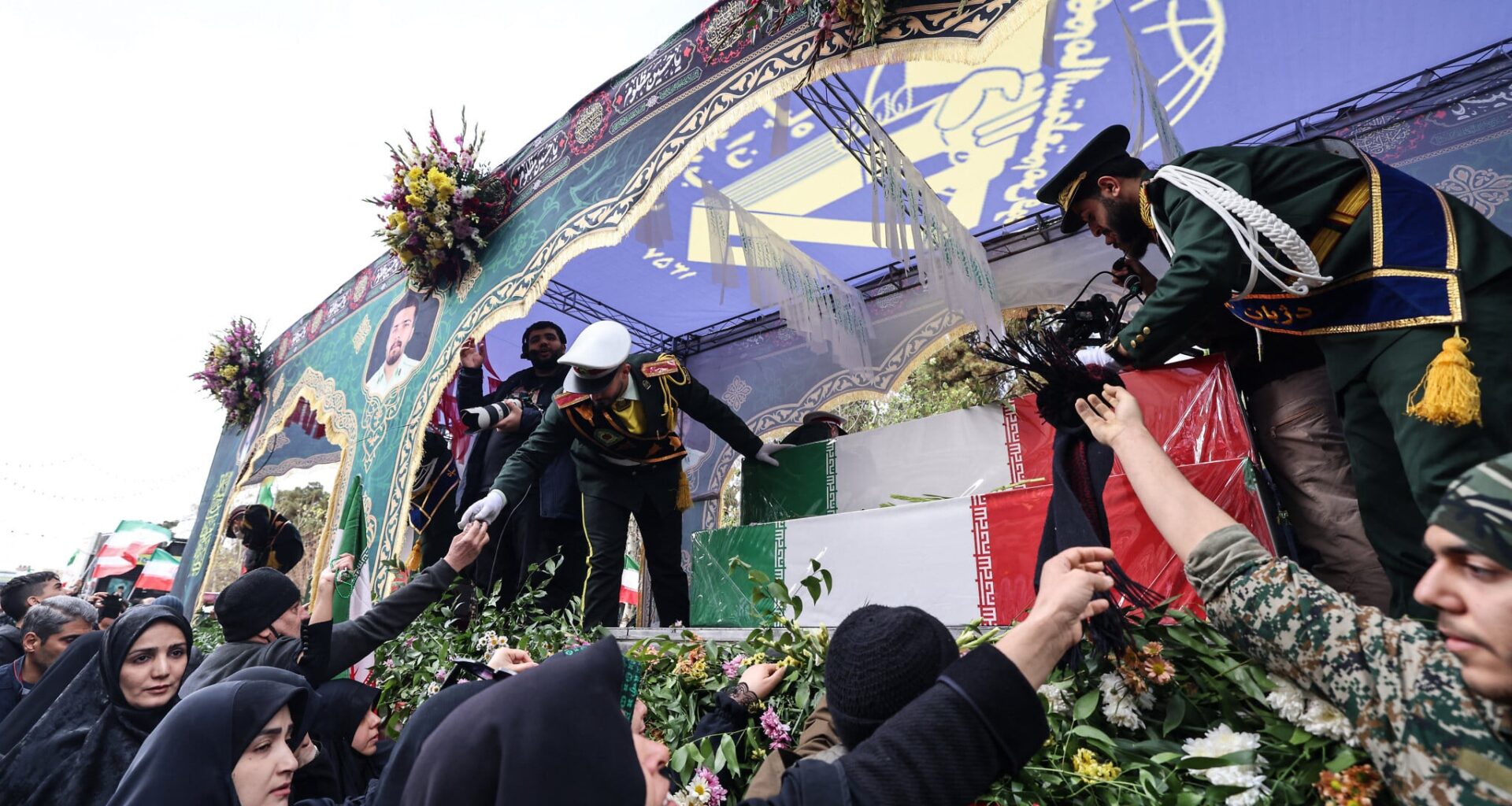
Iranian regime operatives have been forcing protesters and their families to falsely present individuals killed by security forces in the recent wave of protests as members of the regime’s Basij paramilitary force who were attacked by demonstrators, according to accounts from inside Iran shared with The Times of Israel this week.
The testimonies were relayed to three Iranian anti-regime activists based in the United Kingdom and Canada by acquaintances inside Iran, and then forwarded to The Times of Israel, in an effort to publicize events amid the regime’s internet shutdown and violent repression of protests, including by killing thousands who demonstrated across the country.
The demands for false claims of militia membership, which appear aimed at retroactively justifying the regime’s use of widespread deadly force against protesters, could not be independently corroborated, but matched accounts that have been cited by the UN.
“Families are forced to pay for the bullets used [to kill their relatives], or they are told when and where they can bury the body, or even forced to lie on state TV, claiming the victim was a Basij member killed by protesters,” a resident of Tehran said in a Farsi-language voice message sent on Thursday to one of the activists and forwarded to The Times of Israel.
Another account centered on Saeed Golsorkhi, a 31-year-old man from Shahrud in northeastern Iran who was shot on January 9 during the nationwide protests. A relative told the two UK-based activists that while Golsorkhi was being treated for his wounds, security forces raided the hospital he was in to arrest injured protesters, but he managed to escape to his mother’s home.
Get The Times of Israel’s Daily Edition
by email and never miss our top stories
By signing up, you agree to the terms
Days later, armed forces stormed the house, dragged Golsorkhi outside, beat him, and pressured him to sign papers falsely stating that he was a Basij member — so authorities could allege that he was attacked by protesters rather than government forces, the relative said.
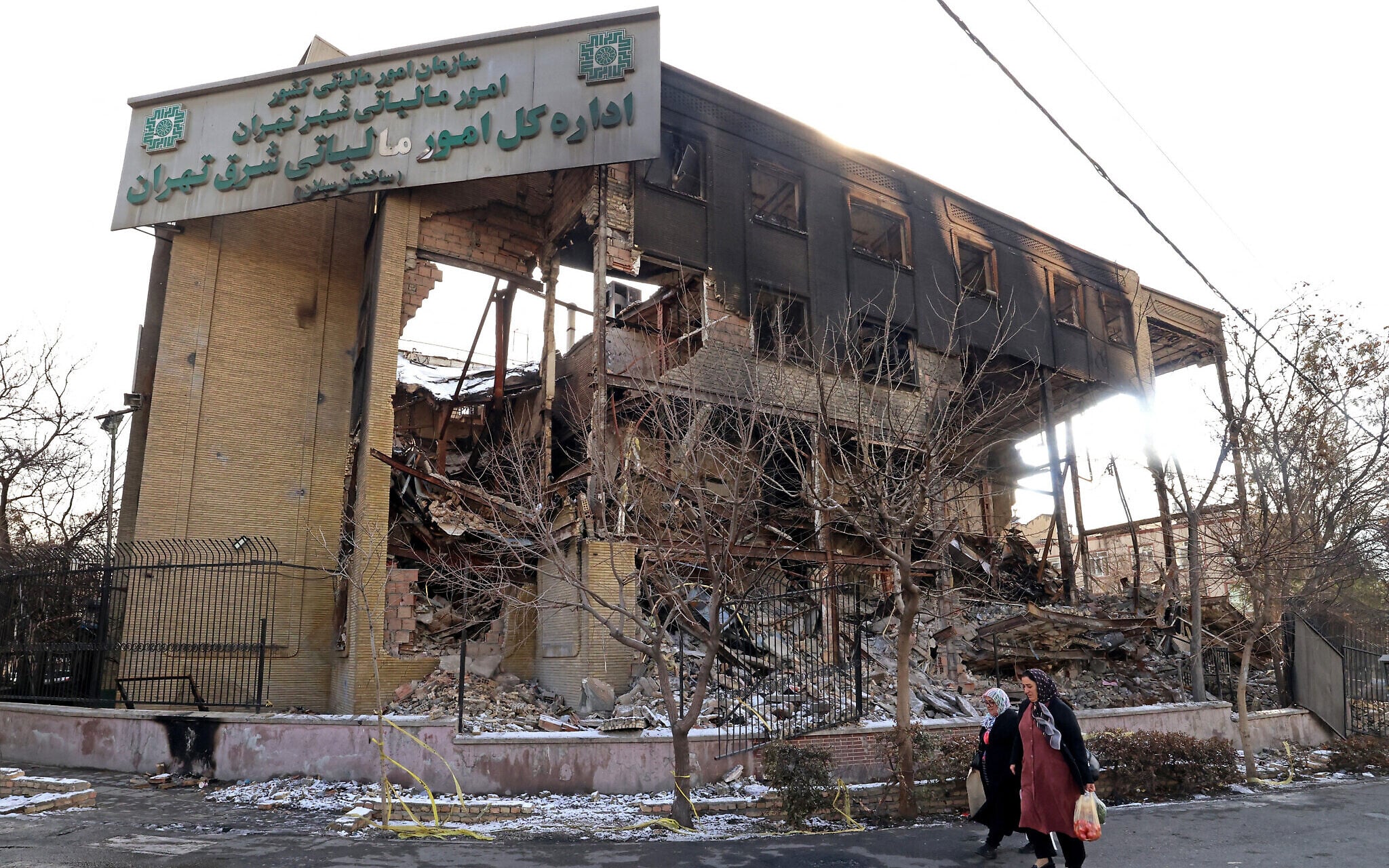
This photograph, taken during a tour for foreign media, shows women walking past a government building that was burned during recent public protests, in Tehran on January 21, 2026. (Atta Kenare/AFP)
When he refused, authorities shot Golsorkhi in the head and back, according to the relative. Graphic images sent to the activists and seen by The Times of Israel showed what appeared to be Golsorkhi’s badly bruised body pierced by bullet wounds in his right eye and torso.
One of Golsorkhi’s brothers was arrested last week after spending days in hiding, and his fate remains unknown, they added.
A relative of Mohammad Zareh, a 40-year-old from Isfahan who was allegedly shot and killed with live ammunition by members of Iran’s Islamic Revolutionary Guard Corps, recounted a similar experience to one of the UK-based activists. The IRGC initially accused Zareh of being linked to ISIS and demanded money from the family for the return of his body, the relative said.
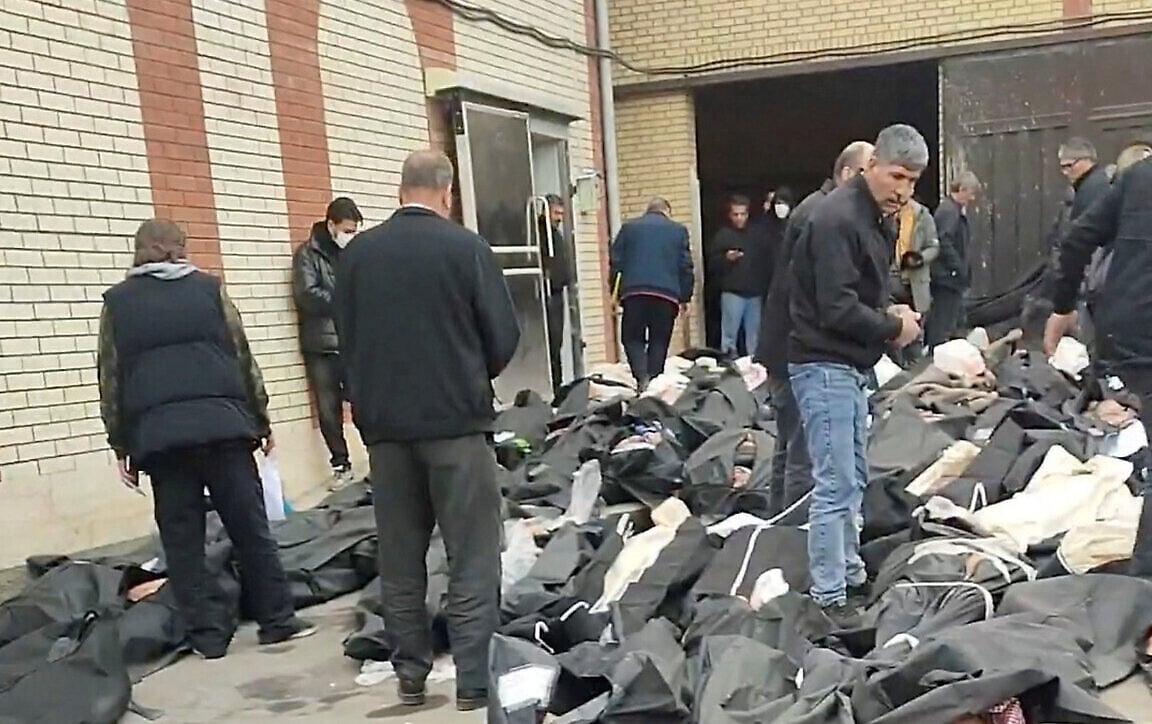
Bodies lie in body bags on the ground as people stand amid the scene outside Kahrizak Forensic Medical Centre in Tehran, Iran, in this screen capture from a video obtained from social media, January 11, 2026. (Social Media/via REUTERS)
When no evidence linking Zareh to ISIS was found, he was labeled a “martyr” on Iranian state media, which falsely reported him as a Basij member killed during the protests, the relative said.
The Tehran resident, who went by Amir, a pseudonym, accused the regime of “trying to make everything look normal and say nothing is happening, but the reality is very different.”
“This post-mortem cruelty is even more painful than the killings themselves,” he said.
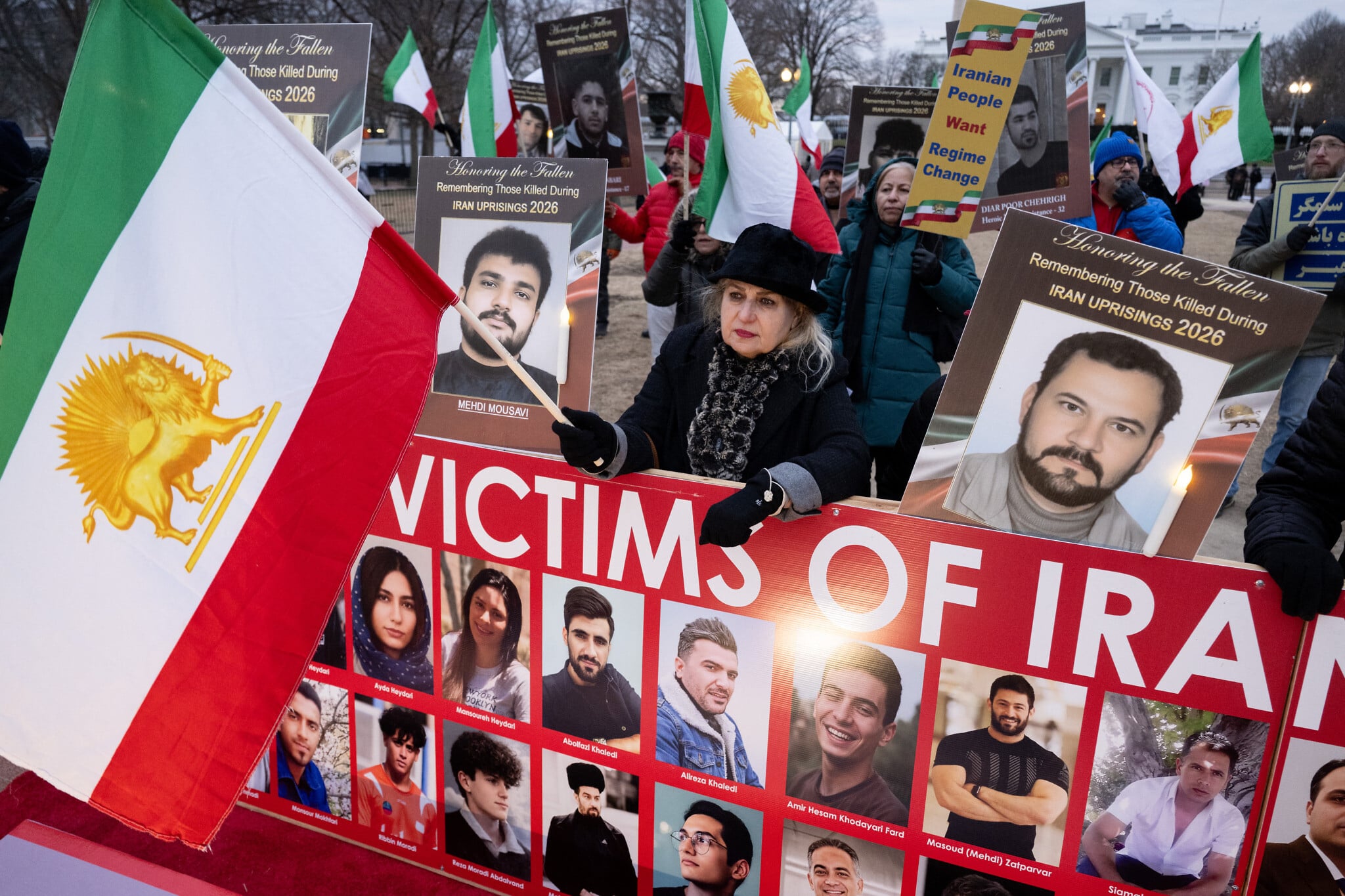
Iranian Americans hold pictures of slain protesters outside the White House in Washington, DC, January 16, 2026. (SAUL LOEB / AFP)
Recent testimonies collected by Iran International, which is linked to Iranian dissidents, also accused the authorities of demanding payment before releasing the bodies of slain protesters, and rights monitors have claimed that authorities sometimes offer to release the bodies without payment if families accept posthumous Basij membership cards.
Reports of Iranian authorities forcing such false confessions were also cited by the UN’s Special Rapporteur for human rights in Iran in a Friday meeting of the UN Human Rights Council.
The phenomenon was also attested to in a 2022 report by Iran International during a previous round of protests.
Activists and experts say both the anti-government protests that spread across the country starting in late December and the deadly regime response were unprecedented in terms of scale and use of deadly force.
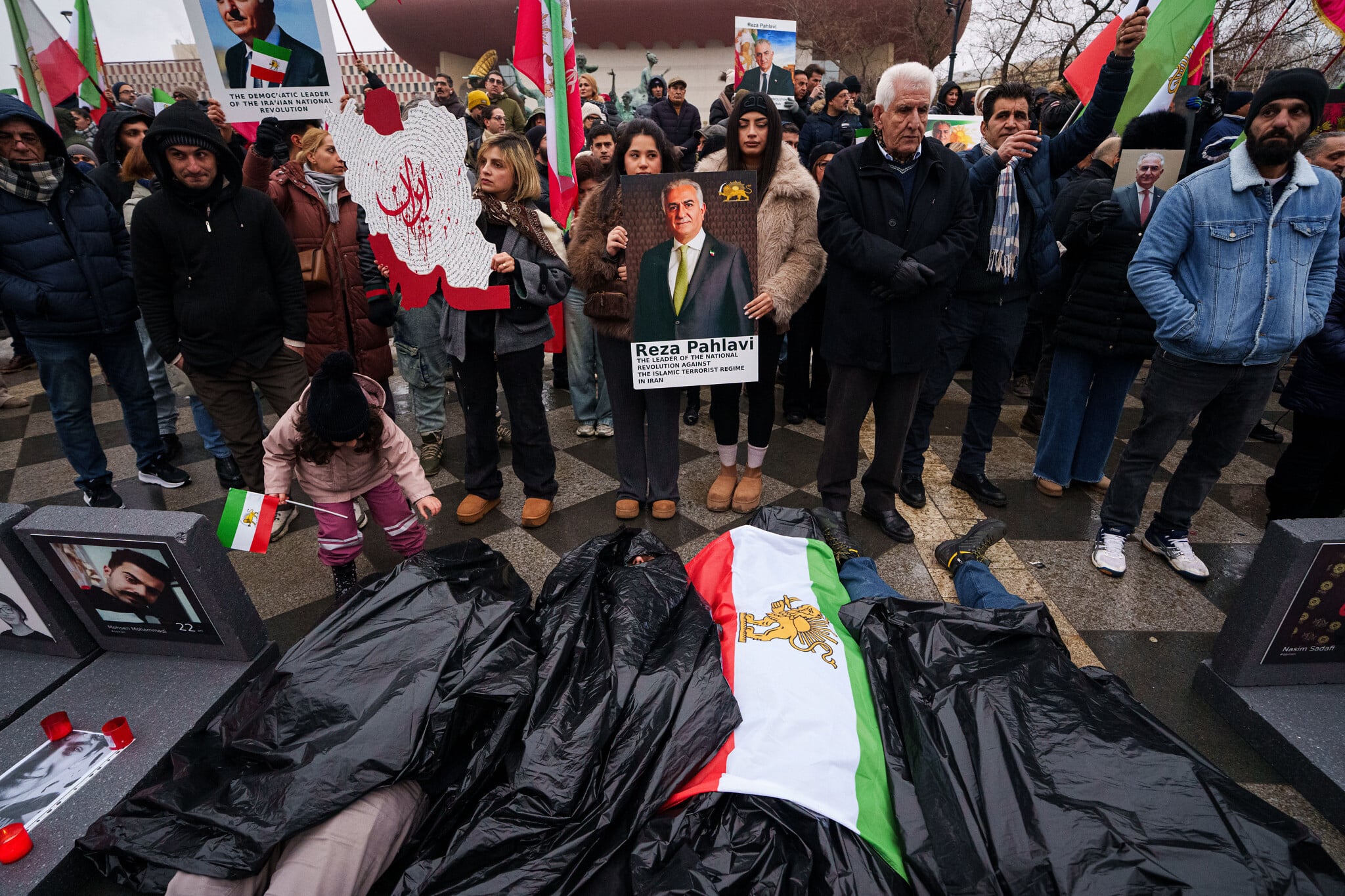
People covered in plastic bags symbolizing victims lie on the pavement as members of the Iranian community stand during a rally in support of anti-government protests in Iran, in Bucharest, Romania, January 24, 2026. (Andreea Alexandru/AP)
On Tuesday, the US-based Human Rights Activists News Agency said at least 6,126 people had been killed in the protests, which were brutally put down some two weeks ago. Many more are feared dead, with some groups citing tolls in the tens of thousands.
The Human Rights Activists News Agency, which verifies each death via activists in Iran, identified the dead as including at least 5,777 protesters, 214 government-affiliated forces, 86 children and 49 civilians who weren’t demonstrating. The crackdown has seen over 41,800 arrests, it added.
Iran’s government has put the death toll at a far lower 3,117, saying 2,427 were civilians and security forces, and labeling the rest “terrorists.” In the past, Iran’s theocracy has undercounted or not reported fatalities from unrest, and its internet shutdown has made it difficult to gain a clear picture of the situation inside the Islamic Republic.
‘Nothing left we can do’
According to Amir, the government has continued to crackdown on perceived critics, throttling daily life.
“When you go outside, the atmosphere is completely controlled. If someone in authority notices anything suspicious, they check your phone, go through it, and even the smallest thing can put you in serious danger,” he said in the voice note.
“Banks and many public places are barricaded with iron sheets, like prisons or vaults. Entry to shopping centers is heavily guarded — what used to be a single security guard is now accompanied by three, four, or five of the regime security forces,” he added. “Everything feels strange and tense.”
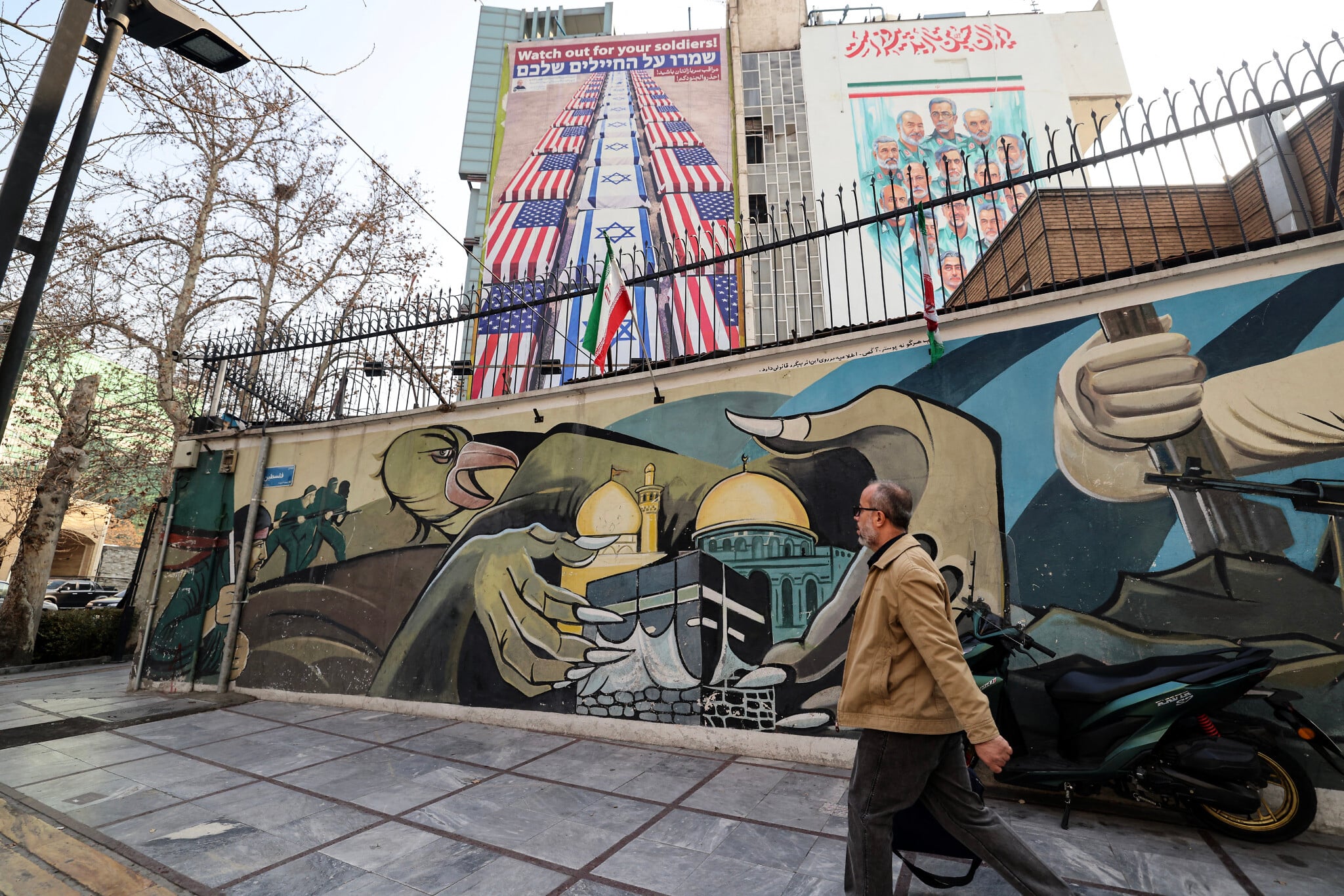
An Iranian man walks past an anti-US and anti-Israel banner hanging on a building in Palestine Square in Tehran on January 27, 2026. (ATTA KENARE / AFP)
He urged the international community to intervene in defense of those opposed to the regime, calling for increased penalties on those behind the regime’s deadly tactics. “I don’t understand when they want to sanction the IRGC — how long do you need to wait,” he asked. “The people of Iran urgently need external support. Every hour of delay means more arrests, torture, and killings.”
In another voice message sent on Monday to one of the activists, a woman identified as a 33-year-old Tehran resident also pleaded for outside help.
“Our only hope right now — because it seems America isn’t doing anything — our only hope now is you,” Ava, a pseudonym, told the activist, encouraging continued demonstrations in support of the protesters and efforts to share their stories.
“Judging by the videos that have reached Iran International since last night — since the internet was reconnected — they will probably cut the internet again today. We’ll go back into silence,” she said.
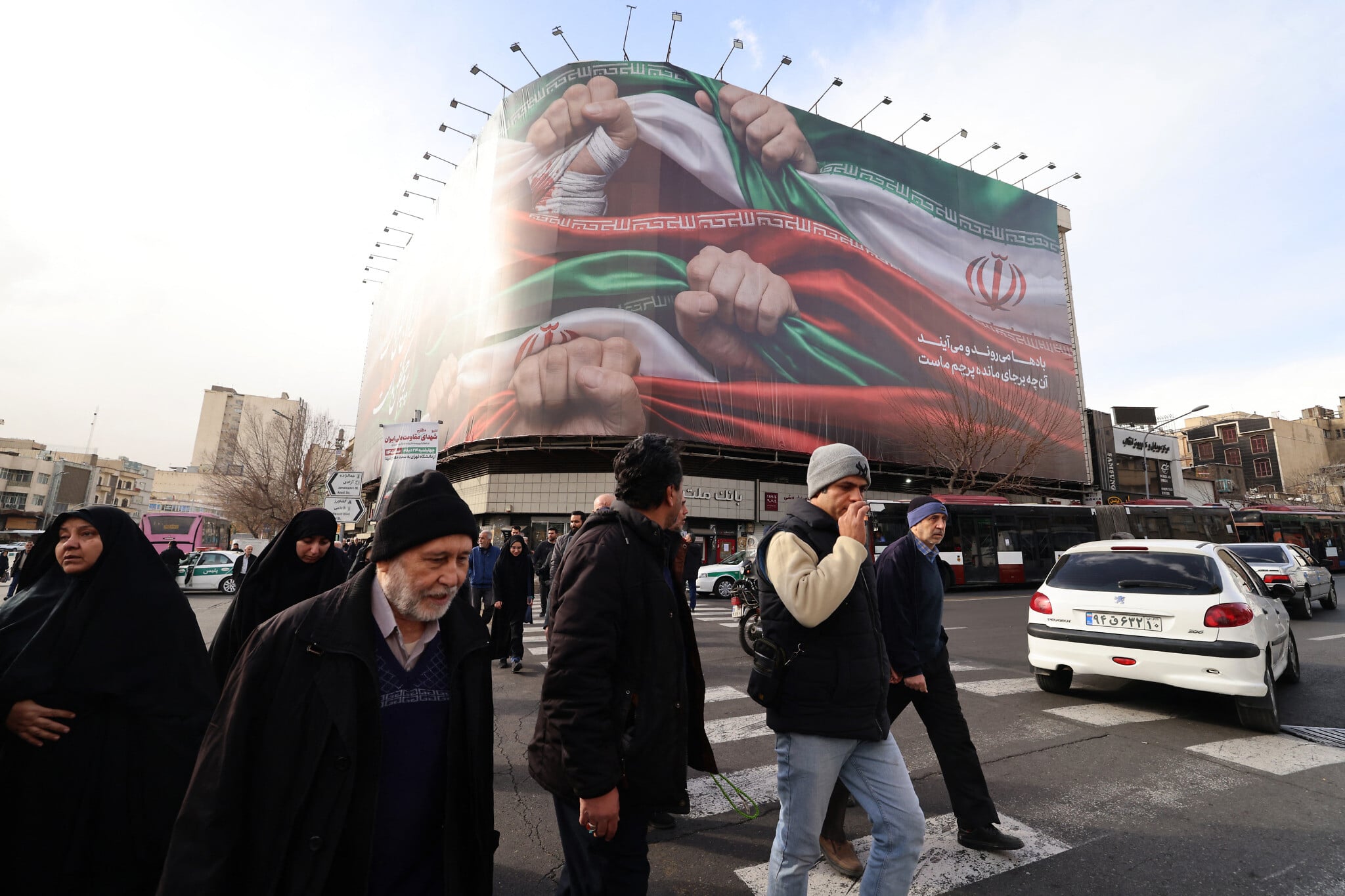
People walk past a large patriotic banner depicting the Iranian flag in Enghelab Square in Tehran on January 14, 2026. (ATTA KENARE / AFP)
The head of Iran’s telecom company told local media on Saturday that internet service would be restored in the coming days, though it has been difficult to determine whether Iran has indeed been reconnected and on what scale.
Ava, who arrived in Tehran this week from another area in Iran, added that the aftermath of the protests had even worse consequences in smaller cities than in the capital: “The things I saw in Tehran were different from what they were saying in the provinces and in smaller cities — because in Tehran they couldn’t control the protests as tightly given the forces they had.”
“But in small towns — we had cities with populations of only twenty or thirty thousand, yet they had, for example, a thousand people killed, 700 or 800 killed. We heard things, we saw things that really went beyond mass killing. It was horrific — truly horrific,” she said in a shaky voice.
The Canada-based activist said an Iranian doctor in Isfahan, Iran’s third largest city, also reported hundreds killed in outlying areas, as well as ongoing regime atrocities in the city itself.
According to the doctor’s account, relayed on Sunday, regime “forces attacked the hospital, entered the surgery room, and when the doctors and nurses tried to stop them from stealing the body [of a protester], they also got shot. More of them came and dragged the bodies, taking them out. In addition to the protesters, we’ve lost good doctors and hospital staff.”
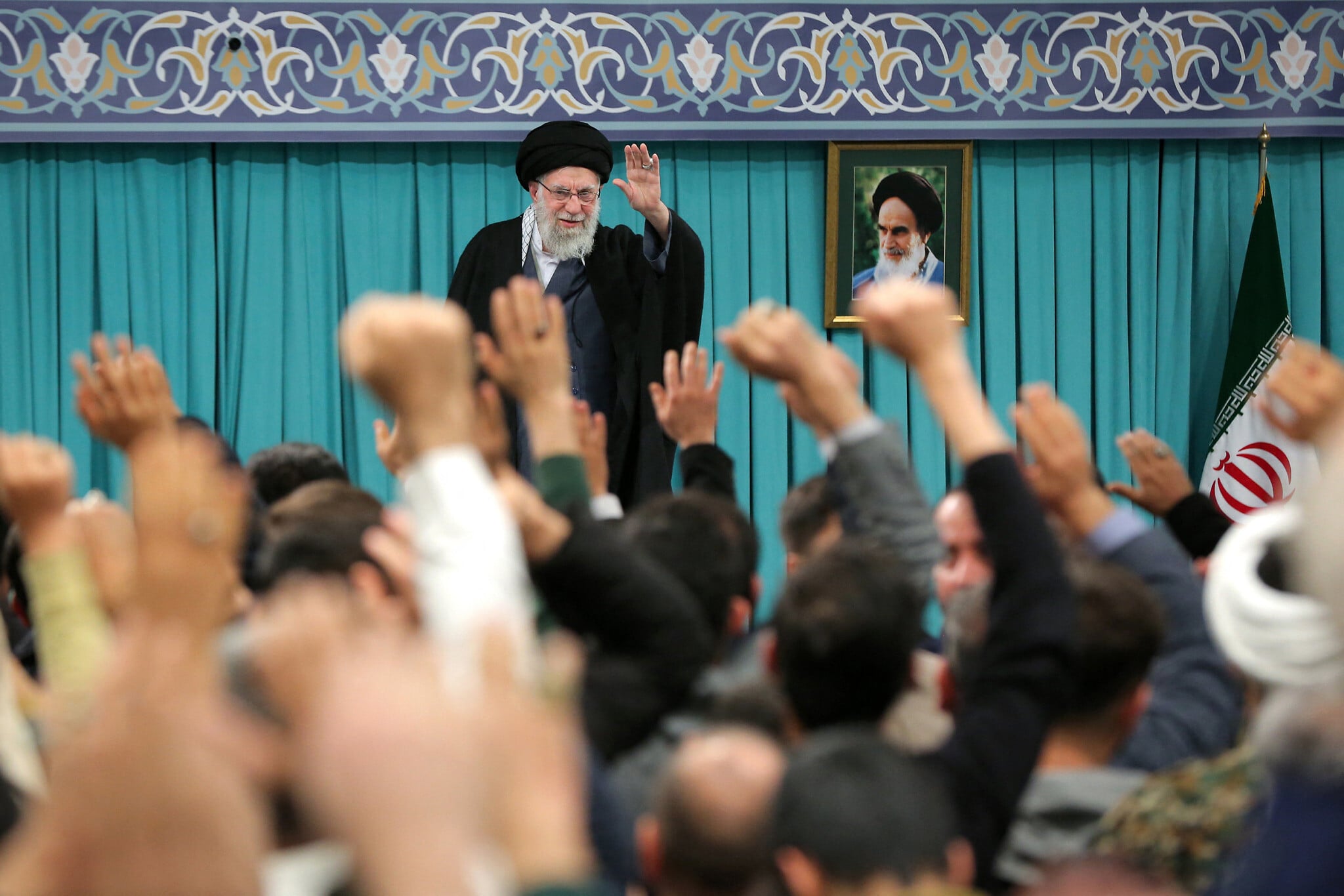
This handout photograph provided by the office of Iran’s Supreme Leader Ayatollah Ali Khamenei shows him addressing a meeting with the people in Tehran on January 17, 2026. (KHAMENEI.IR / AFP)
Ava said the regime had totally suppressed the protests, making outside help their only hope for salvation.
“Tell them that there is nothing else we can do inside Iran. Nothing… So many people have been killed that no one dares anymore,” she said. “Going out into the street equals suicide. It’s not about bravery anymore — anyone who goes out now, it’s beyond bravery, it’s foolishness. You go out directly, and they kill you straight away; they don’t even ask why you came.”