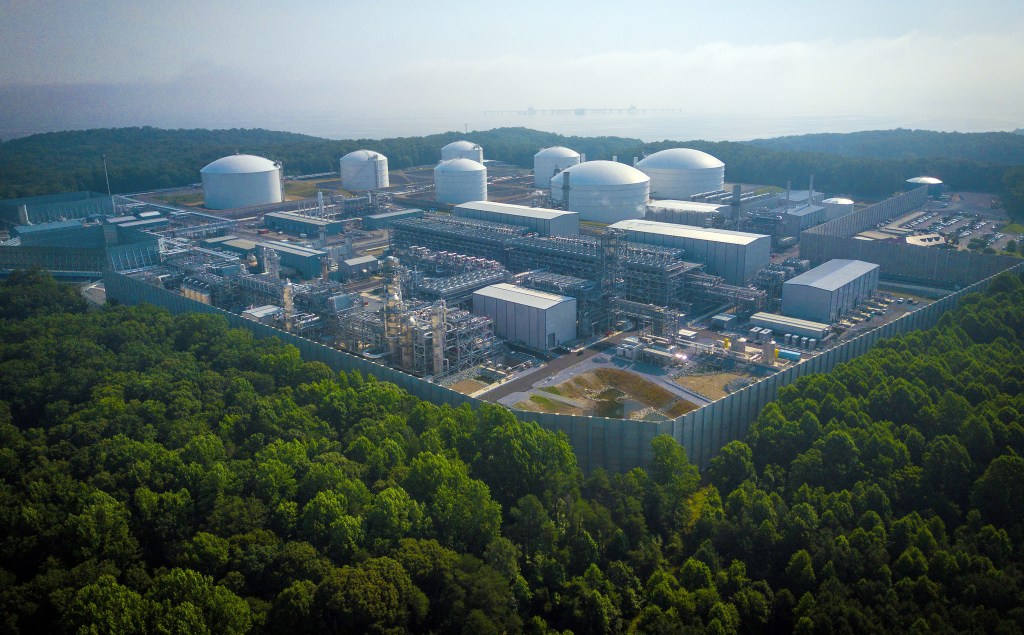
Maryland’s attorney general is co-leading nine states that oppose allowing liquefied natural gas plant construction without local approval, arguing public safety would be jeopardized.
A coalition of nine state attorneys general, co-led by Attorney General Anthony G. Brown, opposes a Federal Energy Regulatory Commission plan they say would allow construction and expansion of liquefied natural gas plants without notice and consultation with state and local entities.
In a letter to the commission, they opposed the use of “blanket” permits for such construction without meaningful review by the commission and consultation with state and local emergency management authorities, arguing it could jeopardize public safety and strain emergency response capabilities.
The Natural Gas Act requires LNG developers to coordinate with state and local emergency management agencies before construction. The commission, which oversees siting, construction, expansion, and operation of natural gas export or import plants, began considering procedural changes in November.
Maryland has one such facility, the Cove Point LNG export facility in Lusby, which connects to Mid-Atlantic gas transmission systems of Transcontinental Gas Pipeline, Columbia Gas Transmission and Eastern Gas Transmission and Storage. Liquefied natural gas is a cooled version of natural gas that can be transported long distances.
The commission’s proposal comes at a time when Maryland is grappling with energy policy amid the rapid expansion of regional data centers and other factors driving up electricity demand and costs. State lawmakers are considering ways to boost energy production in the state.
Brown said the process ensures state and local leaders will have input into emergency response plans before the commission approves expansion or construction applications. Already, the letter said, LNG plants lack transparency in details such as facility costs and safety measures.
Several trade groups support the changes, including The Center for Liquefied Natural Gas, the American Petroleum Institute and the Interstate Natural Gas Association of America. In comments filed with the commission, the groups urged moving to a blanket authorization process, which already is in place for pipeline and storage facilities.
“The public interest benefits of doing so are many,” and will allow “LNG terminals to implement improvements benefiting safety, reliability, efficiency, and capability without undue burden or delay,” the groups said.
Brown co-led the letter with Oregon Attorney General Dan Rayfield, with support from attorneys general of Connecticut, Delaware, Massachusetts, Michigan, New York, Rhode Island and Vermont.
Have a news tip? Contact Lorraine Mirabella at lmirabella@baltsun.com, (410) 332-6672