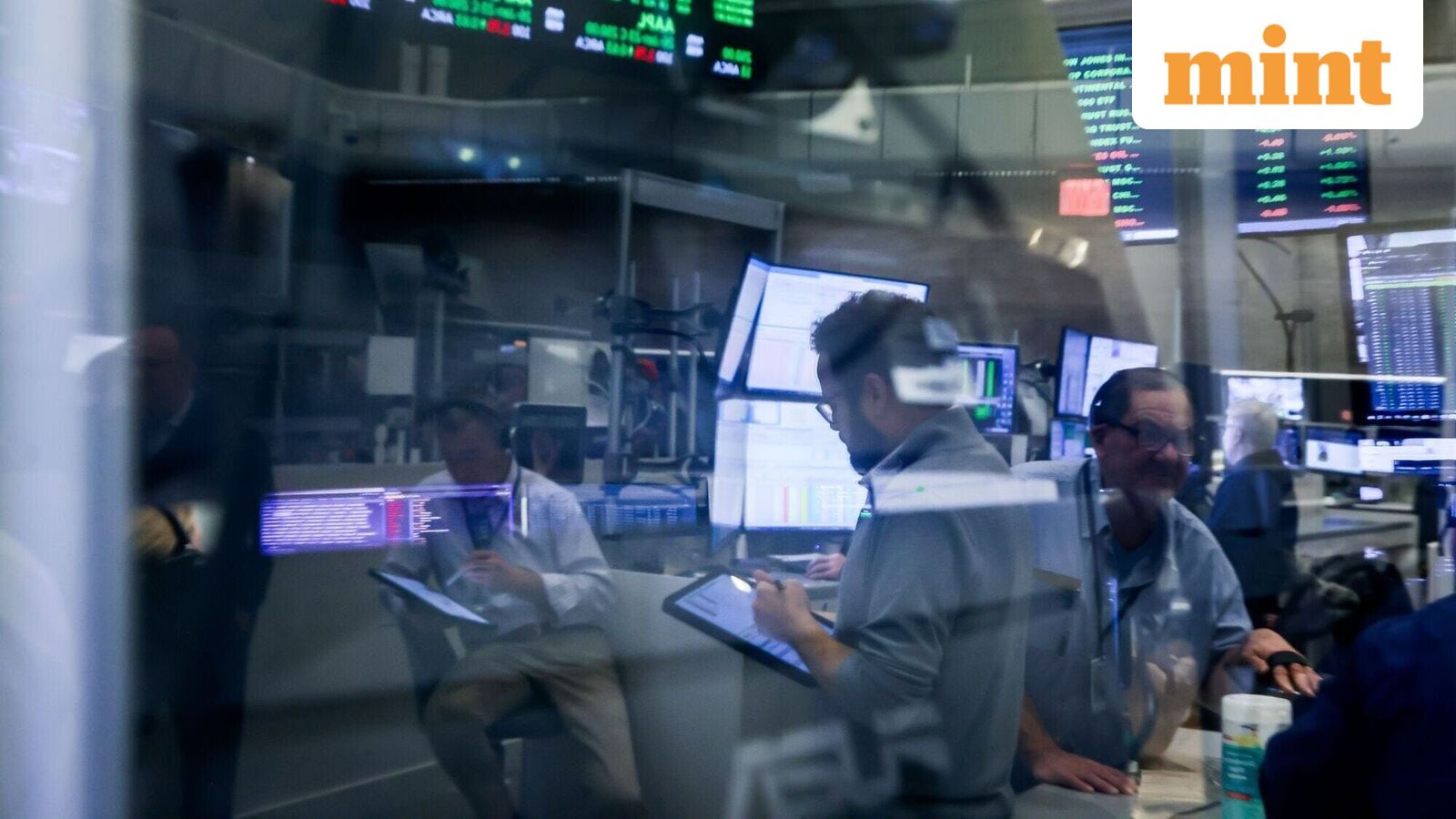
The stock markets gave a cold shoulder to India’s landmark trade deal with the European Union on Tuesday, closing nearly unchanged despite the magnitude of the deal and what it means for the country’s trade and economy. Experts said investors had already priced in the development, which comes at a time of global trade fragmentation, US-India trade frictions and elevated uncertainty.
The Nifty 50 rose nearly 0.8% during the day, before closing 0.5% higher at 25,175.40, while the Sensex finished up 0.4% at 81,857.48. Among sectoral indices, Nifty Metal rallied the most at 3%, while Nifty PSU Bank followed closely behind, with 1.8%. The top gainers of the day were Adani Enterprises (up 5.3%), Axis Bank (5.1%) and JSW Steel (4.6%), while losers were led by Mahindrta and Mahindra (-4.3%), Asian Paints (-2.8%) and Kotak Mahindra Bank (-2.6%).
Yet, market experts called the trade agreement with the EU a clear breakthrough, particularly as trade talks with the US drag on. However, they stressed that it should be viewed as a meaningful addition to India’s trade strategy, not a replacement for a deal with the US.
The deal is unlikely to spark any near-term market turnaround, Emkay Global Financial Services said, calling it a “structural recalibration of exports” rather than an event-driven trigger for equities.
The brokerage in a report noted that a fruitful US-India deal, stability in the rupee, and reduced global noise remain far more critical for markets. On the sector front, textiles along with select pharma and chemicals are seen as the key beneficiaries. Stocks likely to gain include Dr Reddy’s, Lupin and Sun Pharma in the pharma space, and SRF, Navin Fluorine, Gujarat Fluorochemicals and Aarti Industries in chemicals, along with textile players, the brokerage noted.
Hailed as the ‘mother of all deals’, the trade treaty creates a massive free trade zone of two billion people by eliminating or slashing tariffs on over 97% of traded goods. This historic pact secures unprecedented market access for Indian textiles and services, while opening India’s tightly regulated market to European cars and machinery, among others.
As the world’s fourth and second largest economies, India and the EU account for a quarter of the global GDP and a third of global trade, the Union commerce ministry said. In FY25, India’s bilateral trade in goods with the EU stood at ₹11.5 trillion, with exports of ₹6.4 trillion and imports of ₹trillion. Trade in services between India and the EU touched ₹7.2 trillion in 2024, a ministry statement said.
According to Nirav Karkera, head of research at Fisdom, a fintech wealth management platform, the trade deal was largely expected and priced in by the markets. In fact, he noted that a failure to close the deal would have been more disappointing for Indian equities. As more clarity emerges in the days ahead, he expects selective pockets to start seeing inflows.
He added that the muted market response was “a mix of expiry-related factors and the trade deal.”
“Today, we saw no activity in markets due to expiry-related adjustments too,” said Rajesh Palviya, senior vice-president and head of technical and derivative research at Axis Securities.
As the market remained bearish through the month, putting participants under pressure, short-sellers used the opportunity to book profits, leading to short-covering and some upward movement in stocks, he said. That said, with a major event ahead, even short-sellers were hesitant to carry positions forward due to the risk of getting trapped, prompting them to cut positions as well. As a result, adjustments happened on both sides of the market, he explained.
FIIs were net sellers of Indian equities worth ₹3,068 crore on Tuesday, while DIIs stepped in as net buyers with purchases of ₹8,999.71 crore, according to BSE provisional data.
Going forward, beyond the ongoing earnings season and Budget-related expectations, participants are keeping a close watch on the US Federal Reserve’s policy decision due on Wednesday, global trade cues including the India-US trade deal developments, foreign flows and rupee movement.
While the Fed is widely expected to keep rates unchanged, investors will closely parse Chair Jerome Powell’s commentary on inflation and the timing of future rate cuts for cues on global liquidity and emerging market flows.
(Srushti Vaidya contributed to this story)