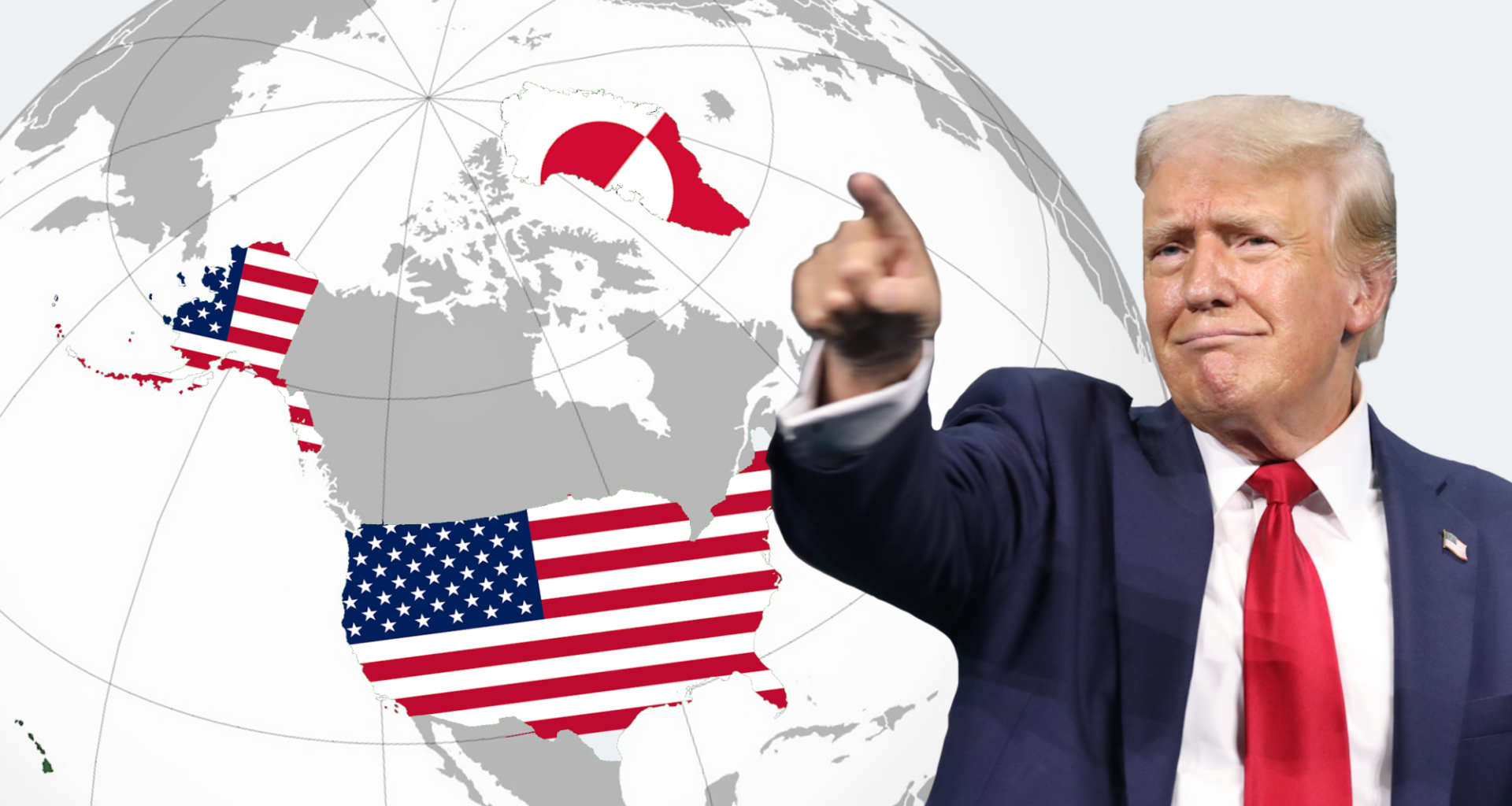
European officials have reacted to President Donald Trump’s statement that he wants the United States to own Greenland. Trump claims that U.S. control over Greenland, which is currently an autonomous territory under Denmark, would ensure American and European security. On Jan. 18, Trump threatened to impose tariffs on Denmark, Norway, Finland and a few other NATO members if they object to him taking Greenland.
In only the past year of Trump’s second term, the reputation of the U.S. abroad has been on a downward spiral. U.S. allies feel forced to stop backing U.S. imperialism now that it impacts them directly.
Trump was already testing their patience with his negligence on the Russia-Ukraine conflict, but threatening to seize NATO territory seems to be pushing it. Notably, Canada’s response to this move was to pivot to trading with China. As a result, Trump threatened more retaliatory tariffs.
Contrary to popular belief, this isn’t the first time two NATO members have had tension with each other. Turkey and Greece have been at odds over territorial waters, as well as the Cyprus conflict, for a while now. Trump’s threats are being taken far more seriously regarding the overall stability of established diplomatic ties.
NATO is an aging relic of the Cold War that only continues to justify its existence because of Russian aggression. NATO relies on the U.S. for its continued existence, whereas Turkey and Greece are more or less disposable in that regard. This highlights how the panic that Trump has caused exposes a major flaw in this system, which is the possibility of U.S. aggression.
Danish Prime Minister Mette Frederiksen admitted that a U.S. attack on Greenland would shatter diplomatic ties as they exist now.
According to Article Five of NATO’s defense clause, any attack on a NATO member should result in retaliation from other NATO countries in order to restore security. The only time this has ever been applied was after the Sept. 11, 2001 terrorist attacks. Hypothetically, a military invasion of Greenland would mean war with NATO.
Regarding Trump’s logic in this decision, the U.S. already has an airbase in Greenland due to a security agreement with Denmark from 1951. The base tracks objects in space and warns of possible ballistic missiles heading towards the U.S. Because of this, Trump’s claim that U.S. control over Greenland is critical for security does not make any sense.
What also doesn’t make sense is U.S. National Security Advisor Michael Waltz’s claim about wanting Greenland’s natural resources. Greenland has a large reserve of oil and natural gas, but the infrastructure to actually harvest it seldom exists. It would have to be built after the fact, which would be incredibly costly.
In the case that Trump decides to actually invade Greenland, the people suffering the most would be the Greenlandic Inuit people, who have already suffered under Danish colonialism. Morally, impeding on a sovereign nation is obviously wrong, but evidently, that didn’t stop the Trump administration from doing what it did in Venezuela.