hen United States President Donald Trump again raised the prospect of acquiring Greenland, many observers dismissed it as mere political theater. The island, frozen and sparsely populated, appeared too distant and peripheral to matter for nations beyond the North Atlantic. Yet, such dismissal is dangerously misleading.
Greenland is not an eccentric fixation; it is a strategic signal. It demonstrates that geopolitics has returned to its raw, unfiltered form, where geography, military logic, economic coercion and legal ambiguity have coalesced into a singular instrument of power.
In this emerging international environment, distance no longer guarantees safety. What is unfolding in the Arctic today may foreshadow the logic applied in the Indo-Pacific tomorrow. For Indonesia, the situation in Greenland should be read not as a curiosity, but as a warning.
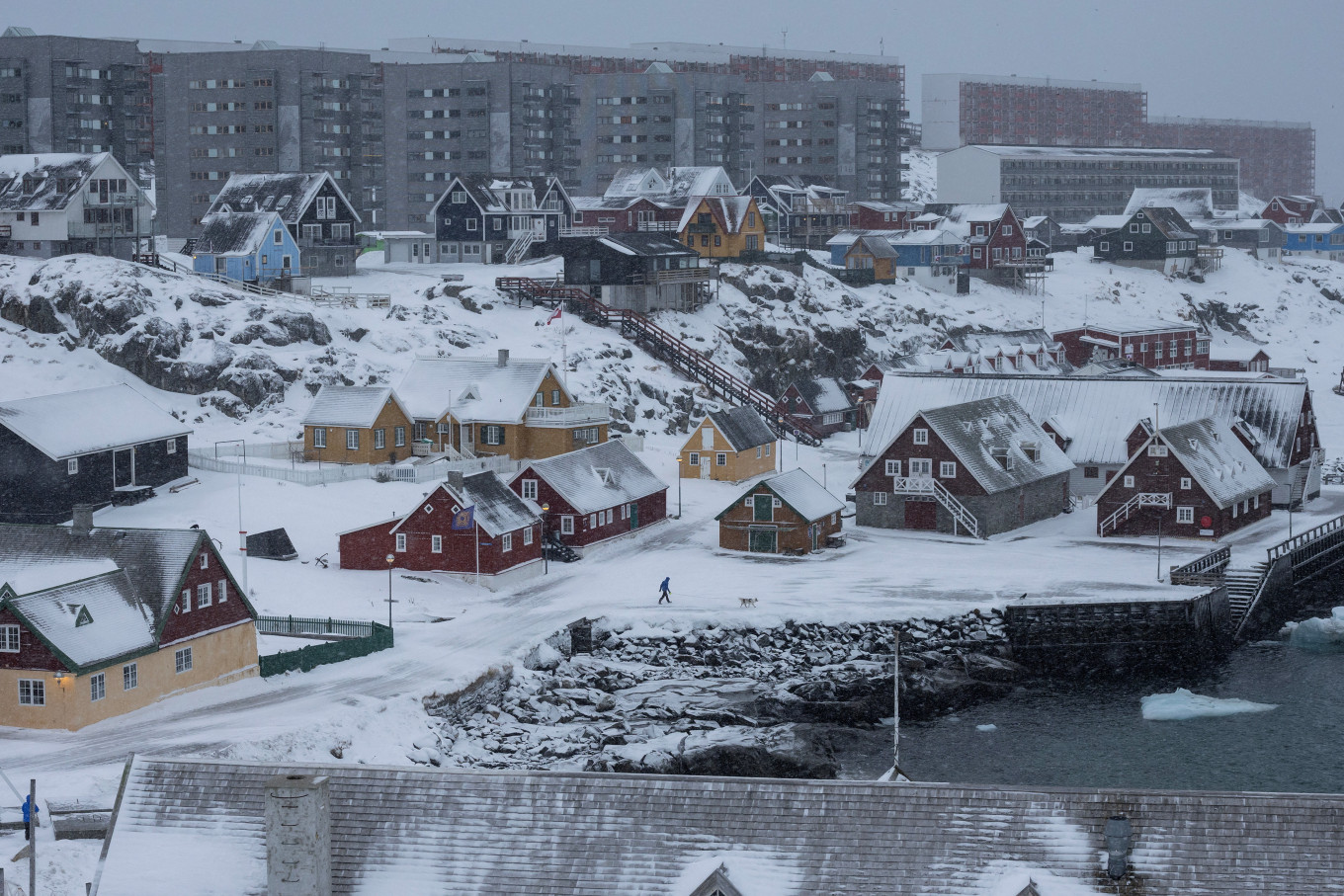
Greenland occupies a pivotal position in the evolving Arctic security architecture. It anchors US early-warning systems, hosts critical military infrastructure at the Pituffik (formerly Thule) Space Base, and sits astride emerging sea lanes opened by climate change.
As polar ice retreats, the Arctic is transforming from a frozen periphery into a contested frontier where the interests of the US, Russia and China, intersect.
Trump’s framing of Greenland as a “national security necessity” concerns control rather than formal ownership, specifically, the control of access, the denial of rivals and the extension of strategic depth. This logic is rooted in offensive realism, a worldview in which great powers seek to maximize relative power and minimize vulnerability in an anarchic system.

Every Thursday
Whether you’re looking to broaden your horizons or stay informed on the latest developments, “Viewpoint” is the perfect source for anyone seeking to engage with the issues that matter most.
for signing up our newsletter!
Please check your email for your newsletter subscription.
Such a strategy does not require open confrontation to succeed; its effectiveness lies in its ability to gradually reshape strategic environments, normalizing what once appeared unthinkable.