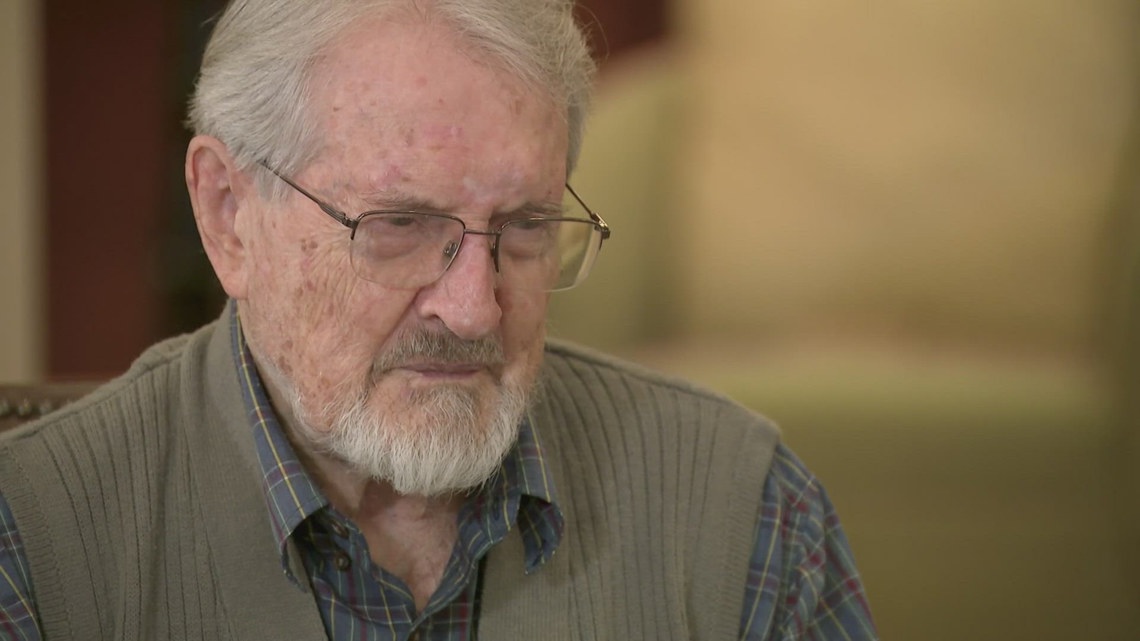
William Royer, now 94, shares his memories of captivity, resilience, and the long road home during the Iran Hostage Crisis.
HOUSTON — Forty-five years ago, U.S. hostages held in Iran were finally freed after 444 days in captivity. One of those hostages was William Royer, a Houston man, now 94 years old. He’s reflecting on survival, resilience, and the long road home.
Royer tells KHOU 11 it doesn’t feel like nearly half a century has passed since his release.
Royer was teaching English in Iran when history took a dramatic turn.
A crisis that stunned the world
The year was 1979. Anger had been building outside the U.S. Embassy in Tehran, with protesters demanding the United States return Iran’s deposed Shah.
On November 4, that tension boiled over into violence.
Iranian students stormed the embassy, overpowering a small group of Marine guards and taking more than 50 Americans hostage.
The captives were blindfolded and paraded through the streets as the world watched.
“We were fed,” Royer recalled. “But any time you needed to go to the bathroom, they’d put a bag over your head. You’d knock on the door and be led down the hall. You couldn’t see anything outside.”
444 days of uncertainty
What followed was a nightmare that dragged on for more than a year.
Weeks turned into months. Then tragedy.
Eight U.S. service members were killed during a failed, secret rescue attempt.
Then-President Jimmy Carter took responsibility.
“The responsibility is fully my own,” Carter said at the time.
By November 1980, the hostages had been held for more than 377 days.
“I was angry throughout,” Royer said. “I didn’t let myself think I wouldn’t come home. I never gave up.”
Freedom at last
After 444 days, the hostages were finally released, just minutes after Ronald Reagan was sworn in as president.
“Once we got out on the runway and the plane took off, you just felt satisfaction — fresh air,” Royer said. “The shackles were removed, and you were on your way to freedom.”
Royer and 52 others began the long journey home, first landing in New York, where crowds lined the streets.
Two days later, they arrived in Washington, D.C., greeted with tearful reunions and a ticker-tape parade through the nation’s capital.
That same day, Royer, seen in archival video wearing glasses, was honored alongside fellow survivors at the White House.
“Thank God you’re home,” President Reagan told them.
A hero’s welcome in Houston
For Royer, however, the most meaningful reunion was still ahead.
Newspaper headlines captured the moment he finally returned home to Houston, donning a cowboy hat as the city welcomed him back.
“After what you lived through, you don’t take freedom for granted,” Royer said. “Definitely not. Not at all.”
“I don’t think there’s an understanding of how precious our freedom is.”
At 94, Royer believes his voice may be one of the last left from that chapter in history.
He’s sharing his story so Americans don’t forget the Iran hostage crisis and because he believes its impact still echoes through U.S. policy and global tensions today.
Got a news tip or story idea? Email us at newstips@khou.com or call 713-521-4310 and include your name and the best way to reach you.