My son seems sceptical. “Just keep looking,” I tell him, as we lean against the rough wooden railing at the edge of the boardwalk, staring over the sand dunes to the freshwater lake of the Lagoa dos Salgados. We can see ducks, gulls, avocets and what I think might be a spoonbill — but there is no flash of pink.
“But Dad,” my four-year-old says. “Flamingos aren’t real!”
His older brother, aged eight, interjects. “Of course they are, there’s loads of flamingos in your books.” But the little one is not convinced. “Nope, they’re not real. They’re extinct, like dinosaurs.”
There’s a certain logic to putting them in the same category: brightly coloured, slightly ridiculous-looking creatures from television cartoons and picture books.
And even if he believed in flamingos’ existence, I can see why he is struggling to accept we would see them here, on Portugal’s Algarve, between the golf courses and high-rise apartment blocks of one of the most overdeveloped coastlines in Europe.
It is easy to be condescending about the Algarve. Since the 1960s tourists have flocked here for sun, sand and seafood. The developers have never been far behind, with lax planning laws allowing them to build row upon row of concrete holiday barracks and cheap nightclubs, particularly in and around the hotspots of Albufeira, Lagos and Armacao de Pera.
But there is a reason five million people continue to visit the Algarve each year: its coastline has 150 beaches, many of them among the best in Europe. And hidden between the busiest resorts it is still possible to find quiet idylls, places of peace and tranquillity. Thanks to conservation efforts in recent years, it is even possible to find abundant wildlife in the nature reserves that punctuate the coastline, including the spectacular Ria Formosa — a haven of salt marshes, islands and lagoons.
We are in Portugal on a hunt for the best beaches, the best (child-friendly) restaurants and the most scenic wilderness the Algarve can offer. And mythical-seeming pink birds. My son may be sceptical, but the guidebook tells us huge flocks pass this way on their annual migration routes from October to April, and some are here all year round.
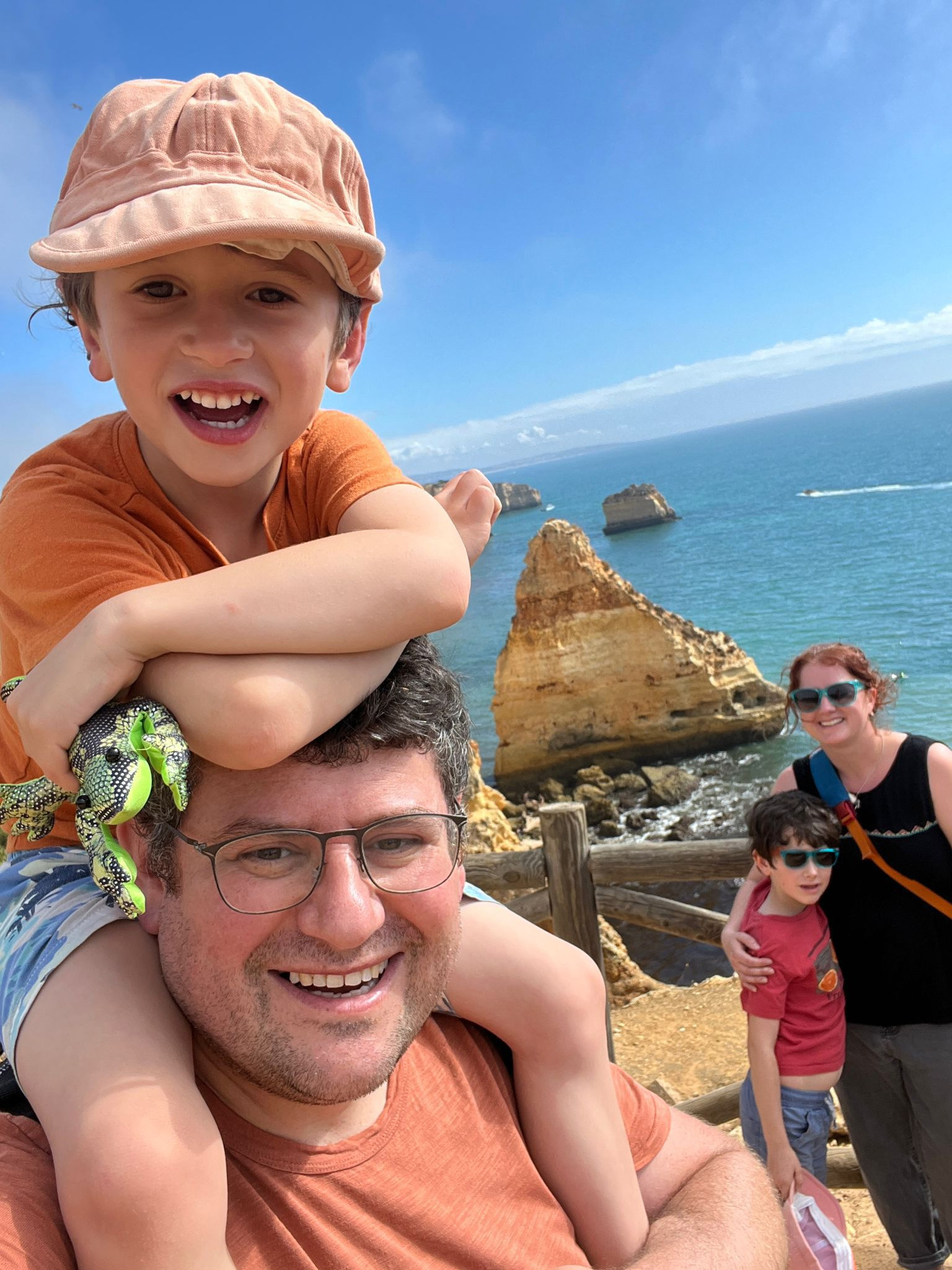
Ben Spencer with his family
We stay in Vale de Parra, about 40 minutes’ drive west from Faro airport. It is a slightly nondescript village, but within a five-minute walk in either direction of our villa there are a handful of excellent, affordable restaurants serving everything from freshly caught shrimp and octopus to pizza and pasta. Crucially, there are also top-notch bakeries selling pasteis de nata and bolos de arroz — perfect for breakfast and to keep energy up on our adventures. Our base is Villa Arcadia, a set of four functional apartments with a pool and plenty of space to relax in the sun and have a barbecue. We are there out of season, and have the whole place to ourselves, but it would be a great place for a group of families to get together.
• Read our full guide to the Algarve
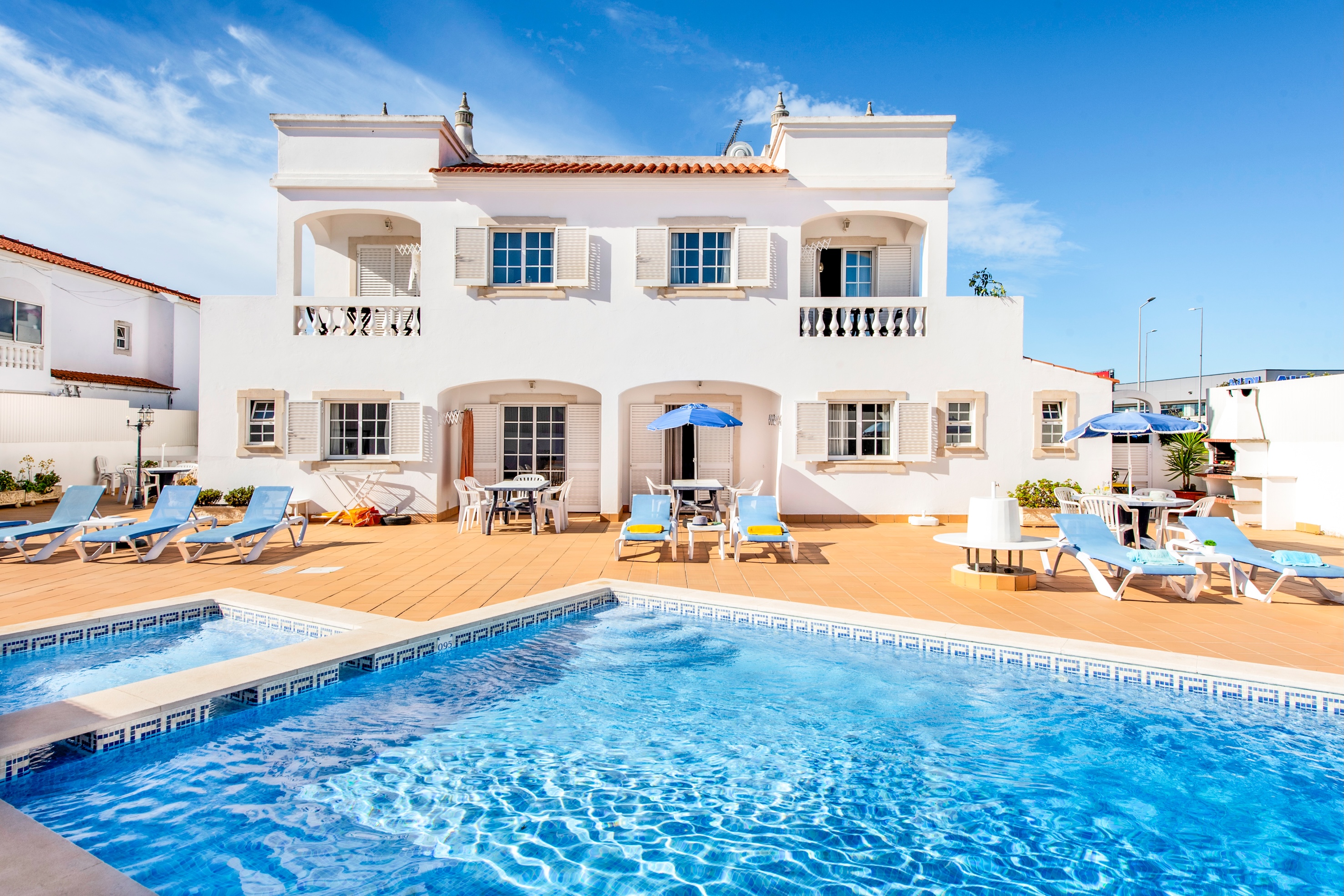
Villa Arcadia has a pool and plenty of outside space
Most importantly, Vale de Parra is a perfect base for exploring the Algarve, a five-minute drive from the beach, halfway along the southern coastline, and with easy access to the hassle-free A22 motorway which zips from east to west.
Finding the best beaches on the Algarve
Our target is to swim at a different beach each day. From day one, we realise our quest for beautiful scenery doesn’t take much effort. Fifteen minutes’ drive from our villa we find the vast sands of Praia Grande de Pera, backed by dunes and the lagoon at Salgados. Four miles long, the beach is big enough to pick a spot well away from other tourists, where we splash and swim and make sandcastles.
Further west, we walk the clifftop trail of the “seven hanging valleys”, finding fossils in the sandstone and peering into the hidden beaches and craggy coves below, including the seastack-dotted Praia da Marinha, the picturesque beach which stars on guidebook covers and Instagram posts. We explore the fishing village of Ferragudo, where the Arade River meets the sea, and get lost in higgledy-piggledy passages draped with pink bougainvillea. On the dock, between teetering stacks of lobster pots, we eat steaming hot bifana sandwiches filled with pulled pork.

The picturesque fishing village of Ferragudo
GETTY IMAGES
Five miles inland is Lagoa, an atmospheric town of cobbled streets, where we eat ovos rotos — a Portuguese version of ham, egg and chips. At Loule, we drink coffee in the bustling indoor market. At Guia in Restaurante Ramires, we eat chargrilled piri-piri chicken, a dish claimed to have been first developed here in the 1960s and inspired by recipes from the Portuguese colonies (mains from £6; restauranteramires.com).
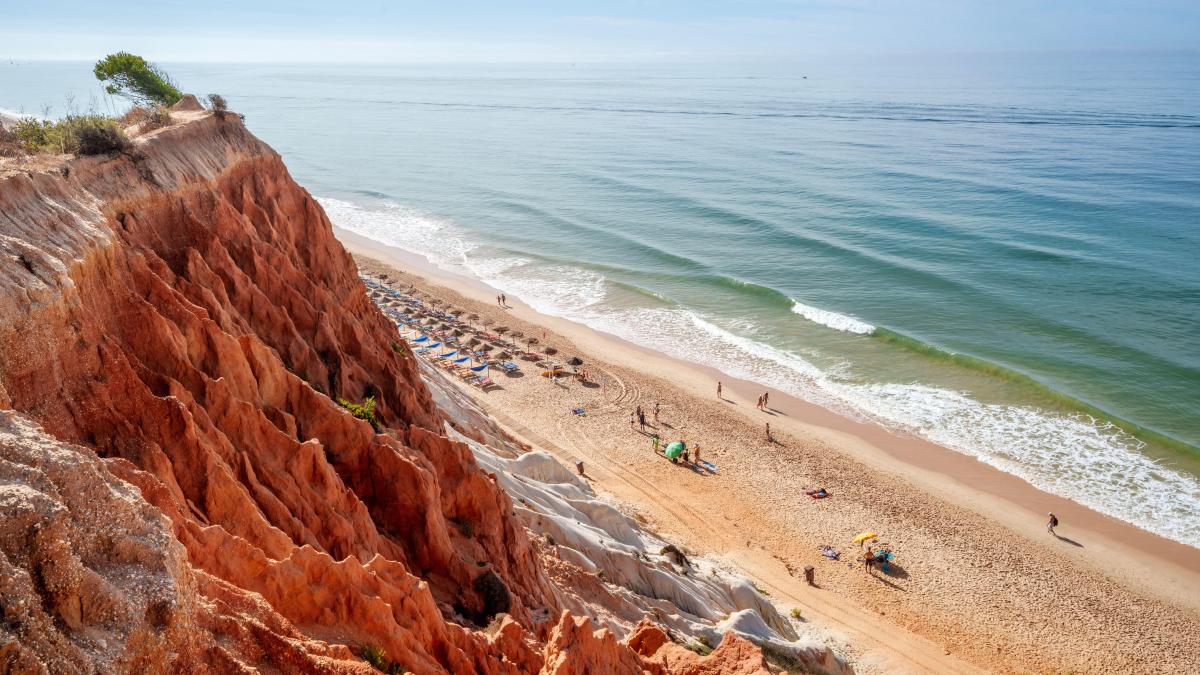
The food is excellent, but it is the beaches that steal the show. Take Falesia, which in 2024 was named by Tripadvisor as the best beach in the world. It’s a long stretch of white sand backed by pink and white cliffs and with a spectacular restaurant, Mare, a few steps from the beach (mains from £21; pinecliffs.com). After a lunch of barbecued squid and burgers, it starts raining. Suddenly we are the only ones left on the sand, so we decide to swim anyway, delighting in having the world’s best beach to ourselves.
• 22 best things to do in the Algarve
There are other worthy claimants to the title, though — take Cabanas, west of Lagos, which is small and secluded, hidden from the world by tall cliffs. Feeling a million miles from the rest of the Algarve, we swim until it gets dark and then go for dinner in the nearby fishing village of Burgau.
At Gale Oeste the sea is so wild that we simply stand in the surf, running from the biggest waves — and occasionally getting knocked down — before eating our pasteis as the sun sets.
Finally, we find what we are looking for. After bumping down a long dirt track on the Quinta da Rocha peninsula, sandwiched between the sea and the Alvor and Odiaxere rivers, we see one, then another, then a whole flock of flamingos loping through the marsh.
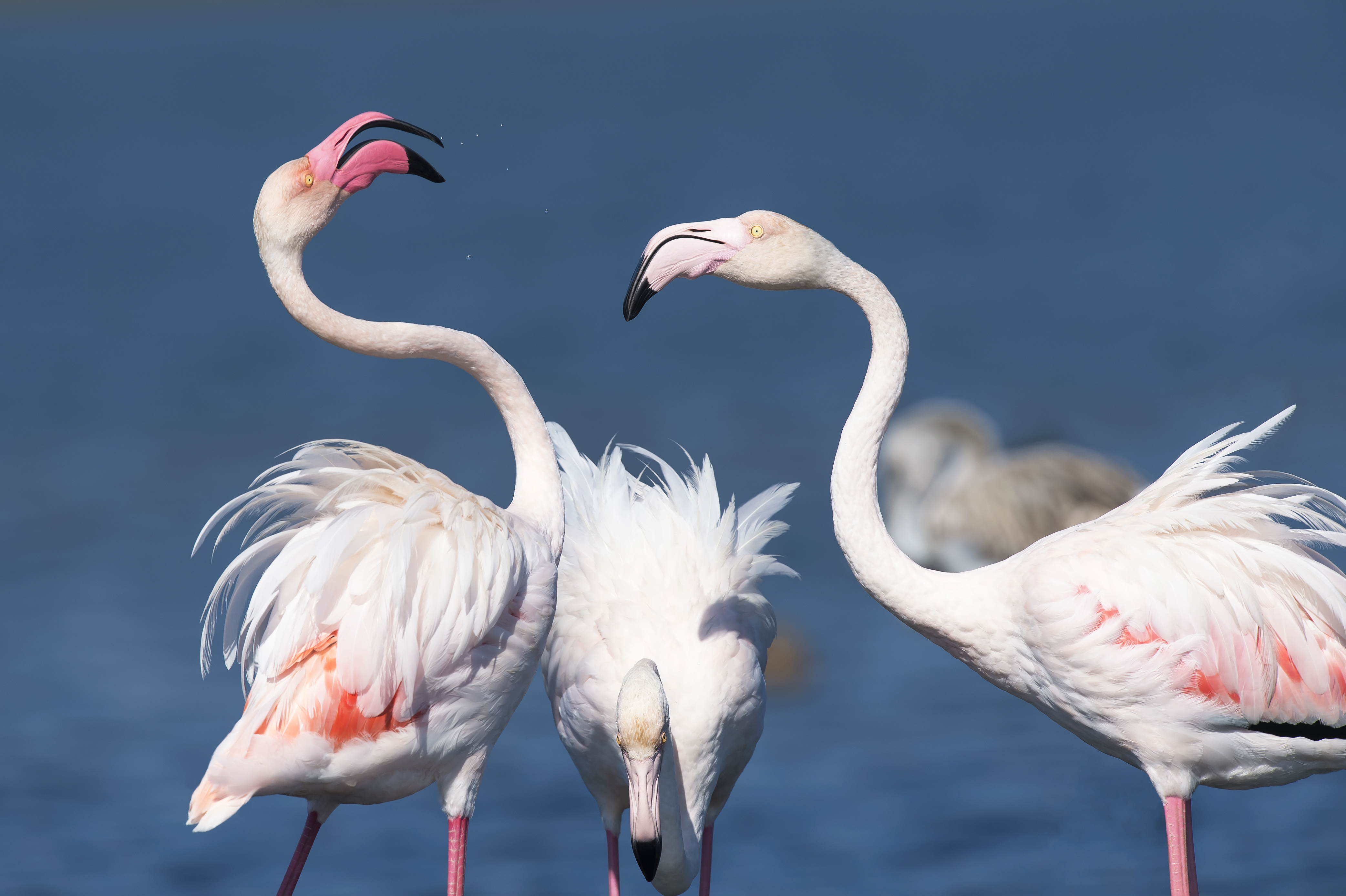
Flamingos can be spotted in the Algarve
GETTY IMAGES
“See, they are real,” I tell my younger son. He gazes at them for a long time through narrowed eyes, then replies: “No, I think they’re robots.”
This article contains affiliate links that will earn us revenue
Ben Spencer was a guest of Solmar Villa Holidays, which has seven nights’ self-catering for 16 from ££2,490 (solmarvillas.com). Fly to Faro
Other great tips for the Algarve Brunch at Tapas no Bucho in Lagoa
Brunch and Wine by Tapas no Bucho in Lagoa is a crowd-pleaser. Deconstructed burgers, jamon and eggs chopped up before you and mixed into fried potatoes, huge salads and a vast wine list: this is top-quality local food with a theatrical twist. Worth a visit to the cobbled town of Lagoa for this place alone (small plates from £3; brunchwine@gmail.com).
Roman ruins without the tourists
The Roman ruins at Milreu, just outside the village of Estoi, are remarkably preserved. The remains of a huge villa, dating from the 1st century AD, features extraordinary mosaics, bathhouses and a temple. If this were in Britain you would be peering at them from outside a cordon with thousands of other tourists. Here you wander freely through ancient kitchens and bedchambers for the princely admission fee of £1.50 (bilheteira.patrimoniocultural.gov.pt).
Get around by boat

Benagil sea cave can be explored during a boat trip
GETTY IMAGES
You could spend every day of your holiday on a different boat trip and still not exhaust them all. Take a bird-spotting cruise through the Ria Formosa nature reserve, search for dolphins out at sea, explore the vast Benagil sea cave or simply go island hopping off the beautiful eastern stretch of the Algarve. You can even hire a pirate ship (departures from Albufeira, Lagos, Faro, Portimao, Tavira and others. Ferries from £1.50, guided trips from £16).