Our journalism is only possible thanks to the trust of our paying members. Not a member yet? Sign up now
Dear readers,
Welcome back to Crime & Corruption. As the world’s most corrupt regimes queue to sign up for Donald Trump’s ‘Board of Peace’, our focus this week turns back to transparency and corruption inside Europe.
Today’s line-up:
EIB transparency under strain: big promises meet quiet rollbacks inside the EU’s public bank.VAT fraud crackdown: Brussels wants faster data access for prosecutors German MP convicted: a court ruling revives the long-running Azerbaijan bribery scandal at the Council of Europe.
‘Transparency’ at the European Central Bank
Loud transparency rhetoric paired with quiet rollbacks has become a familiar pattern in recent years. Fed up with scandals and bad press, leaders from Silicon Valley to the White House and Brussels have reverted to an increasingly popular playbook: make sweeping claims about transparency while simultaneously restricting access to potentially damaging information (read: almost anything).
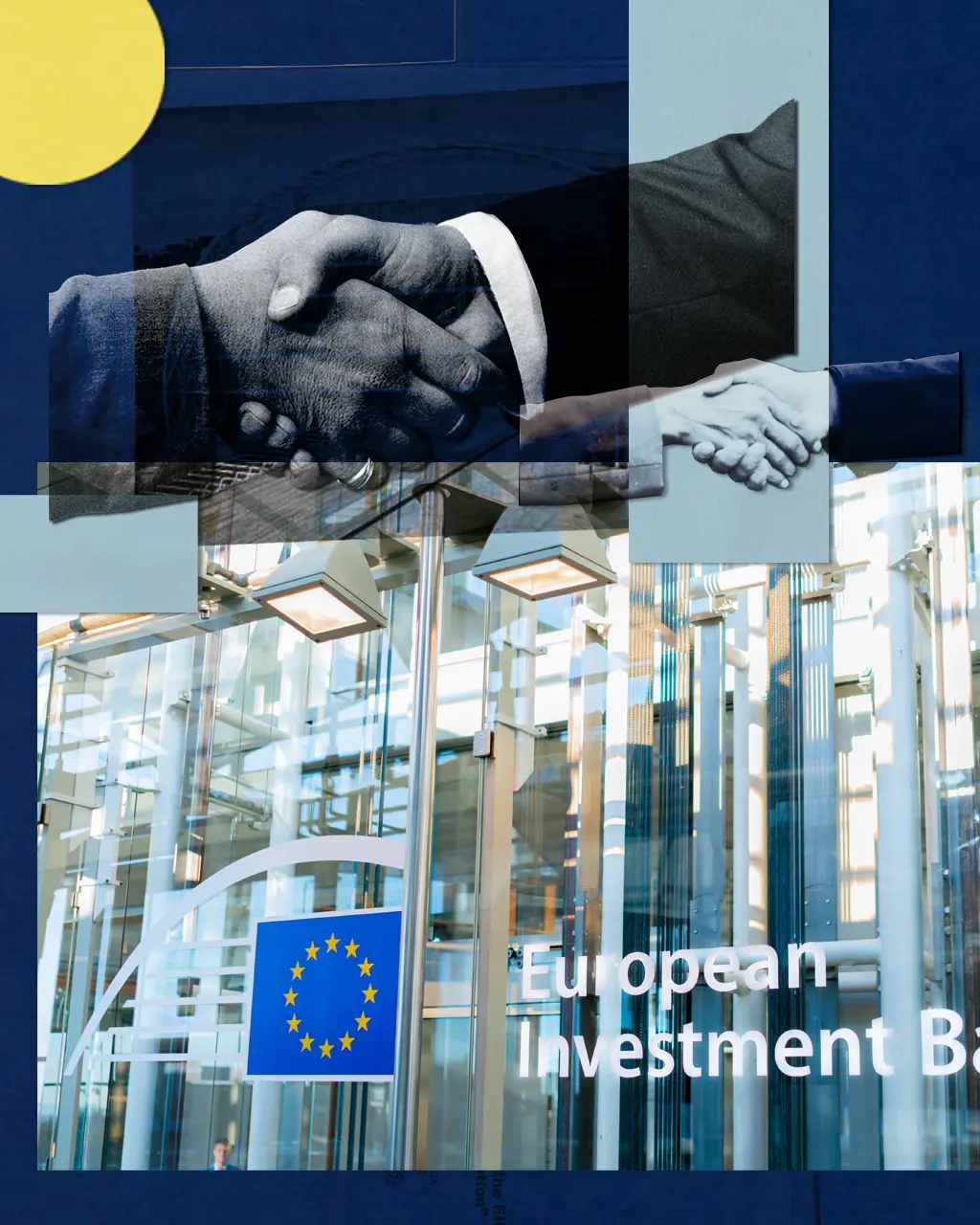
This trend has now penetrated deep into Luxembourg and one of our favourite EU institutions: the European Investment Bank.
Environmental report decimated: in October, the EIB published its “environmental, climate and social due diligence procedures”, a generic 16-page document outlining how the bank assesses the impacts and risks of its operations. It replaces the previous 113-page “environmental and social handbook”, which detailed every step of the due-diligence process. “This suggests that, although the EIB has strengthened the environmental and social standards projects must adhere to, it dismantled all the checks on projects and the bank’s clients that staff had to conduct to ensure compliance,” Anna Roggenbuck, a Policy Officer at the NGO Bankwatch, told us.
Empty integrity report: in December, the EIB published its updated Ethics and Integrity Report, which it says “enhances transparency and accountability”. Staff representatives strongly disagree. They had seen an earlier draft containing anonymised descriptions of 47 misconduct cases – including harassment – some of which resulted in disciplinary sanctions. After what staff describe as a “secret rewrite”, and without consultation, the bank published a 20-page report containing little to no data on the cases investigated, according to an intranet post seen by Follow the Money. “Actually, all the data provided in this report could be held on a single page,” they wrote. And, in a pointed jab to EIB President Nadia Calviño, they added: “Where the President claims to have strengthened transparency and accountability, we see the opposite.”
Tomorrow, Calviño will be in Brussels for her annual press conference. Expect smiles, plenty of photo ops, and good news. But what actually happens inside the bank – and the projects it funds – is increasingly shielded from public scrutiny.
Brussels intensifies its crackdown on VAT fraud
The Dutch government has just released an assessment on the European Commission’s proposal aimed at more efficiently dismantling complex cross-border VAT fraud networks, which cost the EU billions of euros each year.
The proposal contains revisions on rules that govern access to VAT information by the EU’s fraud agencies –the European Public Prosecutor’s Office (EPPO), and the European Anti-Fraud Office (OLAF).
The EPPO told us that it cannot predict the timeline for the reform but stresses that “the sooner it is adopted, the better,” citing the need to improve its ability to combat “massive fraud and organised crime behind it”.
The Dutch Cabinet supports the move but has raised red flags regarding “proportionality”. Specifically, it is concerned that a new requirement to share data on “every indication of a suspicion” is too broad compared to the current “reasonable suspicion” requirement.
“The cabinet does wonder whether the measures in the proposal will have the desired effect and do not go further than necessary,” the Dutch cabinet said.
Recap: in November last year, the Commission proposed a revision of the regulation. The proposal needs unanimity in the European Council after consultation with the European Parliament and the European Economic and Social Committee.
Currently, EU investigators rely on slow, manual requests to national tax offices. The new regulation would allow them to perform “targeted searches” directly within the databases to dismantle “Missing Trader” fraud networks, which cost the EU upwards of €13.15 billion in 2024 alone.
What is a missing trader? A missing trader is a shell company created with the sole purpose to import goods VAT-free from other EU countries. It then sells those goods with VAT included, only to disappear without ever paying that collected tax to the government.
According to EPPO’s spokesperson, the current system is inefficient because “the data exists centrally”, but prosecutors are still forced to request it “individually, from each participating Member State”.
The data watchdog’s warning: the European Data Protection Supervisor (EDPS) has warned that giving law enforcement direct access to tax data risks blurring the line between tax administration and criminal investigations. It went further by saying that granting law enforcement direct access to administrative databases must remain exceptional and be subject to appropriate safeguards to prevent untargeted searches and “fishing expeditions”.
German politician found guilty in Council of Europe scandal
German center-right politician Axel Fischer, a former Bundestag MP (1998- 2021), was found guilty last week of taking bribes from Azerbaijan to act in the country’s interest within the Council of Europe.
The sentence: the Munich Higher Regional Court imposed a suspended prison sentence of 14 months on Fischer, a member of Angela Merkel and Ursula von der Leyen’s CDU party. He was also barred from standing for election for two years, a ruling that will cost him his parliamentary pension entitlements. Fischer has announced he will appeal.
This case is linked to the so-called Azerbaijani Laundromat: a secret fund of €2.5 billion used by the country’s elite to pay off European politicians, buy luxury goods, launder money, and otherwise benefit themselves. It was uncovered in 2017 through a joint investigation by Berlingske (Denmark), OCCRP, and 15 other media.
The Council of Europe – which aims to uphold human rights, democracy and the rule of law in the EU and beyond – was a key target. Some Azerbaijani members of the Council’s Parliamentary Assembly bribed their colleagues from other delegations (including Fischer) to write speeches, submit documents, or vote in favour of the central Asian country. In July, another former Bundestag member, Eduard Lintner, got a suspended nine-month sentence for his role in distributing the bribes.
First conviction under new law: Fischer’s conviction is notable as he is the first German politician sentenced since cash-for-influence schemes were criminalised in 2014. Before, only direct vote-buying was considered a criminal offence, under the argument that broad bribery laws would threaten an MP’s free mandate. This is why Fischer was not punished for the €79,000 euros he received before 2014, but only for the €24,500 he pocketed after.
Jailed to stop procedures being dragged out: presiding judge Jochen Bösl said that it had exceptionally been necessary to order Fischer’s pre-trial detention over his repeated attempts to drag out procedures until the statute of limitations expired.
Bystron immunity: the European Parliament’s Legal Affairs Committee will vote today on the parliamentary immunity of MEP Petr Bystron, a member of the far-right Alternative für Deutschland (AfD), following a request from the German authorities.
The case concerns suspected offences linked to the employment contracts of staff during Bystron’s time as a member of the Bundestag, according to a Parliament source. As the alleged conduct predates his election to the Parliament, his immunity is expected to be lifted, the source said.
It would not be the first time: Bystron has already had his immunity lifted twice in connection over his alleged links to the pro-Russia website Voice of Europe.
Marine Le Pen appeal: the appeal trial of Marine Le Pen – which could shape France’s presidential race – has entered its third week (of five) in Paris. Last Monday and Tuesday, the far-right politician, who trained as a lawyer, said that she acted in good faith and argued that “the European Parliament’s administration used to be much more lenient than it is today.”
Making America Great Again: across the Atlantic, debate is growing over how to prevent Trump-style corruption in the future. Michael Waldman, CEO of the Brennan Center for Justice, proposed several “Fixes for America’s corruption problem”, including tighter campaign finance rules and a major overhaul of the ethics system.
YouTuber-MEP under scrutiny: Fidias Panayiotou, a YouTuber-turned-MEP has come under fire after reports that EU funds meant for parliamentary work have allegedly been used to pay for a luxury property in Cyprus. The case, reported by Politico, highlights growing concerns about transparency and oversight as social-media influencers enter EU politics. Panayiotou said he has not been officially notified of a potential EPPO investigation and will “of course, release a video addressing each accusation in detail”.
Serbian student protests against corruption: thousands of people rallied in Novi Sad as university students vowed to continue protests against corruption under President Aleksandar Vučić. The student-led movement, which has mobilised mass demonstrations for over a year, accuses the government of eradicating democratic checks and tolerating corruption. The protests have become one of the most sustained challenges to right-wing nationalist Vučić’s rule.
UN corruption fuels human trafficking: a new UN report warns that corruption is a key enabler of human trafficking, allowing criminal networks to exploit weak institutions and complicit officials. According to the United Nations Office on Drugs and Crime, bribery and abuse of power undermine investigations, border controls, and victim protection worldwide. The findings highlight corruption as a central obstacle to dismantling trafficking networks.
Italy corruption probe hits privacy watchdog: Italy’s data protection authority has been shaken by a corruption investigation involving alleged illicit payments and influence peddling. The probe raises uncomfortable questions as the watchdog plays a key role in policing U.S. Big Tech under EU digital rules.
Cyprus President’s aide resigns over corruption video: a senior aide to Cypriot President Nikos Christodoulides resigned after a video surfaced alleging high-level government corruption. The footage, broadcast by local media, triggered public outrage and renewed scrutiny of Cyprus’ political elite. The presidency denies wrongdoing, but the scandal has intensified calls for accountability.
More anti-corruption reforms needed in Romania: The Council of Europe’s Group of states against corruption (GRECO) says Romania has made some progress implementing anti-corruption recommendations but still must fully adopt key measures to prevent corruption among members of parliament, especially on conflicts of interest, gifts, and benefits. While new lobbying disclosure rules and transparency steps are welcomed, several GRECO recommendations remain unimplemented and authorities are expected to report back later in 2026.