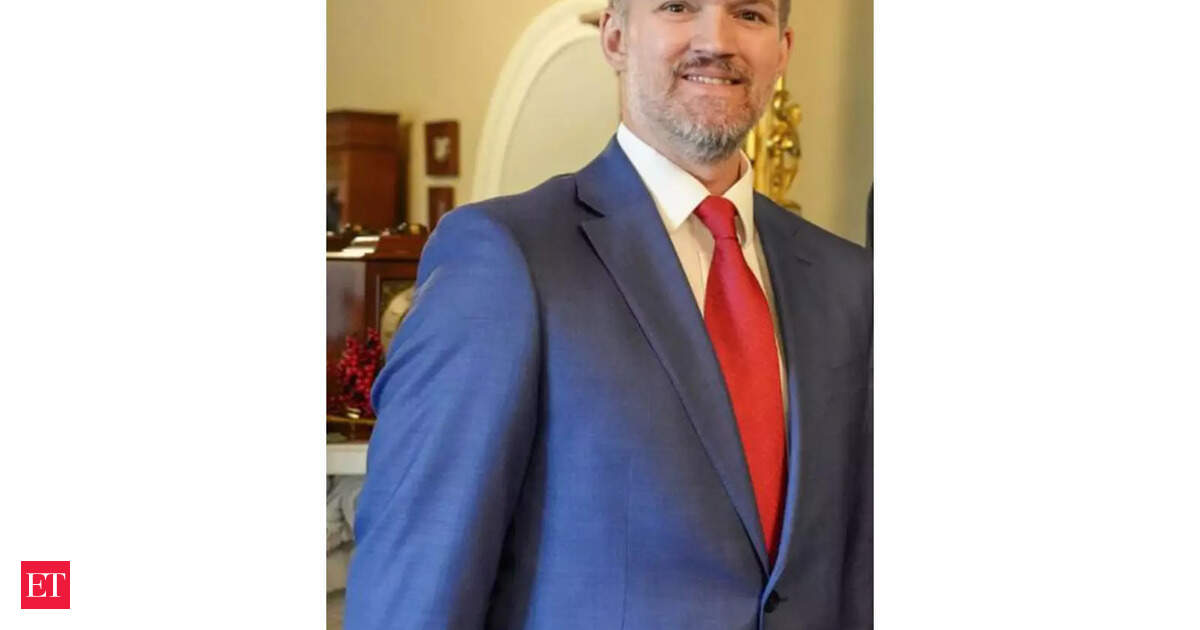
Responding to questions on the agreement, described by both sides as the “mother of all deals”, Greer said India appeared to have secured greater advantages, particularly in terms of access to European markets.
“I’ve looked at some of the details of the deal so far. I think India comes out on top on this, frankly. They get more market access into Europe,” Greer said in an interview with Fox Business on Tuesday.
He added that the agreement also seemed to include provisions on labour mobility.
“It sounds like they (India) have some additional immigration rights. I don’t know for sure, but President (Ursula) von der Leyen of the EU has talked about mobility for Indian workers into Europe. So I think on net, India is going to have a heyday with this. They have low-cost labour,” Greeer added.

Greer said the deal underscored a divergence in trade approaches, with the European Union doubling down on globalisation even as the United States sought to address what it sees as its downsides.
Asked for his broader assessment of the India-EU pact, Greer said President Donald Trump’s push for domestic production and higher fees for access to the US market had prompted other economies to look elsewhere for trade opportunities.Because President Trump has prioritised domestic production and essentially started charging a fee for other countries to access the US market, these countries are trying to find other outlets for their overproduction, he said. So the EU is turning to India. The EU is so trade dependent, they need other outlets if they can’t keep sending all their stuff to the United States, Greer added.
On India’s purchases of Russian oil, Greer said New Delhi continues to face a 25% tariff linked to those imports, in addition to the reciprocal 25% tariff imposed by the Trump administration.
Asked whether India was still buying Russian oil, Greer said the country had made progress but had not fully scaled back purchases. “I’m in frequent contact with my counterpart in India. I have a great working relationship with him, but they still have a way to go on this point,” he said. “They like the discount that you get from Russian oil; it’s close by, so it’s hard for them.”
He added that the US Treasury Department had introduced tougher sanctions in recent weeks and that Washington expected India to continue reducing its reliance on Russian energy. “We’re watching it closely,” he said.
The India-EU free trade agreement is set to create a combined market of nearly two billion people. Prime Minister Narendra Modi and top EU leaders unveiled a transformative five-year agenda centred on trade and defence cooperation to help safeguard the rules-based global order.
The two sides also signed two key agreements, one on security and defence collaboration, and another on the mobility of Indian talent to Europe, during summit talks hosted by Modi for von der Leyen and European Council President Antonio Costa, against the backdrop of strained ties with the United States.
According to officials, the FTA — covering nearly a quarter of global GDP — will eliminate tariffs on 99% of Indian exports to the EU and reduce duties on more than 97% of EU exports to India.
Indian sectors such as textiles, apparel, leather goods, handicrafts, footwear and marine products are expected to gain significantly from the pact, while Europe stands to benefit in areas including wine, automobiles, chemicals and pharmaceuticals.