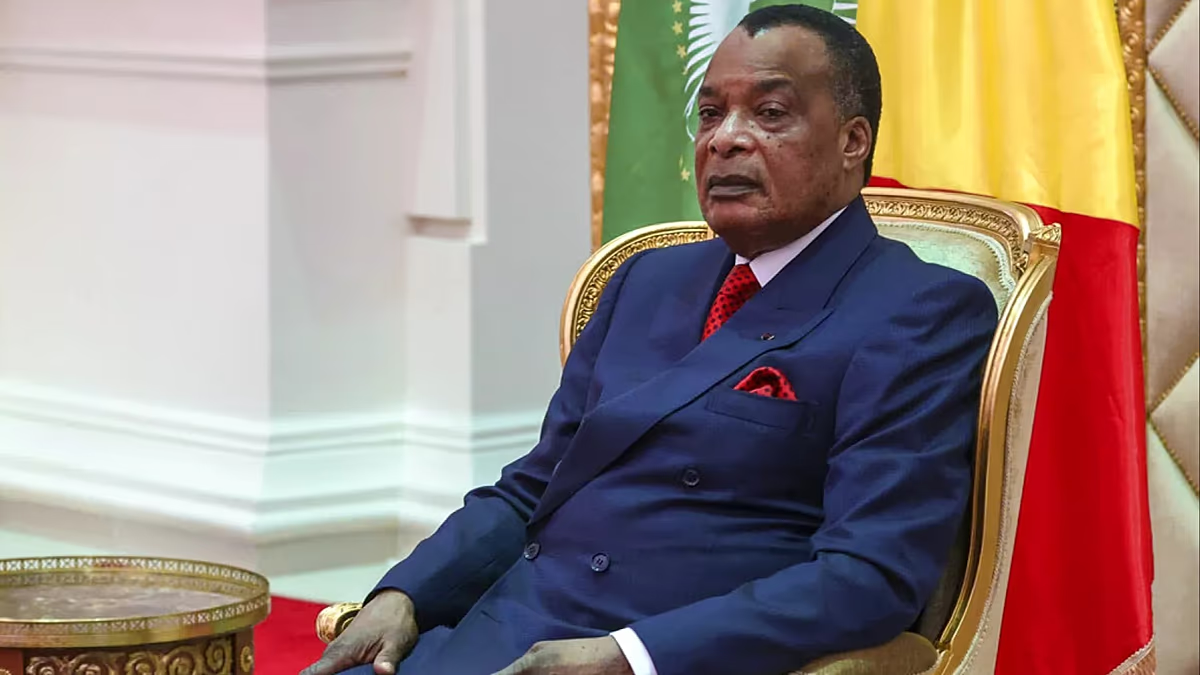
Norwegian prosecutors have formally charged a PetroNor E&P subsidiary and two executives with severe corruption, alleging they funneled millions in bribes to the family of Congo Republic’s long-serving president.
The indictment by Okokrim, Norway’s economic crime authority, rips the veil off the murky intersection of European capital and African resource extraction. Investigators allege that between 2016 and 2020, Hemla Africa Holding AS paid approximately $25 million (KES 3.2 billion) to companies controlled by close relatives of President Denis Sassou Nguesso to secure lucrative drilling licenses.
The Mechanics of the Deal
According to the charge sheet filed in Oslo, the bribes were disguised as payments to local partners. The prosecution contends that these “partners” were merely shell entities with no operational capacity, set up solely to funnel cash to the Nguesso ruling clan. This structure allowed the Norwegian firm to bypass anti-corruption compliance checks while securing a 20 percent stake in the offshore PNGF Sud license.
The investigation, which spanned three years and involved cross-border cooperation with French and Swiss authorities, highlights the persistent “resource curse” plaguing the Congo Republic. Despite vast oil wealth, the nation’s poverty rates remain staggeringly high, with funds often siphoned off through complex corporate structures in tax havens.
The Accused: Hemla Africa Holding AS and two senior executives whose identities remain protected under Norwegian privacy laws.
The Beneficiaries: Direct family members of Denis Sassou Nguesso, who has ruled Congo for over 40 years.
The Stakes: If convicted, the executives face up to 10 years in prison, and the company faces ruinous fines.
A Pattern of Plunder
This case is not an isolated incident but part of a broader pattern of alleged kleptocracy in Brazzaville. President Sassou Nguesso, labeled by critics as one of Africa’s “presidents for life,” has repeatedly faced accusations of using state oil revenue as a personal slush fund. His family’s lavish spending in Paris and Dubai stands in stark contrast to the crumbling infrastructure in Pointe-Noire.
PetroNor E&P has issued a statement denying criminal intent, arguing that the payments were legitimate business transactions mandated by local content laws. However, legal experts argue that the lack of any tangible service provided by the local partners is a smoking gun for corruption.
Global Implications
The charges send a chilling signal to Western multinationals operating in high-risk jurisdictions: the era of impunity is fading. “This is a warning shot,” says corruption analyst Sarah Chayes. “You can no longer hide behind local consultants. If you pay the piper, you will face the music at home.”
For the people of Congo, however, the legal drama in Oslo offers little immediate relief. The $25 million in question—enough to build dozens of clinics or schools—is already gone, vanished into the opacity of global finance. The trial, set to begin later this year, will be a test of whether international law can truly pierce the sovereign armor of entrenched dictatorships.