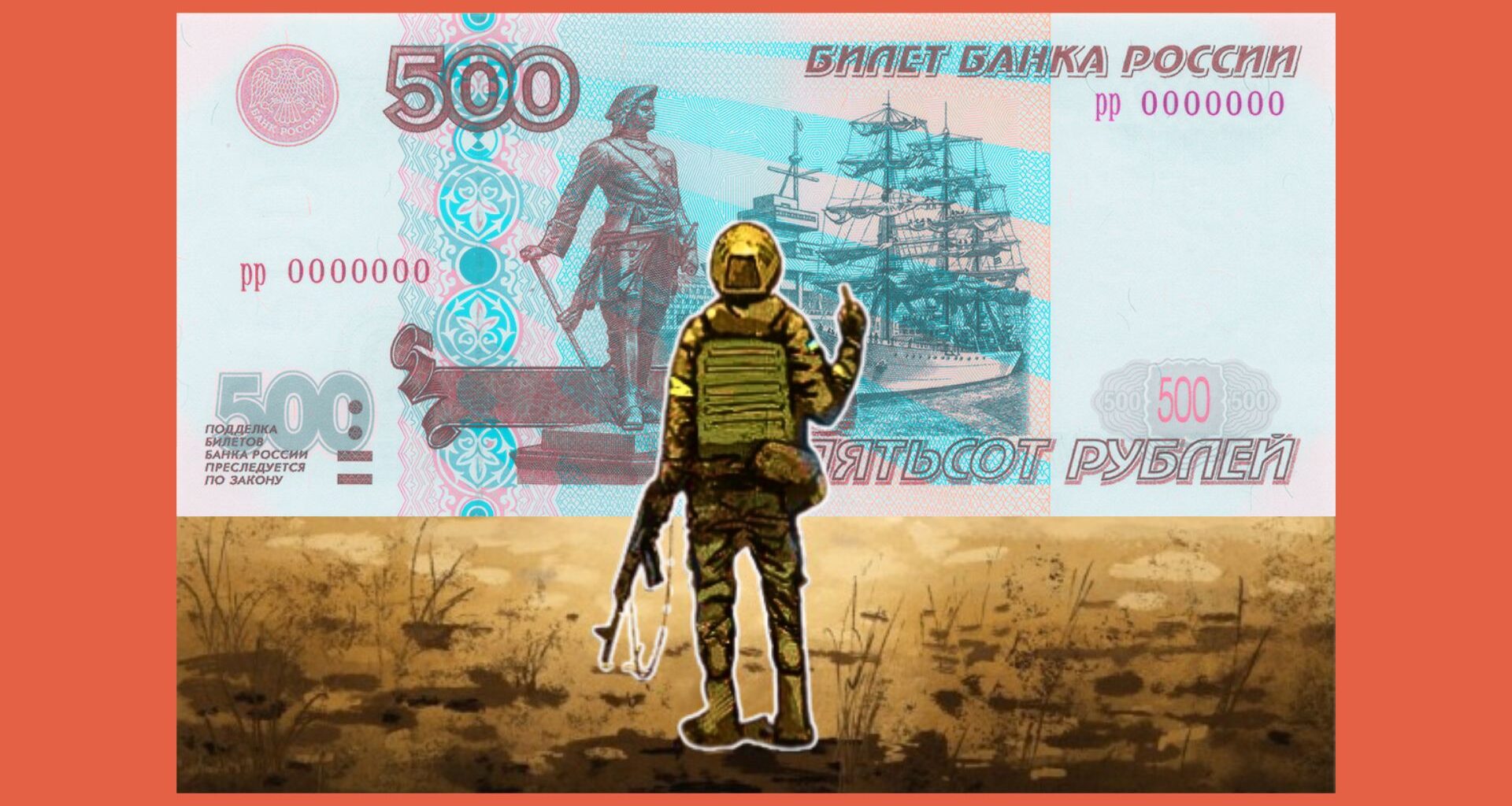
Once the fighting ends, Russia will have money but few goods, weaker production and too few people to work. Russia’s economy now resembles a pyramid scheme, stable only as long as the war continues.
The war triggered an income shock for part of Russian society. Before the full-scale invasion, most of Russia’s provinces had been mired in poverty for decades. Revenues from oil and other raw material exports lined the pockets of oligarchs and, to some extent, improved the quality of life for residents of Moscow and Saint Petersburg. But not Russia’s economy. Elsewhere, poverty and stagnation reigned.
After 24 February 2022, volunteering for military service gave families an unprecedented cash injection. The megabucks initial paycheck of 400,000 to 700,000 roubles (4,400 to 7,700 euros at the time of writing) that soldiers receive upon enlistment is more than half a year’s salary (with the average monthly wage at around 73,000 roubles, or 795 euros as of January 2026). The annual pay for committing war crimes in Ukraine now amounts to 27,500 million euros – three times higher than the average Russian gets.
Across poorer regions, participating in Russia’s war against Ukraine can lift household income by 400 to 600 per cent.
Weekly updates with our latest articles and the editorial commentary.