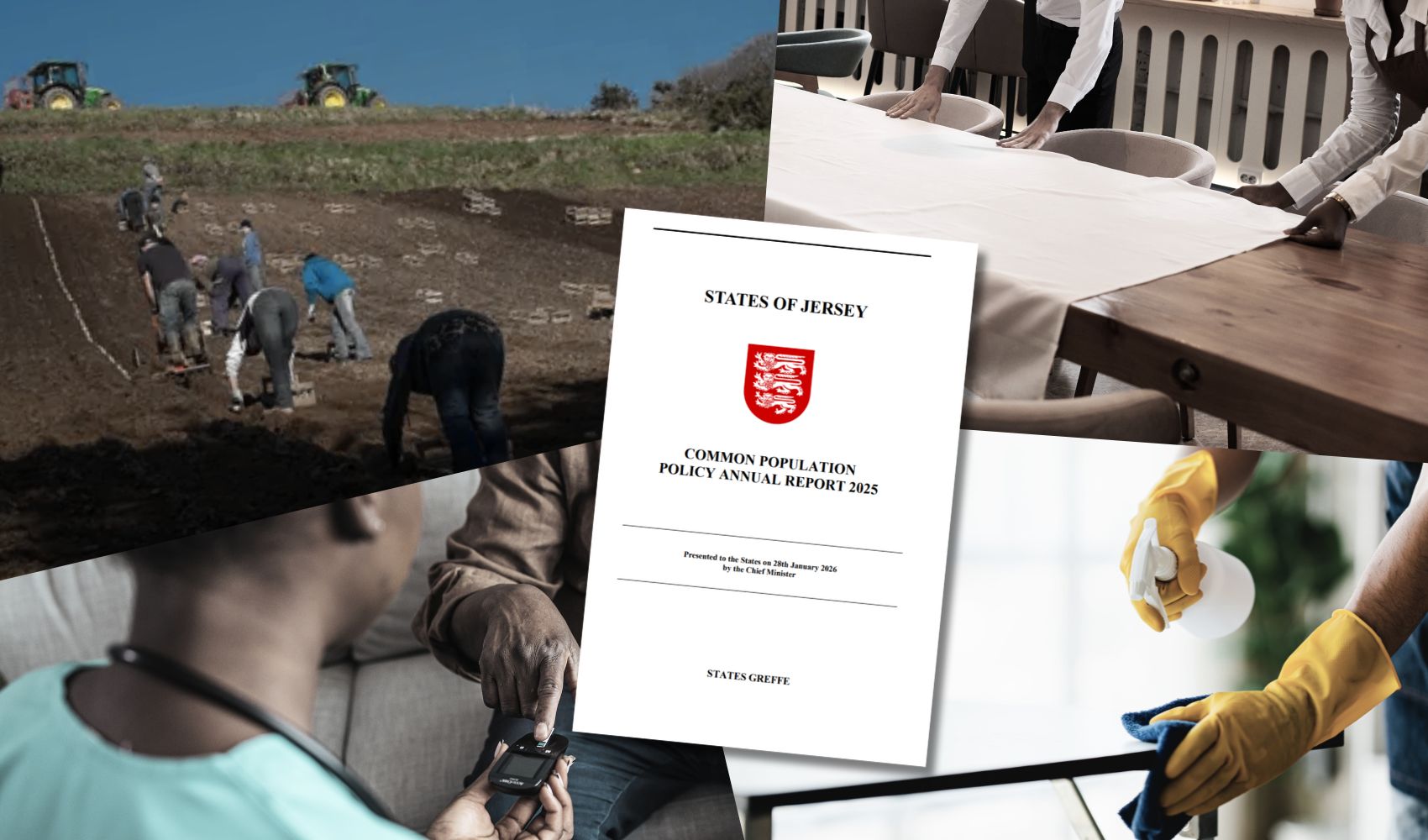
A safeguarding group is to be set up to support and protect migrants’ rights following an increase in the number of African and Asian workers being brought to the island and concerns about the level of support they are receiving.
Published this morning, the government’s 2025 annual population policy report said that there were now an estimated 105,540 people living in Jersey – an increase of 510 from the previous year.
The report also showed that between 2019 and 2024, the number of Filipino and Kenyan workers had risen by 502% and 703% respectively.
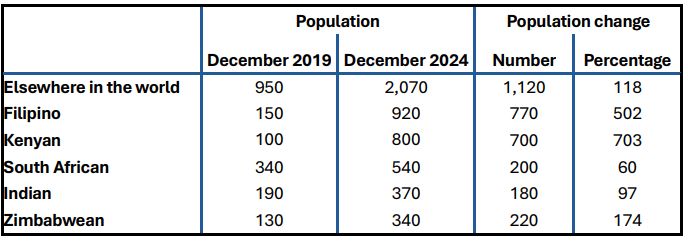 Comparison of population size, aged over 20 years, by nationality, between 2019 and 2024. Common Population Policy Annual Report 2025.
Writing in the foreword of the report, Chief Minister Lyndon Farnham confirmed that a dedicated Migrant Safeguarding Group is now being set up to address “issues such as exploitation risks, accommodation standards and access to healthcare”.
The report stated: “Following Brexit and economic growth across many EU countries, European migrants have now been largely replaced by African and Asian migrants with many more workers now subject to fixed term immigration permissions. These workers bring valuable skills to the island, but they may face increased challenges in adapting to life in Jersey.
“Ministers understand the importance of this workforce and took action in 2025 to support
migrants through the relaunched International Cultural Centre and will shortly be setting up a Migrant Safeguarding Board.
“Work permit policies remain under review, with 2025 seeing the expansion of skilled worker routes that give workers and their families a route to long-term residence in Jersey.”
It added that the government is “committed” to ensuring migrant workers are “treated fairly” and have “access to safe working and living conditions”.
Modern slavery risk
In 2023, a panel of politicians led by Reform Jersey’s Deputy Beatriz Porée reviewed the effectiveness of the island’s policies.
The Work Permit Holder Welfare Review Panel found that protection and support for migrant workers could be improved following an 800% increase in the number of permits issued since 2019 due to workforce shortages, Brexit, and the pandemic.
Among its recommendations were that the Home Affairs Minister should ensure clearer communication of employer obligations regarding recruitment and employment and the establishment of a well-defined and easily accessible resource to “provide clarity to both employers and employees on what was expected of them”.
The Panel observed a lack of provisions aimed at protecting work permit holders from Modern Slavery, which includes a variety of crimes such as human trafficking and forced labour.
During the review, both the Friends of Africa and the Kenyan Jersey Committee also expressed concern about the lack of protections.
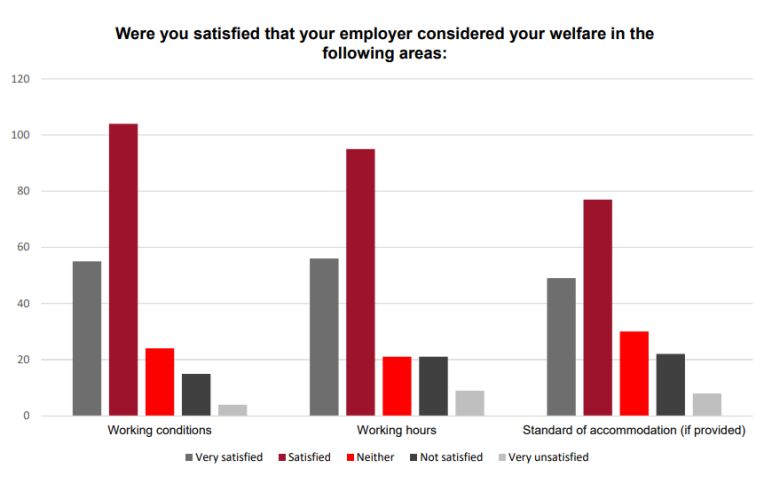 Pictured: Survey responses from migrant workers representing welfare satisfaction in the 2023 survey.
Next month, an inquest into the death of Filipino farm worker George Michael Monte De Ramos Castrudes is due to be concluded.
Mr Castrudes died last January following a fire in his prefabricated accommodation at the The Three Oaks Vineries site in Grouville.
During the inquest opening, Deputy Viscount Matthew Berry outlined the issues that will considered.
These will include: the medical cause of Mr Castrudes’ death; the cause of the fire; the condition of his accommodation and the contribution – if any – to the cause of the fire and its spread; whether issues around Mr Castrudes’ finances, immigration status or other circumstances contributed to his death; and whether any recommendations should be made in order to prevent further deaths.
“Hidden in plain sight”?
More recently, business leaders, policymakers, legal experts, and HR professionals were invited to an event on how to “tackle the hidden realities” of modern-day slavery in offshore jurisdictions.
The event’s keynote speaker, campaigner James Clarry, CEO of Justice and Care, warned that hundreds of people could be suffering while “hidden in plain sight” across the Island.
He estimated that, assuming equivalent numbers to those seen in the UK, there could be as many as 200 modern slavery victims in the Island – and that approximately 75% would be migrants.
Afterwards, he said that he had felt “very encouraged” by conversations he had during his visit, and said he could see a “clear desire” among local stakeholders to help tackle the issues raised.
READ MORE…
October 13, 2023December 21, 2024
Related