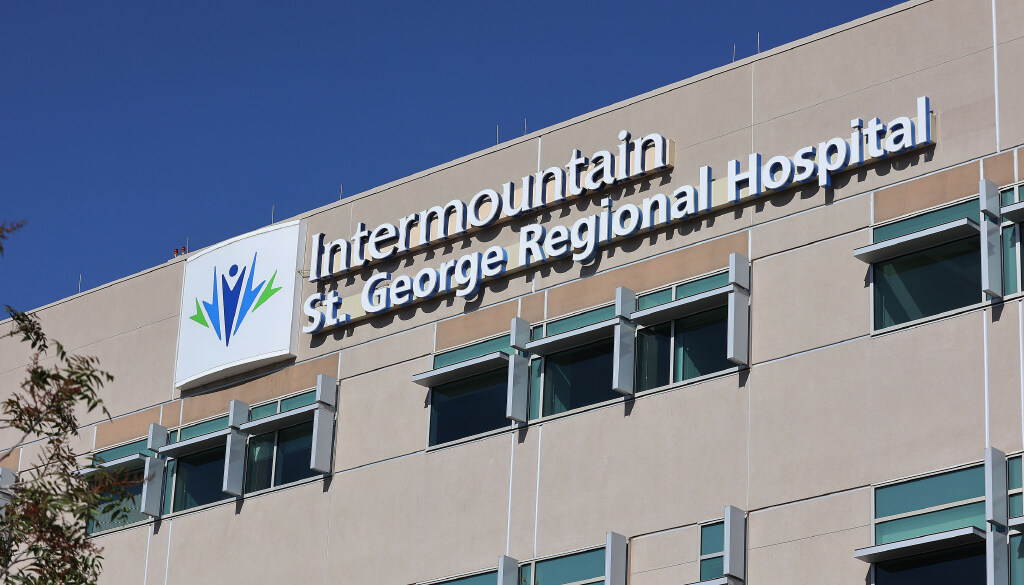
SALT LAKE CITY — About a third of Intermountain Health employees were stunned last week when they received an email saying their pensions will be frozen at the end of the year and replaced with a 401(k)-based retirement program.
Intermountain Health, Utah’s largest employer with about 68,000 caregivers, said no new pension benefits will be earned after this year. Roughly 23,000 workers who had been counting on those pensions will instead transition to a 401(k) plan, according to information on the company’s website and interviews with employees.
Many caregivers now describe feeling blindsided.
“It was Tuesday morning when we came to work and then we had this email,” said one surgeon, who spoke on the condition of anonymity because of fear for his job. “You feel like you’ve just lost a million dollars. Like, how would you feel if you lost a million dollars? You’d feel devastated. And that’s how everybody was feeling.”
The surgeon said Intermountain Health is not known for the highest pay among healthcare companies, but its reputation and pension plan had previously made the trade-off feel worthwhile.
He said the change could cost him more than $1 million in expected retirement income.
“The long term effects mean instead of retiring at my desired goal with my wife, I had to come home and tell her, ‘Sorry, honey, I got an email today. The pension froze and that means I’m likely going to have to work for several more years. Our retirement plan is now dramatically altered,” he said.
Other employees who spoke with KSL NewsRadio described a mix of “betrayal, shock and confusion” as they try to figure out how to adjust their retirement plans. Some say they now expect to delay retirement; others are unsure how they will make the numbers work with reduced guaranteed income. There is also concern the move could push some caregivers to leave Intermountain for other employers.
The surgeon said one of the most frustrating parts of the rollout has been what he sees as a lack of support and clear resources for employees trying to understand the financial impact and their options going forward.
“Everybody was silently struggling,” he said. “There’s just a lot of unknowns. I was thinking if they would do something to this magnitude that they would have counselors on standby to help with people’s reactions to this to try to get them through to kind of help them, knowing that this is such a dramatic event that’s happened, and there’s nothing.”
The surgeon went on to say employees are being told there are upcoming webinars that will explain a little more about what is happening, but he feels that is not enough.
“Intermountain has a reputation for being a very solid and reliable brand and a very good employer that takes care of its employees, and this was kind of a big, sudden change in all of that,” he said.
Intermountain Health, in its announcement to employees, cited “ongoing financial pressures” as the reason for the change, including lower government payments, inflation and market volatility. The company also noted that about 97% of organizations in the health care industry have already moved away from traditional pensions to 401(k)-style plans.
At least one employee who spoke with KSL NewsRadio acknowledged that Intermountain has always had the legal right under its contracts to freeze the pension plan. But, they said, knowing that does not cushion the blow.
This story was adapted from a radio broadcast script using artificial intelligence. Every story, including those adapted with AI, is reviewed by a human editor before publication to ensure that KSL’s editorial standards are upheld.